What Size Mat Is Needed Under Walking Pad?
Protecting your flooring requires a precise equipment footprint calculation. Select the exact mat dimensions needed to absorb continuous motor vibration.

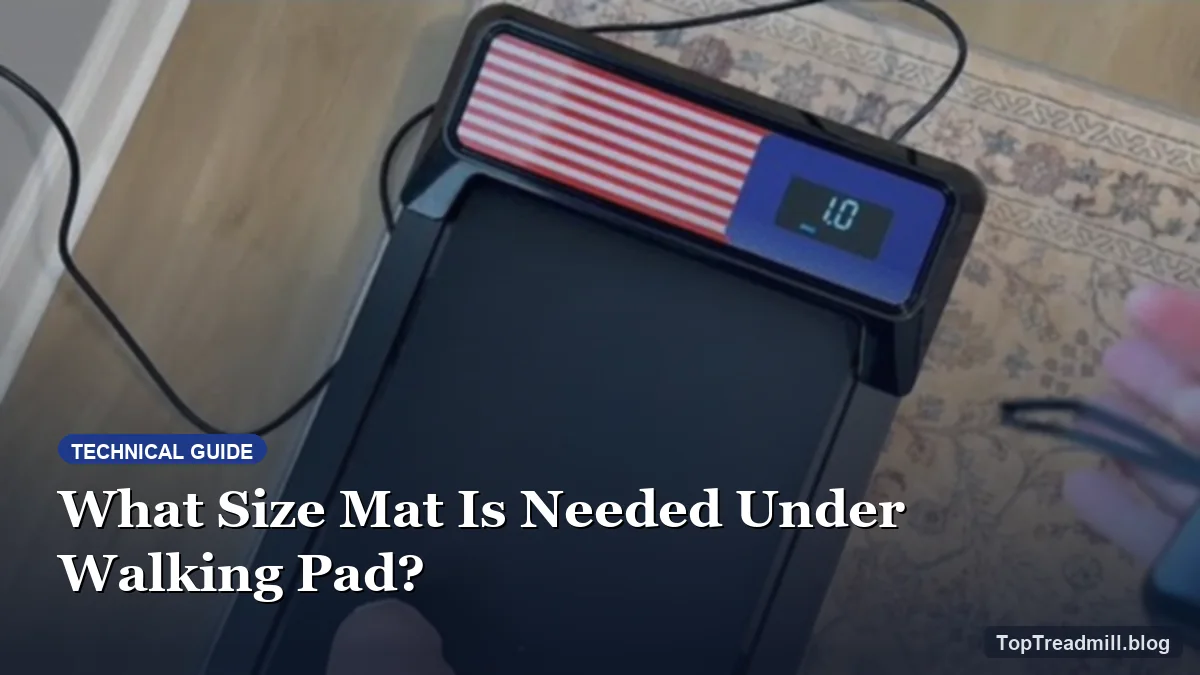
Your walking pad requires a mat that extends at least two inches beyond the frame on all sides. This prevents floor scuffing and dampens mechanical impact sounds.
Ready to compare models? Start with our Best Treadmill: Top Home Cardio & Under-Desk Picks (2026).
Practical Quick-Reference Table
| Scenario / Metric | Recommended Target | Why It Matters |
|---|---|---|
| Compact Walking Pad | 36 x 60 inches | Provides minimal clearance for ultra-short desks. |
| Standard Under-Desk Unit | 36 x 72 inches | Accommodates standard stride length safely. |
| Frame Perimeter Buffer | 2 inches minimum | Blocks friction wear and direct frame contact. |
| High-Density Vinyl Mat | 1/4 inch thickness | Absorbs baseline motor vibration effectively. |
| Carpeted Surface Setup | Rigid PVC barrier | Prevents deep indentations from heavy rollers. |
| Hardwood Floor Setup | Closed-cell foam | Eliminates abrasive scuffing and dust migration. |
Determining Standard Walking Pad Dimensions
Measuring your fitness apparatus accurately forms the foundation of floor protection. Most residential walking pads measure approximately forty to fifty inches in total operating length.
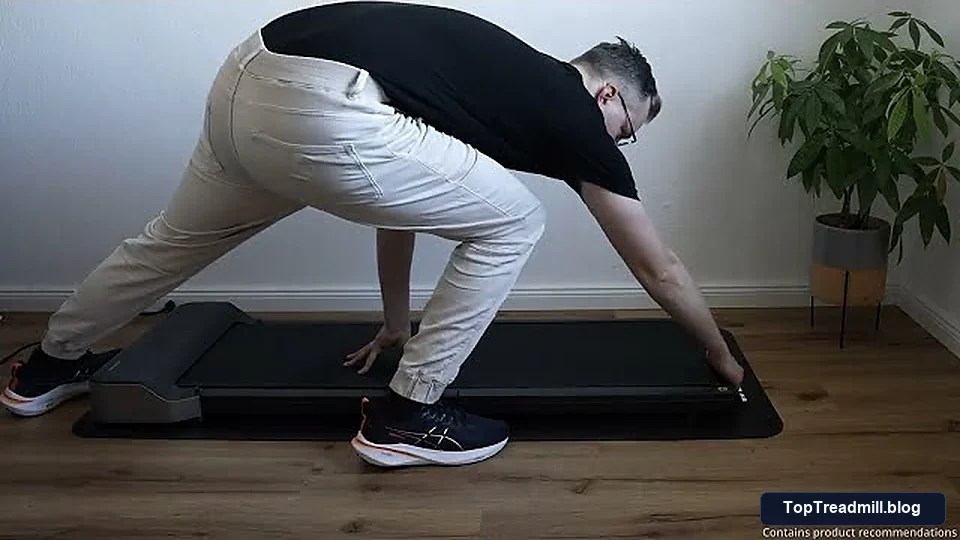
Width specifications vary across models featured in our best walking pad under 300 roundup. Always record your exact baseline metrics before purchasing any protective under-machine mat.
Manufacturers design these compact motorized units for space-saving efficiency in modern home offices. Consequently, standard exercise mats built for massive treadmills will overwhelm your workspace.
A tailored footprint ensures the protective sheet remains entirely concealed beneath your compact walking apparatus. Precise alignment prevents tripping hazards in high-traffic residential or office corridors.
- Measure the exact maximum length including end caps.
- Record the widest point across the side motor cowlings.
- Account for folding mechanisms if your frame collapses.
- Verify clearance against adjacent office furniture legs.
Measuring the Footprint Accurately
Grab a reliable steel tape measure to capture the true spatial demands of your machine. Extend the tape completely from the front motor housing to the rear roller end cap.
Record fractional inches carefully because tight office spaces leave zero room for error. Margin calculations depend entirely on your precise initial measurements during this step.
- Use a rigid metal tape measure for exact readings.
- Measure twice to eliminate human recording errors.
Calculating Clearance and Safety Buffers
Adding a safety perimeter around your walking device prevents direct floor damage completely. Industry standards recommend maintaining at least a two-inch buffer zone around every outer edge.
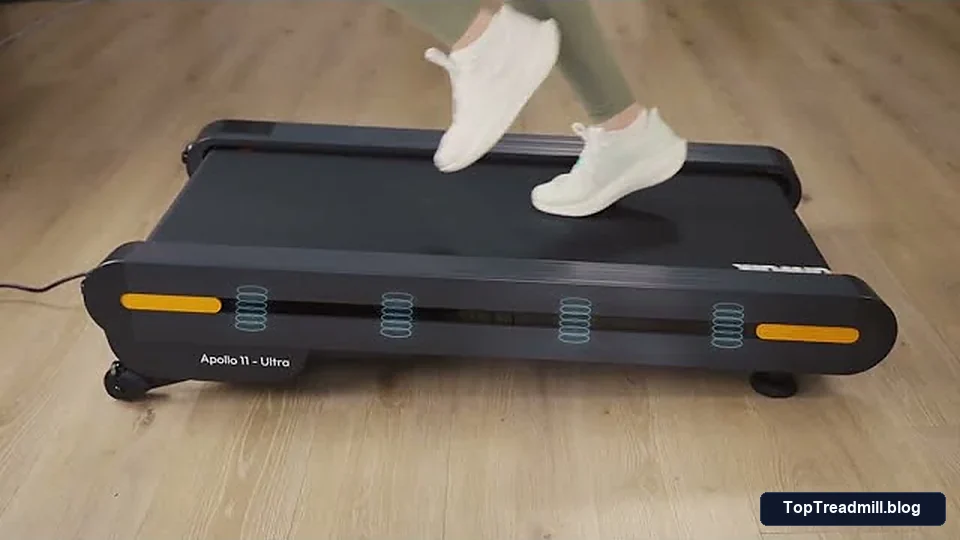
This extra surface area absorbs lateral shifting caused by continuous foot strike impacts. Without this buffer, the vibrating metal frame will slowly grind against delicate flooring.
Rear clearance matters significantly when evaluating options found in our walking pad vs under desk elliptical comparison. Always extend the mat rearward to capture any backward drift safely.
Front clearance accommodates power cords and front-mounted wheels safely without pinching insulation. Proper spatial distribution guarantees structural stability across various indoor flooring materials.
- Maintain a 2-inch border minimum on all four sides.
- Extend rear margins if users have longer stride lengths.
- Protect power cable paths from sharp pinching forces.
- Allow extra side clearance for emergency dismounts.
Factoring User Stride Dynamics
Slight stride variations cause users to drift backward during prolonged walking sessions. A properly sized mat absorbs these minor positional shifts without exposing bare floors.
Taller users require greater longitudinal mat length to catch trailing foot placements reliably. Always scale your protective boundary upward if taller individuals share the device.
- Account for natural backward drift during pacing.
- Scale mat length upward for taller household users.
Video Walkthrough: What you should know before buying a walking pad (treadmills)
Material Composition and Thickness Requirements
Selecting the correct material thickness determines long-term floor protection and acoustic dampening. High-density polyvinyl chloride or rubber composites offer superior resistance to continuous heavy compressive loads.
Thin yoga mats lack the structural density required to withstand constant motor vibration. They compress permanently, allowing abrasive friction points to damage underlying hardwood surfaces.
Look for materials measuring between one-eighth and one-quarter inch in overall thickness. This specific range balances impact absorption with low-profile stability for under-desk office environments.
Avoid porous foam variants that trap moisture and disintegrate under heavy mechanical pressure. Premium closed-cell configurations resist sweat infiltration and simplify daily equipment maintenance routines.
- Choose high-density PVC or durable rubber compounds.
- Target a thickness profile of 1/8 to 1/4 inch.
- Reject low-density yoga mats for heavy motorized units.
- Ensure closed-cell construction to block moisture absorption.
Evaluating Density Ratings
Material density directly influences how well your protective barrier handles mechanical stress. High-density rubber distributes the downward force of your footsteps across a wider floor area.
Low-density alternatives featured in our budget walking pad guide crush rapidly under heavy weight. Investing in commercial-grade density prevents premature replacement and expensive flooring repairs.
- Prioritize high-density rubber over soft foam.
- Test material resilience by checking compression recovery.
Managing Motor Heat and Ventilation Clearance
Electric walking pad motors generate continuous heat during active belt operation cycles. Placing your machine on an improperly sized mat can trap thermal energy near the housing.
Ensure your protective mat allows adequate airflow around the front motor ventilation grilles. Overheating internal components drastically shorten the operational lifespan of your drive motor.
Leave at least one inch of exposed hard flooring directly beneath motor vents if possible. This tactical spacing prevents thermal buildup and reduces premature electronic component wear.
Monitored heat dissipation keeps internal circuit boards functioning within safe operating temperature limits. Proper equipment placement safeguards your investment against preventable electrical motor failures.
- Keep front motor ventilation grilles completely unblocked.
- Prevent thermal energy entrapment beneath the housing.
- Allow minimal gaps for cooling air circulation.
- Inspect motor housing temperatures after extended walks.
Preventing Thermal Accumulation
Restricted airflow forces electric motors to draw excess electrical current during operation. This inefficiency accelerates internal heat generation within the enclosed drive chassis.
Strategic mat placement ensures cooling fans circulate room air efficiently around components. Protecting your motor from thermal stress guarantees smooth, reliable daily walking sessions.
- Monitor motor casing warmth during long sessions.
- Ensure room air reaches internal cooling fans.
Hardwood Versus Carpet Placement Protocols
Different flooring types demand specific mat sizing and material density considerations. Hardwood surfaces require smooth, non-staining PVC sheets to prevent abrasive dust scratches and scuff marks.
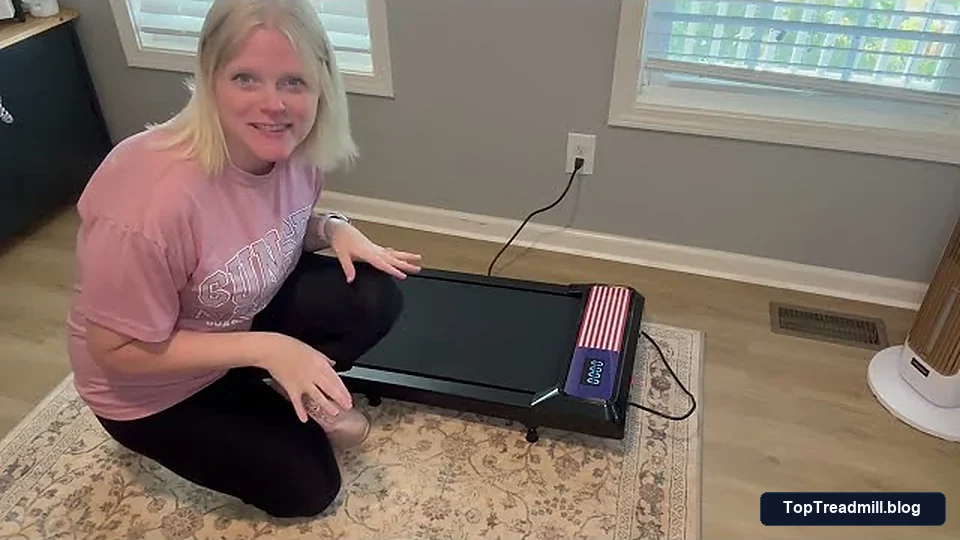
Carpeted installations require firmer, thicker mats to bridge soft pile fibers. Without a rigid barrier, walking pads sink unevenly and twist internal frame components out of alignment.
High-pile carpets trap heat and exacerbate motor strain during extended walking workouts. A rigid equipment mat distributes weight evenly to maintain proper mechanical frame alignment.
Always verify that your chosen mat backing will not chemically react with finishes. Certain rubber compounds can permanently discolor sealed hardwood floors over time.
- Use non-staining PVC mats on finished hardwood floors.
- Deploy rigid barriers over thick residential carpets.
- Prevent frame warping caused by uneven carpet sinking.
- Check chemical compatibility to protect floor finishes.
Addressing Carpet Pile Challenges
Thick carpet fibers create unstable foundations for motorized fitness equipment frames. A rigid under-machine platform stabilizes the chassis and prevents destructive structural twisting.
Measure your carpet pile height and consult our deck size calculator before selecting your protective mat thickness. Deeper piles require stiffer composite materials to maintain a level deck.
- Assess carpet pile depth prior to mat selection.
- Choose rigid sheets to stop frame misalignment.
Acoustic Isolation and Vibration Damping Mechanics
Foot strike impacts create low-frequency vibrations that travel through building structures easily. A correctly sized equipment mat acts as an effective acoustic isolation barrier.
Extending the mat beyond the equipment footprint traps sound waves before transmission. This dampening effect keeps downstairs neighbors or family members undisturbed during workouts.
Vibration isolation also protects internal sensors and electronic display panels from jarring. Minimizing mechanical shock extends the operational life of sensitive internal wiring harnesses.
Dense rubber compounds absorb kinetic energy much better than thin plastic sheets. Maximize your acoustic isolation by choosing thicker, specialized vibration-dampening floor pads.
- Block low-frequency vibrations from entering flooring.
- Extend boundaries to absorb impact sound waves.
- Protect delicate electronic sensors from mechanical shock.
- Select dense rubber for superior acoustic dampening.
Optimizing Sound Reduction Layers
Layering specialized acoustic materials enhances overall noise reduction during fast walking intervals. Sound-deadening pads absorb rhythmic foot impacts before they reach subflooring structures.
Proper sizing ensures the entire vibration footprint remains contained on the mat. Escaped vibrations bypass isolation barriers and travel freely through structural joists.
- Contain the entire vibration footprint on the mat.
- Layer dampening materials for multi-story buildings.
Maintenance and Long-Term Floor Preservation
Regular maintenance preserves both your protective mat and underlying flooring investment. Dust and debris accumulate beneath walking pads, creating abrasive friction points over time.
Lift your walking pad periodically to clean and inspect the protected floor area. Removing trapped dust prevents permanent scratching on delicate hardwood or laminate surfaces.
Wipe down your equipment mat with mild soap and water between sessions. Routine cleaning eliminates sweat accumulation and prevents premature material degradation or slipperiness.
Check your mat for signs of compression wear or structural cracking annually. Replacing degraded protective sheets ensures continuous safety and reliable floor preservation.
- Lift the walking pad monthly to clean underneath.
- Wipe down mat surfaces with mild soapy water.
- Inspect for cracks and permanent compression marks.
- Replace degraded mats to maintain full protection.
Routine Inspection Protocols
Establish a monthly routine to inspect your mat and surrounding floor areas. Catching minor wear patterns early prevents catastrophic damage to expensive home flooring.
Check that your mat remains centered beneath the walking pad equipment frame. Shifting units can expose bare flooring to continuous mechanical abrasion and wear.
- Schedule monthly equipment and mat inspections.
- Verify central alignment to prevent floor exposure.
Frequently Asked Questions
How much larger should the mat be than my walking pad?
Your protective mat should extend at least two inches beyond the frame on all sides. This precise margin prevents scuffing and absorbs impact vibrations.
Can I use a standard yoga mat under my walking pad?
Standard yoga mats lack the density needed for heavy motorized equipment. They compress permanently and fail to protect delicate hardwood floors from friction.
Does mat thickness affect motor cooling and ventilation?
Excessive thickness can trap heat if it blocks front motor vents. Ensure your mat allows proper airflow around the internal drive housing components.
How do I choose between rubber and PVC mat materials?
Choose high-density PVC for smooth hardwood and rigid rubber composites for thick carpets. Both options provide excellent vibration dampening and floor protection.
Why is my walking pad shifting off the protective mat?
Continuous foot strikes create lateral force that moves unsecured units. Use non-slip gripper pads underneath to keep your walking pad centered permanently.