Walking Pad vs Under Desk Elliptical: Complete Guide
Choosing between a walking pad and an under desk elliptical impacts daily workplace ergonomics, joint stress, and activity levels. This technical guide evaluates their mechanical differences.

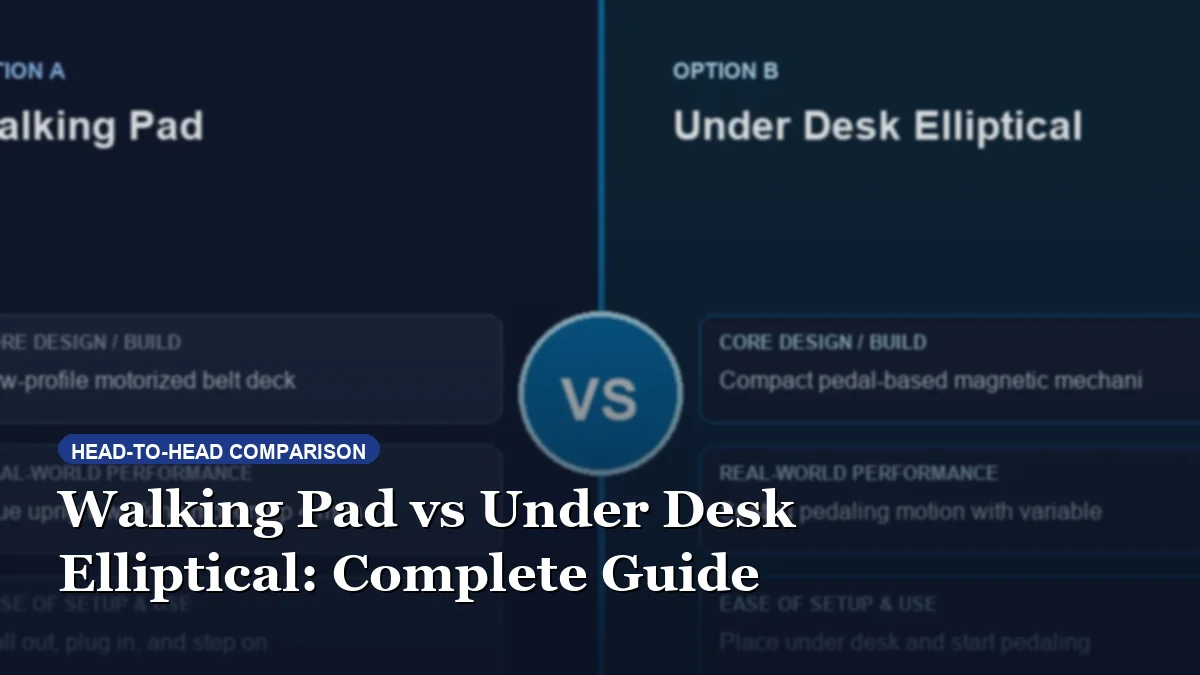
Choose the walking pad for genuine step counts and natural stride mechanics, or select the under desk elliptical if you have strict clearance limits and need absolute seated stability.
Compare all top models in our Best Treadmill: Top Home Fitness Picks (2026 Guide).
Side-by-Side Breakdown
| Criteria | Walking Pad | Under Desk Elliptical | Edge |
|---|---|---|---|
| Core Design / Build | Low-profile motorized belt deck | Compact pedal-based magnetic mechanism | Side A |
| Real-World Performance | True upright walking motion up 4 mph | Seated pedaling motion with variable resistance | Side A |
| Ease of Setup & Use | Roll out, plug in, and step on | Place under desk and start pedaling immediately | Side B |
| Durability & Reliability | Requires belt lubrication and motor checks | Fewer moving friction points, sealed bearings | Side B |
| Efficiency / Operating Footprint | Longer deck profile requiring floor storage | Compact footprint fitting under standard desks | Side B |
| Maintenance Requirements | Monthly belt alignment and silicone lubrication | Occasional crank tightening and dust wiping | Side B |
| Best Ideal Use Case | Active standing desks and true step goals | Low clearance cubicles and seated multitasking | Side B |
Core Design & Engineering Differences
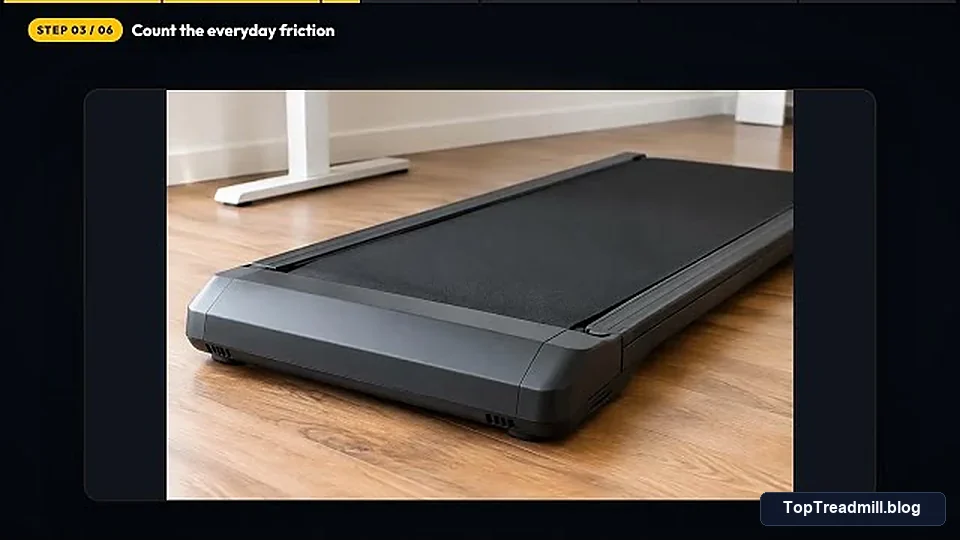
Engineering active office equipment requires balancing structural integrity with spatial constraints. A walking pad features a motorized running belt housed inside a slim frame, replicating traditional treadmill mechanics.
Conversely, an under desk elliptical utilizes a flywheel and magnetic resistance assembly. For alternative motorized models, check out our curated best under desk walking pads collection for home offices.
Weight distribution also varies significantly between these two office fitness devices. Walking pads are heavier and longer, while ellipticals feature compact frames designed to slide easily beneath standard office chairs.
- Walking pads use continuous-duty direct current motors ranging from 1.5 to 2.5 horsepower.
- Under desk ellipticals rely on heavy internal flywheels ranging from 14 to 20 pounds for smooth pedal strokes.
- Deck thickness on walking pads generally stays under five inches to maintain low step-up heights.
Mechanical Drive Systems
Drive systems dictate how power transfers from the internal components to your body. Walking pads transfer motor torque directly to a low-friction walking belt via durable poly-V drive belts.
Ellipticals convert rotational leg force through an internal crank arm and resistance strap. This design creates a smooth circular path that completely isolates your lower body muscles while sitting.
- Walking pad belts require precise tensioning to prevent dangerous slipping during use.
- Elliptical resistance systems use permanent magnets to adjust pedal tension silently.
Real-World Performance & Biomechanics
Evaluating real-world performance involves examining how each machine interacts with human biomechanics. Walking pads encourage a natural upright posture, prompting users to engage their core stabilizers during work hours.
Under desk ellipticals lock your torso into a seated position. If you require higher weight limits, explore our best heavy duty under desk walking pad recommendations for heavy-duty options.
Stride length and pedal stroke radius define the comfort of each device. Walking pads offer unlimited stride length, whereas ellipticals restrict your feet to a fixed, circular pedal trajectory.
- Walking pad speeds typically range from 0.5 to 4.0 miles per hour for safe multitasking.
- Ellipticals offer infinite micro-adjustments in magnetic resistance rather than high velocity.
- Calorie burn is notably higher on walking pads due to weight-bearing bipedal locomotion.
Stride Mechanics and Posture
Maintaining proper ergonomics while typing requires understanding how your limbs move. Walking pads require elevated standing desks to prevent awkward typing angles and shoulder strain.
Ellipticals let you keep your chair at standard desk height because your knees stay low. However, poorly adjusted desk heights can still cause your knees to strike the underside of the surface.
- Upright walking promotes better lower back extension throughout long work sessions.
- Seated pedaling can sometimes cause slouching if the chair rolls backward away from the desk.
Office Integration & Ergonomic Setup
Integrating active gear into an office workspace demands careful maintenance. Before setting up your machine, consult our guide to lubricating your walking pad for long-term belt longevity.
Under desk ellipticals excel in tight spatial environments where a full treadmill won't fit. Their compact footprint allows workers to use them inside standard cubicles without rearranging office furniture.
Cable management and power outlet availability also influence your daily setup routine. Motorized walking pads require grounded wall plugs, whereas many compact ellipticals operate entirely on battery-powered consoles.
- Walking pads need at least five feet of clearance behind the desk for safe storage.
- Ellipticals slide under desks effortlessly and require minimal peripheral room clearance.
- Stand-up desk converters must accommodate the added height of a walking pad platform.
Workspace Clearance Requirements
Clearance dimensions dictate whether active equipment will disrupt your workflow. Walking pads elevate your standing height by several inches, necessitating adjustments to monitor arms and keyboard trays.
Ellipticals keep your torso at desk height, meaning your eye-level ergonomics remain completely undisturbed. This makes them significantly easier to integrate into traditional, non-adjustable office furniture layouts.
- Check vertical knee clearance to ensure your shins never hit the desk underside.
- Ensure chair wheels lock securely to prevent sliding backward while pedaling.
Maintenance, Efficiency & Longevity
Long-term ownership costs depend heavily on routine maintenance and mechanical complexity. Walking pads feature more wearing parts, including running belts, walking decks, and lubrication reservoirs that need attention.
Under desk ellipticals boast exceptional durability due to their sealed bearing assemblies. Without friction belts or running decks to replace, these units generally require very little ongoing upkeep.
Energy consumption differs between the two categories as well. Walking pad motors draw continuous electrical current under load, while magnetic ellipticals consume minimal power solely for digital consoles.
- Walking pads require monthly silicone oil lubrication underneath the running belt.
- Ellipticals only need periodic bolt tightening and dust removal from the casing.
- Motor brushes in cheaper walking pads may eventually wear down after heavy use.
Preventative Upkeep Schedules
Establishing a regular maintenance routine prevents premature component failure. Walking pads demand careful belt alignment checks to prevent friction wear along the outer plastic side rails.
Ellipticals require virtually no belt alignment but benefit from occasional crank arm inspections. Keeping the exterior clean protects internal magnetic resistance arrays from accumulating office dust.
- Inspect walking pad belts every thirty days for proper centering tension.
- Wipe down elliptical pedals weekly to remove sweat and particulate debris.
Noise Profiles & Workplace Discretion
Maintaining a quiet workspace is crucial for shared offices or open-plan environments. Walking pads emit a distinct rhythmic thumping sound as each footstrike hits the internal deck platform.
Ellipticals operate much more quietly because your feet never leave the pedals. The smooth magnetic resistance system produces a faint whirring noise that remains virtually imperceptible during virtual meetings.
Floor vibration is another factor that can disturb neighboring colleagues or downstairs neighbors. Walking pads transmit more impact shock through flooring than seated pedal exercisers do.
- Walking pad decibel levels typically range from 50 to 65 dB at low speeds.
- Under desk ellipticals usually operate below 45 dB, ensuring complete discretion.
- Using thick rubber equipment mats successfully dampens floor vibrations from both units.
Acoustic Dampening Solutions
Minimizing operational noise keeps office environments peaceful and productive. Placing a high-density rubber mat underneath your walking pad absorbs high-frequency impact vibrations effectively.
Ellipticals rarely require extra acoustic flooring because their smooth pedaling motion generates minimal structural resonance. Regular lubrication of pedal pivots prevents annoying squeaks from developing over time.
- High-density equipment mats reduce walking pad impact sound transmission significantly.
- Silicone spray eliminates unexpected squeaks in elliptical pedal pivot joints.
Joint Impact & Rehabilitation Factors
Understanding joint loading helps users select equipment that supports their physical recovery goals. Walking pads involve low-velocity weight-bearing impact, which helps build lower body bone density over time.
Ellipticals offer a zero-impact exercise environment by keeping your feet anchored. This makes them ideal for individuals recovering from knee or ankle injuries who still want active movement.
Consulting a physical therapist ensures your chosen device aligns with any specific orthopedic restrictions you might manage during your regular workday.
- Walking pads place moderate compressive loads on knee and hip joints.
- Ellipticals completely eliminate jarring impact forces through smooth circular pedaling.
- Both devices encourage healthy circulation throughout the lower extremities during sedentary work.
Orthopedic Considerations
Assessing your personal joint health prevents aggravating chronic pain conditions. Users with severe lower back issues often prefer walking pads because they encourage natural spinal alignment.
Conversely, individuals managing acute knee arthritis find seated ellipticals much more comfortable. The fixed pedal trajectory avoids the repetitive heel strike shock associated with walking.
- Walking encourages natural core activation and spinal extension.
- Seated pedaling protects vulnerable knee joints from heavy impact shock.
Which Option Fits Your Setup
Selecting the right equipment ultimately depends on your workspace layout and fitness aspirations. To find top-rated options, review our best walking pad for standing desk roundup featuring verified models.
If your workspace has strict clearance limitations or you prefer multitasking without breaking a sweat, an under desk elliptical delivers superior convenience and effortless daily compliance.
Evaluate your daily routine, available floor space, and acoustic requirements carefully before making your final purchasing decision to ensure long-term satisfaction.
- Choose walking pads for active standing, high calorie burn, and natural strides.
- Select under desk ellipticals for compact cubicles, quiet operation, and joint safety.
- Always measure your under-desk clearance before ordering any active office gear.
Making Your Final Choice
Making a confident investment requires weighing physical benefits against practical constraints. Walking pads demand more floor space and routine maintenance but offer unmatched cardiovascular engagement.
Ellipticals provide a seamless, low-maintenance entry point into active working with zero learning curve. Match your choice to your office environment for the best results.
- Assess your desk height adjustability before purchasing a walking pad.
- Verify that your office chair stays put while using a seated pedal machine.
Frequently Asked Questions
Can you actually type effectively while using a walking pad?
Typing proficiency drops slightly at speeds above two miles per hour. Most users find 1.2 to 1.5 mph optimal for working without errors.
Do under desk ellipticals burn a significant number of calories?
They burn fewer calories than walking pads but still increase your daily energy expenditure. Consistent daily use helps counteract the negative health effects of extended sedentary sitting.
Which machine is quieter during video conference calls?
Under desk ellipticals are generally quieter because they lack motor noise. Their smooth magnetic resistance systems ensure complete audio discretion during meetings.
How often do walking pads require belt lubrication?
Most manufacturers recommend applying silicone lubricant every thirty days. Regular maintenance prevents friction damage and extends the motor lifespan significantly.
Will an under desk elliptical cause my knees to hit the desk?
This depends entirely on your desk height and leg length. Ensuring adequate vertical knee clearance prevents uncomfortable accidental impacts while pedaling.