How to Lubricate a Walking Pad Belt? Maintenance Tips
Proper lubrication reduces friction, prevents motor strain, and extends the operational lifespan of your walking pad deck. Regular maintenance ensures safe, quiet daily movement.

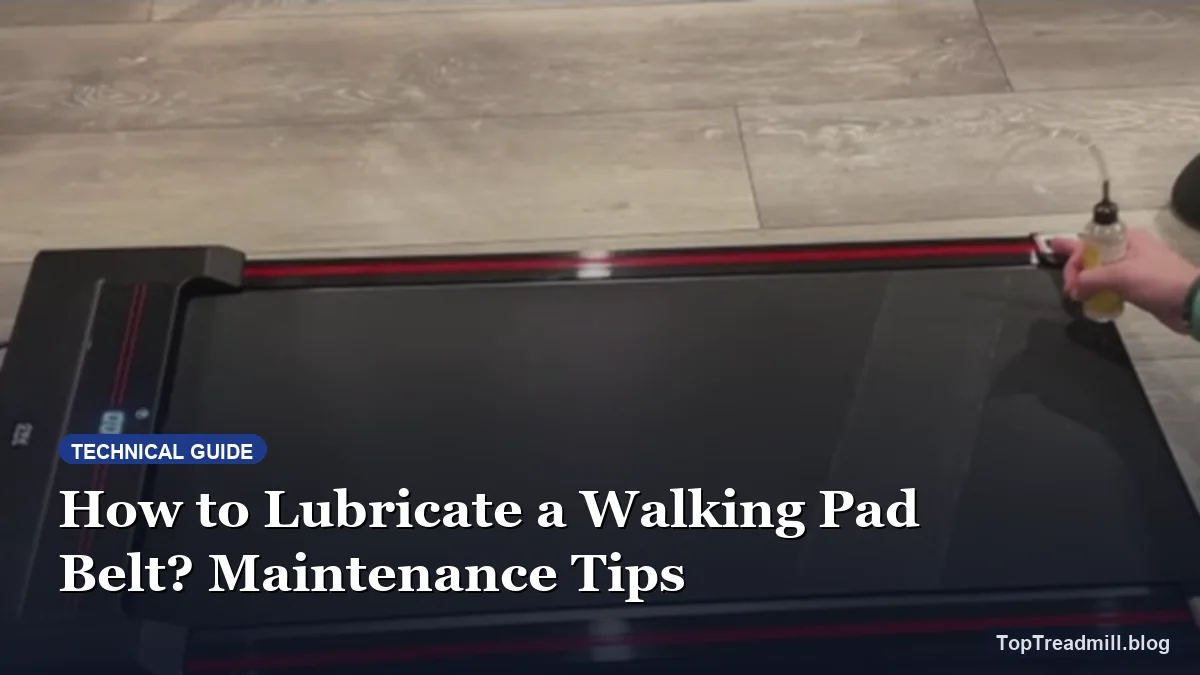
Always disconnect power and apply exactly one-half ounce of pure silicone directly beneath the center of the running belt. Never use petroleum-based oils that damage internal electronic components.
Ready to compare models? Start with our Best Treadmill: Top Home Cardio & Under-Desk Picks (2026).
Practical Quick-Reference Table
| Scenario / Metric | Recommended Target | Why It Matters |
|---|---|---|
| Silicone Viscosity | 100-percent pure fluid | Prevents chemical breakdown |
| Application Volume | 15 to 30 milliliters | Avoids deck oversaturation |
| Maintenance Interval | Every 40 to 50 hours | Controls friction coefficient |
| Break-in Speed | 1.0 to 1.5 miles per hour | Distributes fluid evenly |
| Tension Tolerance | 1 to 2 inches of slack | Prevents premature roller wear |
| Power Status | Completely unplugged | Eliminates electrical shock risks |
Understanding Walking Pad Friction Dynamics and Deck Materials
Walking pads rely on continuous interaction between a low-profile synthetic belt and a laminated fiberboard deck. Over time, high foot-strike pressure forces out factory lubricants, increasing the coefficient of friction.
Without adequate fluid barriers, friction generates excessive heat beneath the belt. Managing this heat is especially important when evaluating options featured in our comprehensive best walking pad treadmill roundup.
Composite decks require specialized maintenance because they lack the massive structural frames found on traditional commercial treadmills. Maintaining low surface friction protects both the motor controller and the internal wiring harnesses.
Environmental dust and carpet fibers frequently migrate beneath the running belt during active use. These abrasive particles mix with old fluid, creating a paste that accelerates wear on both rollers.
- Monitor walking pad amperage draw during extended workout sessions.
- Inspect composite deck surfaces for microscopic thermal cracking signs.
- Keep workout areas free from floating dust and carpet lint particles.
- Identify unusual squeaking sounds originating from the front drive roller.
Thermal Analysis of Unlubricated Walking Decks
Infrared measurements show unlubricated walking pads reaching surface temperatures exceeding one hundred degrees Fahrenheit within minutes. This extreme heat softens the polyvinyl chloride belt layer and damages internal resins.
Controlling this thermal expansion requires maintaining a slick boundary layer using precise lubricant formulations. Regular fluid replenishment keeps operating temperatures stable during extended walking intervals.
- Check deck temperature immediately following a brisk walking session.
- Prevent permanent delamination of the fiberboard deck laminates.
Essential Tools and Pure Silicone Lubricant Specifications
Selecting the correct fluid protects sensitive electronics, a key factor for equipment recommended in our best walking pad for seniors guide. Always utilize 100-percent pure silicone oil without petroleum additives.
Petroleum-based lubricants dissolve rubber components, cause irreversible belt swelling, and void manufacturer warranties. Pure silicone maintains stable viscosity across varied room temperatures without leaving sticky residue.
Gather a long applicator nozzle bottle, clean microfiber cloths, hex adjustment wrenches, and protective nitrile gloves. Proper preparation prevents accidental spills on your flooring or internal motor housing.
Avoid multi-purpose household sprays because they contain harmful aerosol propellants that degrade polyvinyl chloride. Dedicated treadmill lubricants ensure safe chemical compatibility with your specific machine.
- Verify the fluid bottle explicitly states pure silicone composition.
- Keep hex keys matching your specific machine bolts close at hand.
- Prepare lint-free microfiber towels for wiping excess surface runoff.
- Store lubricant containers away from direct sunlight and extreme heat.
Chemical Compatibility of Synthetic Running Belts
Modern walking pad belts utilize multi-ply polyester and PVC weaves designed for low-friction operation. Incompatible chemical sprays react with these synthetic polymers, causing embrittlement and premature belt failure.
Pure silicone remains chemically inert when applied to standard treadmill belt undersides and phenolic decks. This stability preserves factory elasticity and prevents dangerous slipping incidents during use.
- Test lubricant drops on hidden belt edges if unsure of composition.
- Ensure zero solvent odors emit from your chosen maintenance fluid.
Video Walkthrough: How to Lubricate A Treadmill or Walking Pad
Step-by-Step Belt Loosening and Access Procedures
Before applying fluid, completely disconnect your machine from the power source. This vital safety step applies equally whether you use a compact model or a heavy-duty machine from our walking pad vs treadmill comparison.
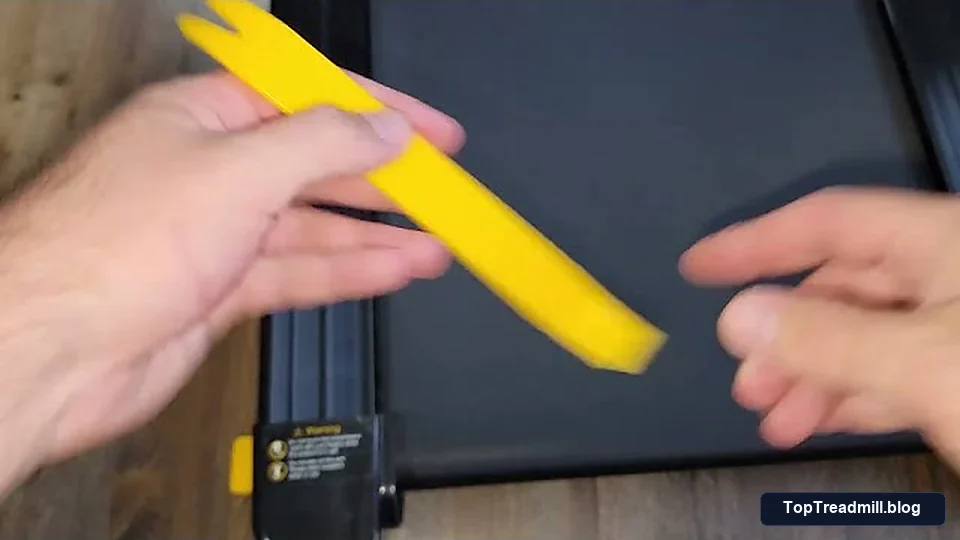
Locate the rear roller tension bolts positioned on both end caps of the walking pad frame. Insert your matching hex wrench and rotate counterclockwise precisely one full turn on each side.
Count your rotations carefully to ensure equal adjustment pressure on both the left and right sides. Uneven bolt adjustments will cause the running belt to track severely toward one edge.
Lift the outer edge of the running belt upward to inspect the internal deck and roller conditions. The loosened tension allows easy access for your fluid applicator nozzle.
- Unplug the power cord from the wall outlet before servicing.
- Mark initial bolt positions with a marker for accurate retightening.
- Count exact wrench rotations to maintain balanced frame geometry.
- Lift belt edges gently to avoid stretching the polyester backing.
Managing Rear Roller Bolt Thread Tension
Over-loosening rear adjustment bolts can disengage internal threaded T-nuts inside the aluminum frame extrusions. Make controlled, incremental turns to maintain proper alignment throughout the entire maintenance procedure.
Keep track of washers and spacers if your specific walking pad model utilizes them. Proper hardware placement ensures smooth tension adjustments during the final calibration phase.
- Never remove rear tension bolts completely from their sockets.
- Keep internal metal threads clean from accumulated dust debris.
Precision Application Methods for Optimal Coverage
Insert the long nozzle of your silicone bottle underneath the center of the loosened running belt. Apply a steady stream of fluid spanning from the front motor housing toward the rear roller.
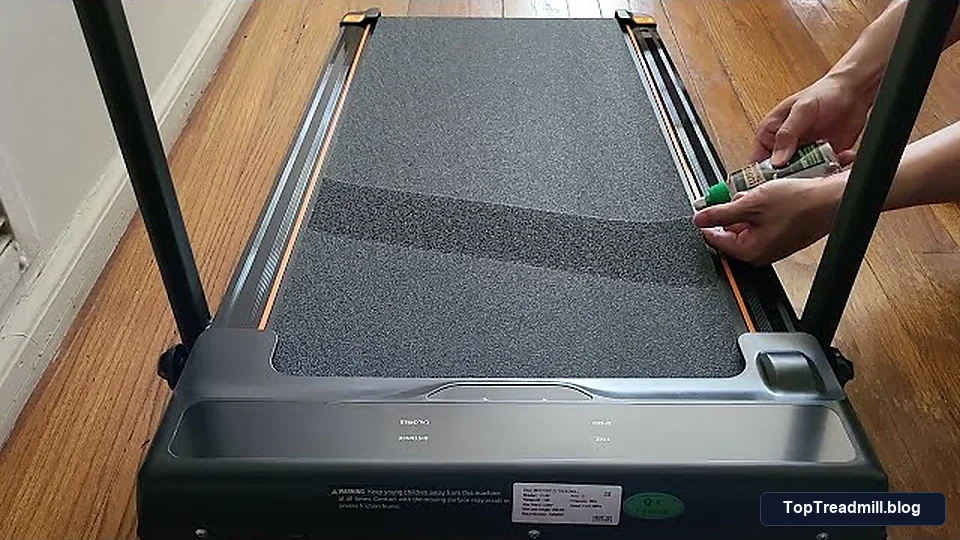
Administer approximately fifteen to twenty milliliters of fluid in a zig-zag or straight line pattern. Avoid over-application, as excess fluid will cause the drive roller to slip dangerously against the belt.
Repeat the application process across the entire board surface for balanced distribution. Calculating exact surface areas ensures proper coverage, similar to using our precise deck size calculator during equipment sizing.
Wipe away any accidental drips on the outer plastic housing or walking pad frame immediately. Slippery exterior surfaces create safety hazards when stepping on and off the machine.
- Measure fluid volume accurately using marked applicator bottles.
- Center the application path to ensure natural foot-strike coverage.
- Clean up stray fluid drips immediately using microfiber towels.
- Inspect the entire deck underside for uniform fluid sheen.
Avoiding Deck Oversaturation and Slippage Risks
Applying too much silicone creates hydrostatic lock conditions where the belt floats uncontrollably over the drive roller. This dangerous lack of traction prevents the motor from properly gripping the running surface.
If oversaturation occurs, wipe the deck thoroughly with dry cloths and run the belt slowly. Allow residual film to absorb completely before attempting any high-speed walking sessions.
- Limit initial applications to small recommended volume amounts.
- Test belt traction carefully before starting standard exercise routines.
Post-Lubrication Belt Centering and Tension Calibration
After applying the fluid, retighten the rear roller bolts by rotating them clockwise the exact same turn count. Restoring original tension prevents the running belt from slipping during active foot strikes.
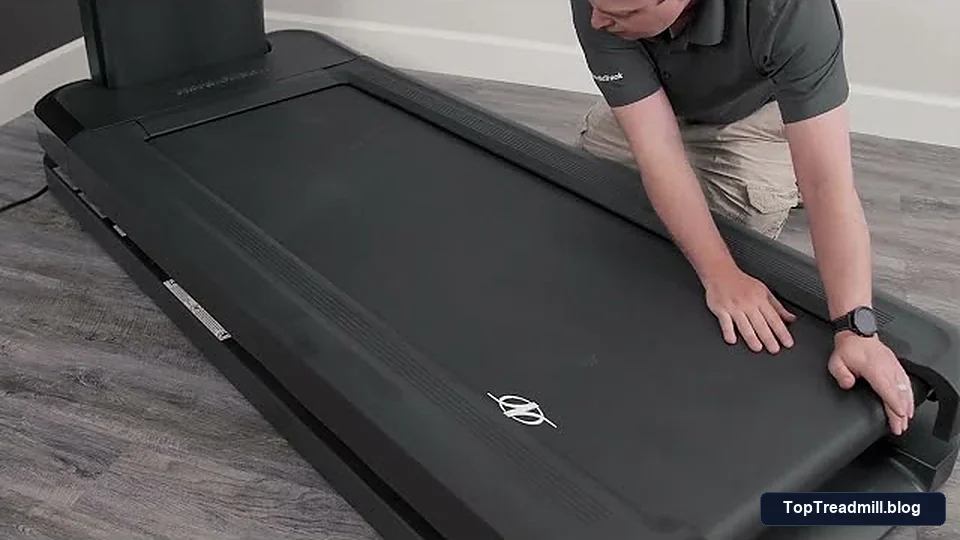
Plug the walking pad power cord back into a properly grounded electrical wall outlet safely. Turn on the master power switch and prepare to initiate belt centering verification protocols.
Start the walking pad at a very slow speed of one mile per hour without stepping on. Observe whether the belt drifts toward the left or right side of the deck.
Make fractional quarter-turn adjustments on the rear tension bolts to correct any lateral belt drifting. Proper centering prevents edge fraying and protects the side rail components.
- Restore exact initial bolt turns to maintain baseline tension.
- Run the walking pad empty at slow speeds during calibration.
- Make micro-adjustments to rear bolts to correct lateral belt drift.
- Keep fingers clear of moving rollers during live alignment tests.
Fine-Tuning Lateral Belt Tracking Under Power
If the running belt drifts toward the right rail, insert your hex wrench into the right bolt. Rotate it clockwise a quarter turn while watching the belt edge return to center.
Allow the walking pad to cycle for two full minutes after each minor adjustment. Patience during calibration prevents over-correcting and damaging the internal roller bearings.
- Perform quarter-turn adjustments exclusively on the lagging side.
- Verify uniform clearance between belt edges and side rails.
Break-In Walking Protocols and Safety Verification
Before resuming normal workouts, walk slowly on the pad at one mile per hour for five minutes. This low-speed phase distributes the silicone evenly across the entire friction interface.
Step carefully across the center of the belt while holding safety handrails if available on your model. Confirm that your feet experience stable traction without any unexpected slipping sensations.
Listen closely for abnormal mechanical noises, grinding sounds, or motor strain during the break-in cycle. Smooth, quiet operation indicates successful lubrication and proper mechanical alignment.
Wipe down the console and side rails to remove any residual oils transferred during servicing. Maintaining a clean operational environment prevents dust accumulation on freshly lubricated surfaces.
- Complete a mandatory five-minute low-speed break-in walking cycle.
- Test foot traction cautiously while holding unit grab handles.
- Listen for smooth motor operation free from straining noises.
- Sanitize control surfaces before beginning your next formal workout.
Final Safety Checks Before Resuming Daily Routines
Inspect the emergency safety key magnetic attachment to ensure reliable engine cutoff functionality. A responsive safety tether protects users from accidental falls during sudden speed changes.
Verify that power cords are routed safely away from moving parts and foot traffic zones. Proper cable management prevents tripping hazards and accidental cord disconnections.
- Test magnetic safety lanyard shutdown response immediately.
- Check power cord routing for pinch points near folding joints.
Preventative Maintenance Schedules and Environmental Factors
Establish a consistent maintenance schedule based on your weekly walking pad usage hours and intensity. Most manufacturers recommend applying fresh silicone every forty to fifty operating hours.
Users walking daily at brisk paces should check lubrication levels on a monthly calendar schedule. High-temperature environments or heavier user body weights require more frequent fluid replenishment.
Keep a maintenance log near your walking pad to track service dates and total operating hours accurately. Documenting maintenance history prevents neglected friction buildup and extends machine longevity.
Consider placing an equipment mat underneath your walking pad to reduce floor vibration and dust intake. Mats prevent carpet fibers from entering the motor compartment through bottom ventilation ports.
- Schedule lubrication tasks every forty to fifty operating hours.
- Adjust maintenance frequency based on user weight and daily mileage.
- Maintain a written service log near your walking pad equipment.
- Use protective equipment mats to minimize dust and carpet lint.
Environmental Impact on Lubricant Longevity
Dry indoor climates and forced-air heating systems cause silicone lubricants to evaporate faster from open decks. Monitor your walking pad more frequently during dry winter months to prevent friction spikes.
Humid environments encourage moisture condensation inside electronic housings, requiring strict adherence to cleaning routines. Balancing environmental factors ensures peak performance across all seasonal changes.
- Increase inspection frequency during dry winter heating seasons.
- Protect equipment from excessive humidity and moisture exposure.
Frequently Asked Questions
How often should I lubricate my walking pad belt?
Apply fresh silicone every forty to fifty hours of active walking use. High daily mileage requires more frequent maintenance intervals.
Can I use standard WD-40 or cooking oil instead?
Never use petroleum oils or standard WD-40 sprays because they destroy rubber belts. Always choose 100-percent pure silicone fluid for safety.
What happens if I apply too much lubricant?
Excessive fluid causes the belt to slip against the drive roller. Wipe away surplus oil immediately to restore proper traction and motor grip.
Do I need to loosen the belt before applying fluid?
Yes, loosening the rear bolts allows easy nozzle access beneath the center. Always track your wrench turns to restore exact tension afterward.
How do I test if my walking pad needs lubrication?
Reach your hand beneath the belt to check for dry deck surfaces. A completely dry feel indicates it is time for fresh silicone application.