Why Does My Walking Pad Slip at High Speed?
Walking pad belts frequently slip when high operational speeds demand maximum friction. Proper tension and alignment instantly resolve this annoying mechanical issue.

Slippage occurs when belt tension drops below the required threshold for high-speed footstrikes. Always adjust the rear roller bolts incrementally using a hex wrench to restore proper tracking.
Ready to compare models? Start with our Best Treadmill: Top Home Cardio & Under-Desk Picks (2026).
Practical Quick-Reference Table
| Scenario / Metric | Recommended Target | Why It Matters |
|---|---|---|
| Belt Tension | 1-2 inches lift | Prevents motor stalling |
| Adjustment Increment | 1/4 turn max | Avoids over-tightening bearings |
| Silicone Lube | 100% pure fluid | Reduces running friction safely |
| Lubrication Interval | Every 30-50 hours | Protects deck lamination layers |
| Running Speed | Max rated limit | Prevents premature belt stretch |
| Roller Alignment | Center tracking | Stops edge fraying damage |
Anatomy of Low-Profile Motorized Walking Surfaces
Compact walking pads utilize unique internal engineering to maintain a low profile. Understanding these core mechanical components helps diagnose high-speed slip.
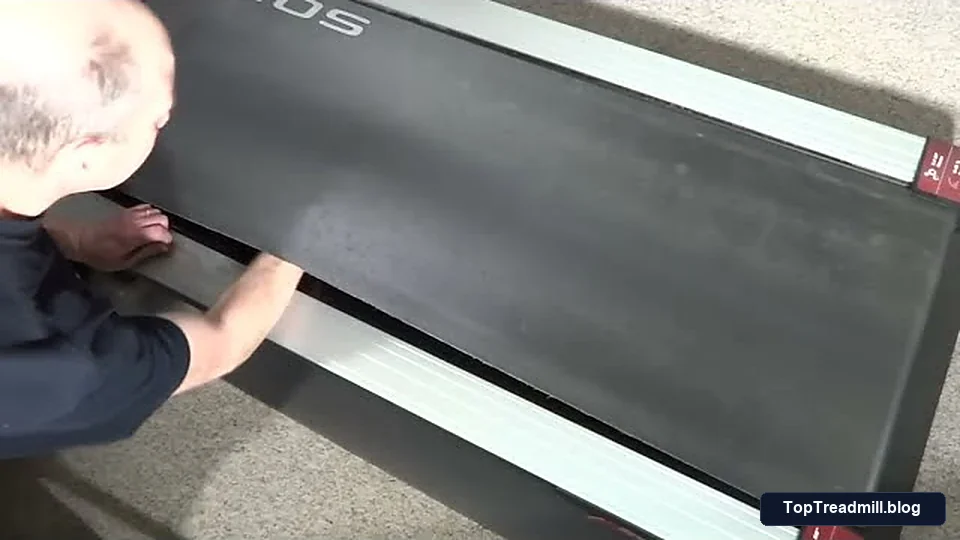
Unlike bulky club treadmills, walking pads feature smaller drive rollers and thinner running belts. These compact dimensions reduce overall torque capacity significantly.
When comparing equipment options in our walking pad vs treadmill comparison, structural design limits become clear. Faster strides exert intense downward force, causing momentary belt slippage if friction fails.
Drive motors rely on continuous friction between the belt interior and the front roller surface. Any reduction in this surface friction causes immediate rotational hesitation.
Modern walking pads utilize compact, low-profile designs featuring a continuous PVC running belt looped over front drive rollers and rear idler rollers. These surfaces lack the bulky elevation mechanisms found in traditional heavy treadmills.
Beneath the belt lies a thin composite deck supported by rubber elastomers or foam dampening pads. This layered construction absorbs impact while maintaining a total frame thickness that rarely exceeds six inches off the floor.
The compact direct-drive or brushless DC motor mounts directly to the front roller axle. This layout transfers rotational torque instantly, yet it places immense friction demands on the belt tension when users push past four miles per hour.
Understanding this streamlined architecture is crucial because minor misalignments compound rapidly at higher velocities. Without deep clearance margins, any belt slack immediately manifests as noticeable mechanical hesitation or sudden jerky slipping sensations.
- Compact motors demand precise mechanical tolerances for stable operation.
- Thinner running belts stretch faster under heavy user weight loads.
- Small drive rollers have less surface contact area than gym units.
- High speeds amplify minor tension imbalances into major slip events.
The Physics of High-Speed Friction Transfer
Friction transfer dictates how efficiently motor torque translates into belt movement. High speeds require optimal surface traction to prevent loss of momentum.
When moisture, dust, or worn lubricants interfere, the friction coefficient drops. Your foot then outpaces the belt rotation, creating a noticeable hesitation.
- Low friction coefficients trigger immediate belt hesitation.
- Footstrike impact forces spike exponentially at higher speeds.
Isolating the Root Causes of Speed-Dependent Slippage
Belt slippage during fast sessions usually stems from specific mechanical wear patterns. Pinpointing the exact trigger prevents unnecessary part replacements.
Loose rear tension bolts represent the single most common culprit behind slippage. Factory stretching occurs naturally during the first few weeks of heavy use.
Another frequent issue involves excessive deck lubrication pooling underneath the belt. Too much silicone oil destroys the necessary traction between roller and belt.
Inspect the drive belt connecting the motor pulley to the front roller as well. A worn or loose internal drive belt mimics running belt slippage.
When evaluating models featured in our best walking pad treadmill guide, high-speed slipping usually stems from insufficient roller tension. Increased belt velocity overcomes a loose spindle grip.
Another frequent culprit involves thermal belt expansion. Friction generates localized heat during rapid strides, causing the synthetic belt material to temporarily stretch, which temporarily reduces surface friction against the primary steel drive roller.
Inspect the underside for glazed spots or worn drive ridges. A contaminated roller surface slicked with excess silicone oil or fine rubber dust will inevitably lose traction once motor RPM exceeds normal walking thresholds.
Finally, assess your stride dynamics. Heavy heel strikes exert immense forward shear force on the belt. If the rear roller lacks adequate clamping pressure, the belt halts momentarily before catching up with the motorized drive.
- Factory belt stretch requires initial break-in tension adjustments.
- Excessive liquid silicone creates dangerous hydroplaning effects.
- Internal drive belts can slip independently of the running surface.
- Worn roller bearings increase rotational resistance and drag.
Differentiating Belt Slip from Motor Stalling
Users often confuse belt slippage with electronic motor stalling or hesitation. True belt slip lets you feel the deck keep moving while your foot halts.
Motor stalling stops the entire front roller and belt assembly simultaneously. Listen closely to the motor housing to identify the exact failure mode.
- Belt slip allows the motor to keep spinning freely.
- Motor stalls cut power and trigger electronic error codes.
Video Walkthrough: How To Fix A Slipping Treadmill Belt
Step-by-Step Roller Tensioning and Calibration Guide
When assisting less mobile users featured in our best walking pad for seniors roundup, proper tension calibration requires extreme patience and precise hand tool usage. Never rush maintenance adjustments.
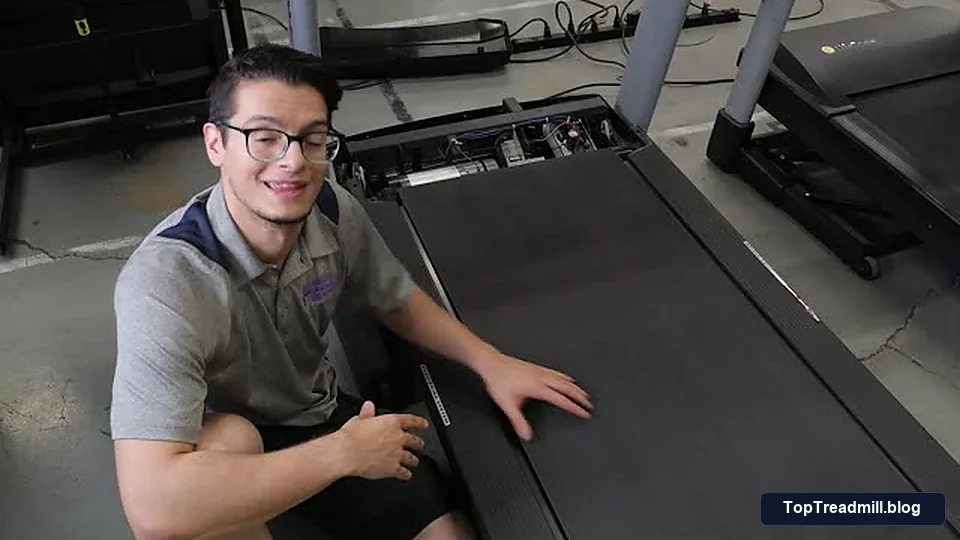
Locate the access ports at the rear end of your walking pad frame. Insert your hex key into the left and right tension bolts securely.
Turn both bolts clockwise by exactly one-quarter turn to increase overall belt tension. Equal turns on both sides maintain proper running belt alignment.
Test the walking pad at a moderate speed before attempting high speeds. If slippage persists, apply another quarter turn to both rear bolts.
Correct tensioning requires precise adjustments using a hex wrench on the rear roller alignment bolts. Always unplug the unit before servicing and make micro-adjustments measuring no more than a quarter turn clockwise.
Rotate both left and right bolts equally to prevent lateral belt drift. Run the walking pad at a moderate speed of two miles per hour to observe whether the running belt centers itself naturally.
Test the tension by walking cautiously at your target high speed. If the belt stalls under your foot weight, tighten both rear bolts by another eighth turn until the slipping behavior completely disappears.
Avoid overtightening the system, as excessive tension destroys internal bearing assemblies and strains the drive motor. You should be able to lift the belt edge roughly two inches off the deck with moderate force.
- Always use a calibrated hex wrench matching your machine specs.
- Never exceed a total of one full rotation during adjustments.
- Test stability gradually across ascending speed increments.
- Keep hands clear of moving parts while testing adjustments.
Fine-Tuning Belt Tracking During Calibration
Adjusting tension frequently knocks the running belt slightly off-center. Watch the gap between the belt edge and side rails carefully.
If the belt drifts toward the right, turn the right bolt clockwise. This simple correction steers the moving belt back to center.
- Monitor side rail clearances while running at low speeds.
- Make microscopic adjustments to avoid chronic edge rubbing.
Proper Lubrication Protocols for Low-Profile Decks
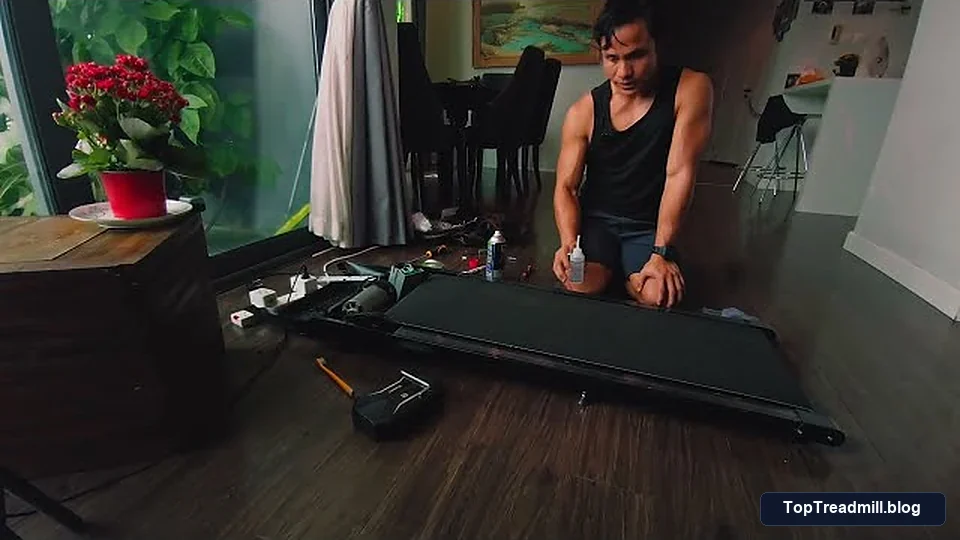
Using data from our treadmill deck size calculator, maintaining optimal surface lubrication prevents friction spikes that mimic loose belts. Inadequate lube creates severe drag, whereas excessive application causes dangerous slippage.
Always use 100% pure silicone oil formulated specifically for fitness equipment. Never use petroleum-based oils that degrade internal belt linings.
Lift the edge of the running belt and apply a thin zigzag bead. Distribute the fluid evenly across the center third of the walking deck.
Run the walking pad at a slow pace for several minutes to distribute lubricant. Wipe away any excess fluid that squeezes out the sides.
Low-profile walking pads require specialized 100% silicone lubricant applied directly beneath the running belt. Never use petroleum-based oils or standard household sprays, as these degrade the proprietary deck coating and trap harmful debris.
Lift the edge of the belt near the midpoint and apply a thin zigzag bead spanning about half the deck width. Most manufacturers recommend dispensing roughly five to ten milliliters of fluid per maintenance session.
After applying the fluid, run the walking pad at a slow speed for three minutes to distribute the lubricant evenly. Walk gently on the belt to press the oil into dry friction points.
Establish a strict schedule based on your usage frequency. High-speed running or walking sessions demand lubrication every 30 hours of use to prevent friction spikes that mimic mechanical belt slippage issues.
- Pure silicone oil preserves sensitive walking pad deck materials.
- Apply lubricant every thirty to fifty hours of active use.
- Avoid spraying oil near the front motor housing vents.
- Wipe excess fluid immediately to restore proper surface grip.
Cleaning Debris from the Drive Roller Interface
Dust and carpet fibers frequently collect around the front drive roller. This buildup disrupts friction transfer and encourages belt slippage.
Unplug the machine before removing any plastic motor housing covers. Use a soft brush to clear away accumulated dust and hair.
- Always disconnect power before opening housing covers.
- Clear stubborn debris using compressed air canisters safely.
Preventative Maintenance and Safe Operation Standards
Establishing a consistent maintenance routine eliminates unexpected high-speed slippage incidents. Proactive care extends the operational lifespan of your walking pad significantly.
Check belt tension and alignment during your monthly equipment inspection. Catching minor alignment drift early prevents permanent edge fraying damage.
Ensure your walking pad rests on a flat, hard surface. Thick carpets compress unevenly, warping the frame and destabilizing belt tension.
Adhere strictly to the maximum weight capacity specified by the manufacturer. Overloading the walking pad stretches the belt beyond its elastic limits.
Long-term operational reliability relies on consistent cleaning routines. Wipe down the motor housing and running surface weekly to clear away sweat accumulation and dust that infiltrates internal drive rollers and electronic sensors.
Always inspect the electrical cord and emergency safety tether before every session. A secure magnetic stop key is mandatory to prevent accidental falls if high-speed belt slipping causes a sudden loss of user footing.
Keep the floor area beneath the walking pad entirely clear of obstructions to ensure proper motor ventilation. Overheating electronics can trigger sudden speed drops or erratic controller behavior during extended high-intensity workouts.
Adhering to strict weight capacity limits preserves structural integrity. Exceeding the maximum recommended user load accelerates deck wear, compromises tension retention, and drastically increases the likelihood of chronic speed-dependent slippage.
- Perform monthly tension and alignment check routines faithfully.
- Place equipment on hard flooring to prevent frame warping.
- Respect user weight limits to preserve belt elasticity.
- Keep the workout area free of airborne dust and pet hair.
Recognizing When a Running Belt Requires Replacement
Even with perfect maintenance, running belts eventually wear out completely. Persistent slippage despite maximum tension indicates stretched fibers.
Inspect the underside of the belt for glazing or cracking signs. Replace aged belts promptly to protect the underlying motor controller.
- Look for visible glazing on the belt underside fabric.
- Persistent tension loss signals permanent material fatigue.
Video Walkthrough: Lubrication
Frequently Asked Questions
Why does my walking pad only slip when I run fast?
High speeds generate heavier footstrike impact forces that overcome loose belt tension. Tightening your rear roller bolts restores the necessary friction for fast walking.
How tight should my walking pad belt actually be?
The belt should lift roughly one to two inches off the deck with moderate finger pull. Avoid over-tightening, as this ruins roller bearings and strains motors.
Can too much lubricant cause belt slippage?
Excess silicone oil creates a slick hydroplaning effect between the belt and rollers. Clean the deck thoroughly and reapply a much smaller lubricant amount.
How often do I need to tension my walking pad?
New walking pads require frequent tension checks during the initial break-in period. Established units typically only need adjustments every few months of use.
What tools do I need to fix belt slippage?
Most walking pads adjust using a standard hex wrench included in the box. Keep this specific tool handy for quick, periodic alignment corrections.