Proper Running Posture on Incline Treadmill: Form Tips
Correct alignment prevents injury and maximizes cardiovascular output during steep hill simulations. Master your pelvic tilt and foot strike today.

Maintain a slight forward lean from the ankles rather than the waist to protect your lower back while running on elevated motorized decks.
Ready to compare models? Start with our Best Treadmill: Top Home Cardio & Under-Desk Picks (2026).
Practical Quick-Reference Table
| Scenario / Metric | Recommended Target | Why It Matters |
|---|---|---|
| Low Incline (1% to 3%) | Neutral Spine | Simulates flat outdoor wind resistance without altering natural stride mechanics. |
| Moderate Incline (4% to 8%) | Slight Ankle Lean | Engages posterior chain muscles while maintaining lumbar stability during sustained efforts. |
| Steep Incline (9% to 15%) | Pronounced Forward Lean | Shortens stride length to prevent overstriding and reduces impact on patellar tendons. |
| Foot Strike Placement | Midfoot Landing | Prevents damaging braking forces that stress knee joints on moving motorized belts. |
| Arm Swing Motion | 90-Degree Elbow Flex | Counterbalances lower body rotation and maintains upper body torso symmetry. |
| Console Interaction | Brief Handrail Touch | Preserves natural balance without compromising core stabilization or caloric expenditure accuracy. |
Biomechanical Foundations of Elevated Treadmill Running
Running on an inclined motorized belt requires significant adjustments to your normal flat ground biomechanics. Gravity pulls your center of mass backward, demanding active postural compensation from your lower extremities and core musculature.
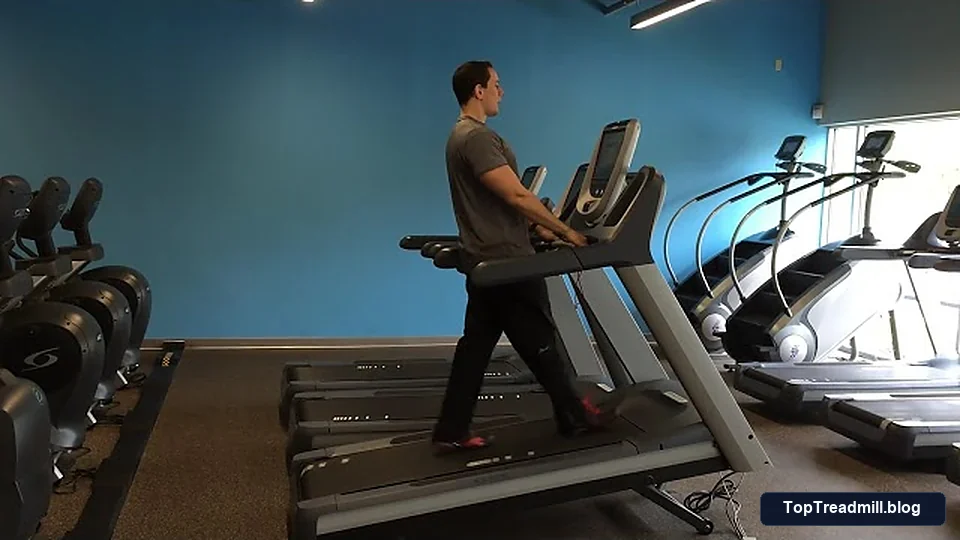
When you raise the deck elevation, your hip flexors must work harder to lift your knees higher. Ignoring this mechanical shift leads to inefficient stride patterns and rapid muscular fatigue throughout your lower back.
Maintaining proper structural alignment prevents excessive stress on your Achilles tendons and calves. Every footstep must land directly beneath your hips to absorb vertical shock forces safely and efficiently every single time.
Advanced treadmill decks feature calibrated hydraulic lifts that alter the running surface angle precisely. Understanding these mechanical changes helps you adapt your running form before minor imbalances develop into chronic overuse injuries.
When running on an incline, your center of mass shifts forward naturally. Choosing the best incline for running on treadmill sessions helps prevent excessive lumbar strain and reduces mechanical efficiency losses.
Elevation angles exceeding eight percent require shorter stride lengths. Overstriding on steep motorized belts places severe shearing stress on patellar tendons and increases the risk of acute hamstring strains during push-off.
Gravity dictates higher vertical displacement requirements on inclines. Runners must actively engage hip flexors to clear the moving running belt without catching the toe box on textured rubber surfaces.
Joint kinematics change drastically as elevation increases from flat ground. Ankle dorsiflexion angles decrease slightly, shifting the primary mechanical load upward to the quadriceps and calves for sustained forward propulsion.
- Keep your gaze focused forward toward the console rather than staring down at your feet.
- Engage your gluteal muscles actively to drive each leg backward during the propulsion phase.
- Avoid leaning your upper torso forward from the hip joint to protect lumbar vertebrae.
- Land softly with your center of gravity centered directly underneath your body mass.
Analyzing Incline Force Vectors and Gravity
Gravity vectors shift dramatically as the running deck increases its incline angle. Your muscular system must generate greater vertical propulsion to counteract these physical resistance forces continuously.
Understanding these vector changes allows runners to optimize their cadence and stride length accordingly. Proper form mitigates unnecessary joint wear while maximizing aerobic conditioning benefits during intense hill sessions.
- Calculate vertical displacement relative to belt speed for optimal pacing.
- Monitor joint stress levels to ensure sustainable long-term training habits.
Expert Insights on Pelvic Alignment and Core Stability
Professional running coaches emphasize the critical role of a stable pelvis during incline workouts. Anterior pelvic tilt frequently plagues runners who fail to engage their deep abdominal muscles on steep motorized grades.
Your transverse abdominis acts as a natural weightlifting belt, keeping your spine rigid and protected. Activating this deep core layer prevents excessive lower back arching when the treadmill elevation exceeds ten percent.
Core stability directly influences your leg turnover speed and overall running efficiency. A balanced core prevents lateral hip swaying, ensuring all muscular energy pushes you forward instead of wasting sideways.
Integrating targeted core conditioning exercises outside your treadmill sessions reinforces these vital postural habits. Stronger abdominal walls translate instantly to better form and reduced fatigue during extended hill climbs.
Anterior pelvic tilt frequently plagues runners tackling steep inclines. Activating your transverse abdominis keeps the pelvis neutral, protecting lower vertebrae from compressive fatigue during prolonged high-elevation treadmill intervals.
Weak gluteal engagement often forces runners to hunch forward. Strengthening deep stabilizer muscles ensures proper hip extension, maximizing power output against incline motor resistances without compromising spinal integrity.
Lateral pelvic drop indicates weak hip abductors. Keeping your hips level while running on elevated motorized decks prevents IT band friction syndrome and maintains optimal alignment throughout your running stride.
Core bracing should remain consistent rather than rigid. Synchronizing your abdominal tension with respiratory rhythms stabilizes the trunk against continuous belt motion and variable incline deck vibrations.
- Draw your belly button inward toward your spine to activate deep core stabilizers.
- Keep your pelvis neutral to avoid strain on your lower lumbar spinal region.
- Perform planks and dead bugs weekly to build necessary running posture endurance.
- Check your posture regularly by auditing your shoulder and hip alignment.
Advanced Core Engagement Drills for Runners
Practicing specific activation drills before stepping onto the treadmill primes your neuromuscular system. These brief exercises ensure your core remains engaged throughout high-intensity incline intervals.
Consistency in core activation separates efficient distance runners from those prone to recurring injuries. Make these preparatory movements a mandatory part of your pre-run warm-up routine every week.
- Execute isometric holds to build endurance in deep postural stabilizers.
- Focus on diaphragmatic breathing patterns during heavy exertion phases.
Video Walkthrough: You're Using the Treadmill WRONG | Physical Therapist Teaches How To Maximize Your Workout Safely
Strategic Incline Adjustments and Heart Rate Integration
Gradual incline progression allows your cardiovascular system to adapt safely to increased physical demands. Jumping straight to maximum elevation without preparation spikes your heart rate and compromises running posture instantly.
Monitoring your biometric data helps determine when poor posture stems from cardiovascular fatigue. When form breaks down, lowering the incline or reducing belt speed restores mechanical integrity immediately.
Cardiovascular efficiency improves significantly when combined with proper postural alignment. Your lungs expand more freely when your chest remains open and upright rather than slumped over the console.
Structured hill workouts mimic outdoor trail running conditions closely. Finding the best treadmill incline to simulate outdoor running ensures balanced muscular development across your entire lower body.
Integrating incline changes requires precise heart rate monitoring. Elevating grade by two percent typically increases metabolic expenditure equivalent to a full one mile per hour speed increment on flat terrain.
Avoid holding handrails during steep climbs. Gripping side consoles alters your natural arm swing mechanics, artificially deflates heart rate readings, and reduces total caloric expenditure by up to twenty percent.
Gradual transitions protect cardiovascular conditioning. Adjusting treadmill elevation in one percent increments every sixty seconds allows your circulatory system to adapt smoothly without inducing premature metabolic lactate accumulation.
Heart rate zones dictate optimal incline durations. Targeting Zone 3 aerobic thresholds using controlled hill climbs builds exceptional cardiovascular endurance while preserving structural integrity within lower extremity connective tissues.
- Increase incline levels by small increments of one to two percent weekly.
- Pair elevated running phases with adequate recovery periods on flat surfaces.
- Monitor your heart rate zones to prevent premature lactic acid accumulation.
- Maintain smooth breathing rhythms synchronized with your foot strike cadence.
Calibrating Heart Rate Targets for Hill Workouts
Target heart rate zones shift upward rapidly once you introduce significant treadmill elevation. Factoring this metabolic shift into your training plan prevents overtraining and preserves proper running form.
Use integrated heart rate chest straps for the most accurate physiological readings during workouts. Wrist monitors often struggle with accuracy during intense arm movements on steep inclines.
- Establish baseline resting and maximum heart rates before setting targets.
- Adjust speed downward when heart rate exceeds anaerobic threshold limits.
Foot Strike Dynamics on Steep Motorized Belts
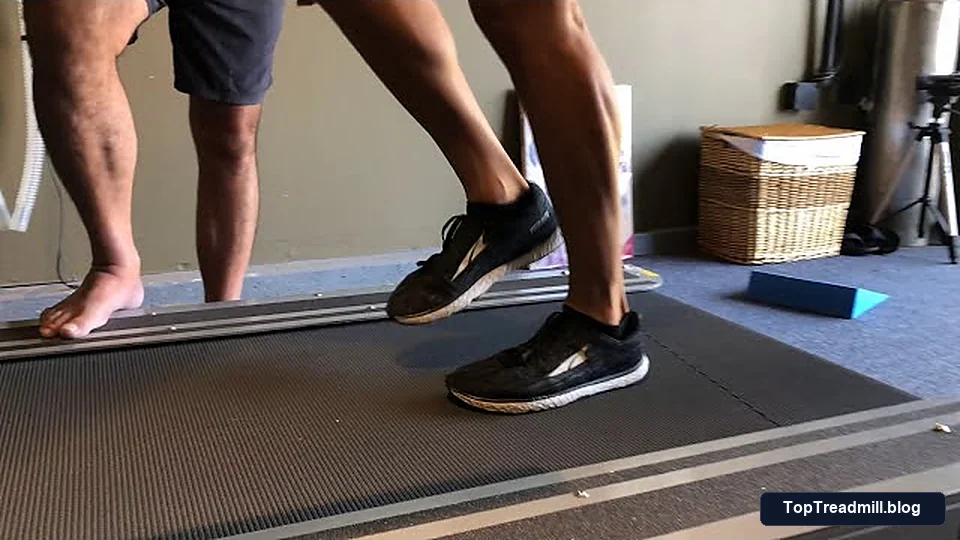
Landing mechanics change fundamentally when you transition from flat running to steep incline workouts. Heel striking becomes inefficient and hazardous because the moving belt pulls your foot backward under load.
Shifting toward a midfoot strike distributes impact shock evenly across your arches and calves. This natural adjustment protects your knee joints from harsh braking forces generated by improper foot placement.
Stride length should shorten naturally as the treadmill incline increases significantly. Overstriding on a hill places excessive shear stress on your patellar tendons and increases the risk of acute injury.
Pay close attention to the sound of your footfalls on the running belt. Quiet, rhythmic footstrikes generally indicate efficient biomechanics and proper midfoot placement during your incline running sessions.
Incline running inherently promotes forefoot or midfoot strikes. Landing closer to your forefoot architecture absorbs impact forces more efficiently and prevents damaging heel shock transmitted through motorized deck frames.
Avoid dragging your feet on high inclines. The continuous forward movement of rubberized belts demands crisp lifting mechanics to prevent premature footwear wear and dangerous friction burns on the sole.
Shoe selection influences traction on elevated decks. Running shoes with high-friction rubber outsoles prevent micro-slipping during aggressive toe-offs on motorized belts set to maximum incline specifications.
Ankle stability dictates foot placement consistency. Strengthening peroneal muscles prevents lateral roll when transitioning from flat running modes to steep, motorized elevation profiles engineered for hill simulations.
- Land with your foot directly underneath your center of gravity.
- Avoid reaching forward with your leading leg on steep grades.
- Keep your ankle flexible to absorb impact shock smoothly upon contact.
- Shorten your overall stride length to maintain high cadence efficiency.
Mitigating Braking Forces Through Form Adjustments
Braking forces occur when your foot lands too far ahead of your torso. Eliminating this habit preserves your momentum and reduces wear on the treadmill drive motor.
Focus on quick, light steps rather than powerful, bounding strides to conserve energy. This cadence-focused approach keeps your running form clean and sustainable over long distances.
- Aim for a cadence of approximately 170 to 180 steps per minute.
- Practice high-cadence drills on flat surfaces to build neural pathways.
Digital Profile Management and Workout Data Tracking
Modern motorized treadmills feature advanced consoles that track your workout metrics meticulously. Creating a personalized digital profile ensures accurate caloric burn calculations and precise incline history logging over time.
Reviewing your session data helps identify trends in your running cadence and posture fatigue. If your stride rate drops significantly during the final minutes, your incline duration may be excessive.
Setting up user accounts properly prevents data corruption and keeps your training progression organized. Consistent tracking empowers you to make data-driven adjustments to your weekly running regimen safely.
Many modern systems allow you to sync your training metrics with external fitness platforms. This integration provides a comprehensive overview of your cardiovascular progress and postural endurance improvements.
Modern treadmills utilize advanced consoles to track metrics. Logging your elevation gain data ensures accurate caloric calculations by accounting for actual vertical work performed against gravity during hill workouts.
Custom user profiles improve workout precision. Entering accurate body weight and age parameters enables internal software algorithms to estimate energy expenditure and cardiovascular stress levels with higher statistical accuracy.
Exporting workout telemetry to fitness applications helps track long-term progress. Monitoring metrics like average vertical speed identifies performance bottlenecks in your incline running efficiency over multi-week training blocks.
Firmware updates often optimize incline motor calibration. Using a helpful deck size calculator alongside software maintenance ensures your mechanical deck positions match exact grade percentages displayed on the console.
- Input accurate body weight and height measurements into your user profile.
- Review post-workout summary metrics to evaluate your running efficiency.
- Track incline percentages alongside heart rate data for complete insights.
- Update your user settings regularly as your fitness levels evolve.
Securing and Resetting Your Training Account Credentials
Maintaining secure login credentials protects your stored workout history and custom incline programs. If you misplace your password, utilize the console recovery prompt or companion mobile application immediately.
Regular account maintenance ensures seamless access to your saved preset hill workouts. Keep your email address updated within the system to receive important firmware and safety notifications.
- Use strong alphanumeric passwords for your equipment user accounts.
- Contact customer support if recovery links fail to arrive promptly.
Safety Protocols and Emergency Stop Procedures
Running on incline treadmills demands strict adherence to basic equipment safety guidelines. Always attach the physical safety lanyard to your clothing before initiating any belt movement or elevation changes.
Never attempt to dismount a treadmill while the running belt moves rapidly. Evaluating the best home treadmill for running options ensures your equipment features sturdy, safe side rails for resting.
Handrails exist primarily for mounting and dismounting convenience rather than continuous support. Gripping the console rails during a run alters your posture and artificially reduces your true caloric expenditure.
Inspect the surrounding workout area regularly to ensure no obstacles obstruct the elevation mechanism. Clear zones prevent accidental entrapment and allow the hydraulic lift system to operate without interference.
Safety features are paramount during high-incline sessions. Always secure the magnetic safety lanyard to your clothing before initiating belt movement to prevent catastrophic falls during unexpected electrical power disruptions.
Side rail utilization should remain strictly limited. Stepping onto stationary side platforms while the belt moves at high speeds risks severe friction injuries and sudden loss of dynamic equilibrium.
Emergency stop buttons require clear accessibility. Users should test the mechanical cutoff switch monthly to verify instantaneous belt braking functions correctly under heavy load and maximum incline conditions.
Cool-down phases prevent venous pooling. Lowering the incline to zero and reducing speed gradually allows heart rates to normalize safely before stepping off the motorized running deck completely.
- Clip the emergency magnetic key securely to your waistband at all times.
- Stand on the side rails when starting the motor from a complete stop.
- Avoid leaning heavily on the front console handrails during runs.
- Unplug the power cord entirely before performing any cleaning tasks.
Executing Emergency Dismounts Without Injury
Knowing how to react when a treadmill malfunctions prevents catastrophic falls and injuries. Grab the side handrails firmly, jump your feet to the side rails, and pull the safety key.
Practice this emergency maneuver mentally so your physical reactions remain instinctive during unexpected belt stoppages. Safety preparedness is an essential component of responsible indoor treadmill training.
- Keep your arms strong to support your body weight on side rails.
- Never try to stop a moving belt with your hands or feet.
Maintenance Standards for High-Incline Deck Motors
Incline motors endure substantial mechanical stress when elevating heavy loads during workouts. Regular preventive maintenance ensures your equipment operates smoothly and maintains precise angle calibrations over years of use.
Dust and debris accumulation inside the motor housing can cause overheating and premature electronic failure. Vacuuming the compartment annually protects the internal circuitry and elevation actuator components effectively.
Lubricating the running belt and deck reduces friction, which directly lightens the load on the drive system. A well-lubricated treadmill runs quieter and maintains consistent belt speeds on steep grades.
Checking the elevation pivot bolts periodically prevents structural wobbling during intense hill sessions. Tightening loose hardware preserves alignment and protects the structural integrity of your motorized equipment.
High-incline training places immense stress on lift motors. Inspecting elevation screw threads regularly and applying manufacturer-approved silicone lubricant prevents binding and extends the operational lifespan of the incline assembly.
Deck lubrication reduces friction and thermal stress. Applying 100 percent silicone lubricant beneath running belts prevents motor overheating caused by excessive drag during sustained, high-grade climbing workout sessions.
Dust accumulation impairs elevation sensor accuracy. Vacuuming the motor compartment quarterly removes debris that interferes with optical sensors responsible for tracking precise deck tilt angles and elevation positioning.
Drive belt tension requires periodic technical inspection. Loose belts cause slippage during steep climbs, reducing mechanical efficiency and accelerating wear on internal transmission components within the primary drive housing.
- Apply silicone-based lubricant beneath the running deck every few months.
- Inspect power cords for fraying or heat damage before every run.
- Keep the floor beneath the treadmill clean to prevent dust intake.
- Schedule professional belt tension checks if you notice slipping.
Lubrication Schedules and Belt Tension Adjustments
Proper lubrication intervals depend on your weekly running mileage and user weight parameters. Follow manufacturer guidelines closely to avoid applying excessive oil that attracts harmful dust particles.
Adjusting belt tension requires precise calibration bolts located at the rear roller. Proper tension prevents annoying slipping while avoiding excessive pressure on the front drive bearings.
- Measure belt slack using your fingers in the center of the deck.
- Turn adjustment bolts in quarter-turn increments to maintain balance.
Frequently Asked Questions
Should I hold onto the handrails while running on an incline?
You should avoid holding handrails because doing so alters your natural posture and reduces core activation. Light fingertip touch is acceptable only for brief balance checks.
How does running on an incline affect my stride length?
Running uphill naturally shortens your stride length to prevent overstriding and reduce joint impact. Embrace this shorter, quicker cadence to maintain efficient biomechanics.
What is the ideal incline percentage for general cardiovascular training?
Setting a one to three percent incline best simulates outdoor wind resistance and flat terrain effort. Higher percentages should be introduced gradually for specific hill training.
How can I prevent lower back pain during steep treadmill runs?
Prevent lower back pain by leaning from your ankles rather than bending at your waist. Engage your deep abdominal core muscles to keep your spine stable.
Why is a midfoot strike important on motorized incline belts?
A midfoot strike prevents damaging braking forces that stress your knees and ankles. Landing underneath your center of gravity ensures smooth shock absorption every step.