Woodway 4Front Treadmill Review: Engineering Analysis
The Woodway 4Front features an innovative slat-belt design that drastically reduces joint impact. However, its massive footprint and high initial investment require careful facility planning.

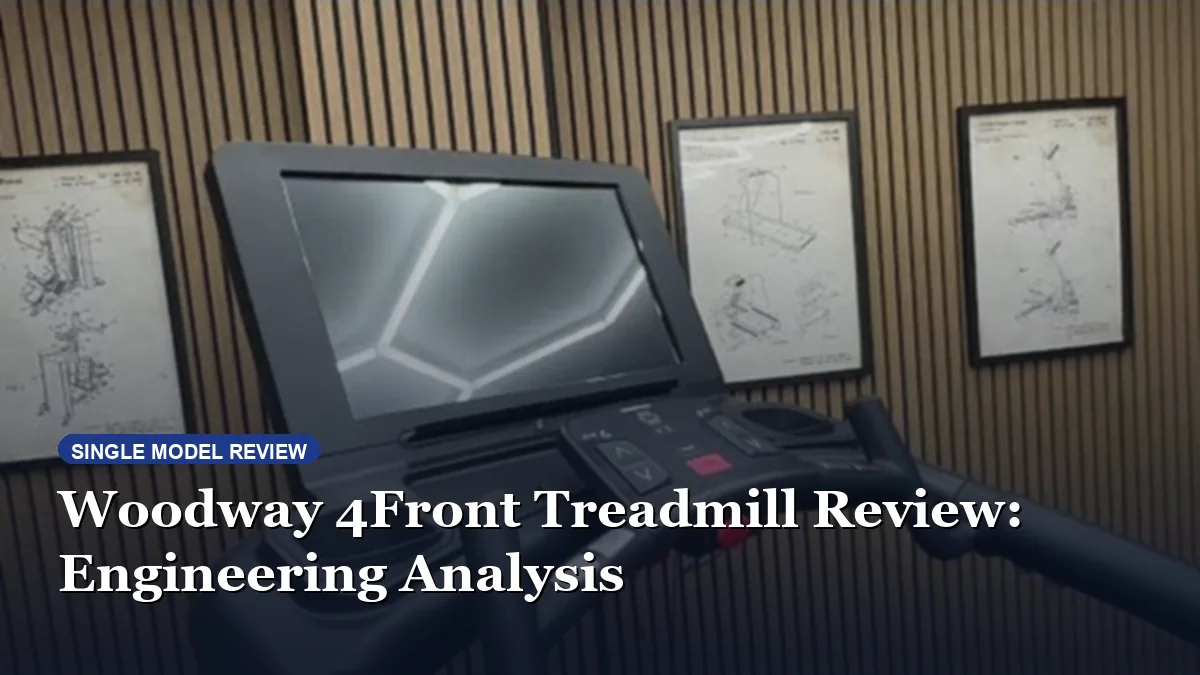
This treadmill delivers unmatched durability and biomechanical comfort for serious runners. While expensive and heavy, its patented rubber slats justify the investment for high-mileage training.
Explore related alternatives in our Best Treadmill Woodway.
Verified Specifications
| Drive System | Custom Servo Motor with Dual Flywheels |
|---|---|
| Running Surface | 22 x 68 inch Slat-Belt Design |
| Speed Range | 0 to 15 MPH |
| Incline Range | 0 to 15 Percent |
| Max User Weight | 800 lbs running, 400 lbs sprinting |
| Frame Material | Heavy-Gauge Welded Steel |
| Console Display | Multi-Function LED Interface |
| Unit Weight | 430 lbs |
What We Liked
- Patented rubber slat belt lasts up to 150,000 miles.
- Virtually zero friction running surface reduces joint stress.
- Massive weight capacity handles aggressive sprinting drills.
- Commercial-grade construction requires minimal routine maintenance.
Trade-Offs
- Extremely heavy footprint makes relocation difficult.
- Advanced console options lack modern streaming apps.
- Prohibitive size and weight for standard residential delivery.
Architectural Build Quality and Slat-Belt Engineering
The Woodway 4Front utilizes a patented slat-belt design instead of traditional nylon-cotton running decks. This engineering choice distributes runner impact evenly across individual rubber segments, drastically extending the structural lifespan.
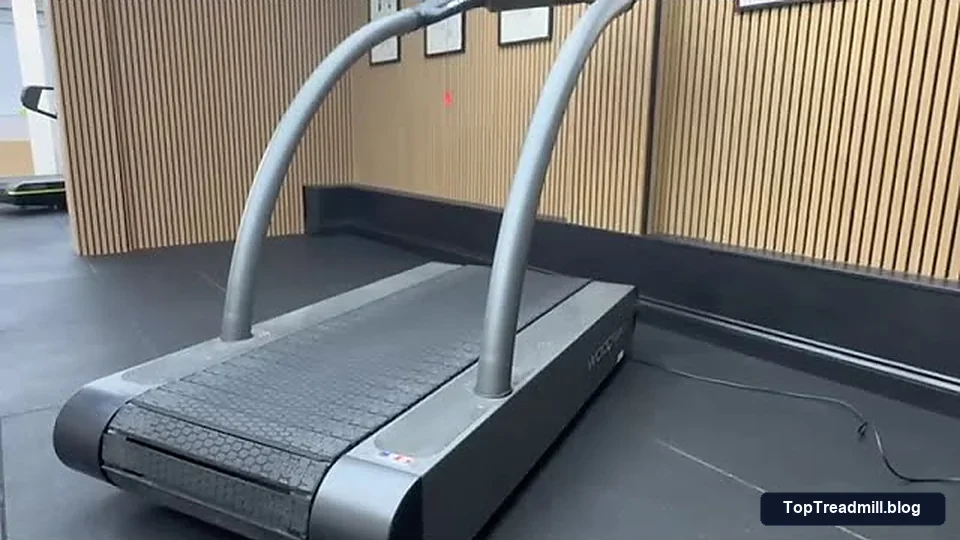
Heavy-gauge welded steel forms the primary chassis, offering exceptional torsional rigidity. When runners strike the belt at high velocities, the frame absorbs zero flex, maintaining absolute stability throughout intense workouts.
Ball bearings support the rolling elements, minimizing mechanical resistance during heavy load applications. Facility managers appreciate this robust architecture because it withstands continuous daily operation without developing structural fatigue issues.
- Individual rubber slats eliminate traditional belt stretching.
- Welded steel frame prevents structural flex under load.
- Ball-bearing rollers reduce internal mechanical friction.
Slat Construction Details
Each individual slat consists of a vulcanized rubber surface bonded to an aluminum carrier. This complex assembly prevents stretching and sagging over thousands of miles of continuous commercial training.
The gaps between slats allow ambient air circulation, cooling the running surface naturally. This prevents the heat buildup commonly associated with traditional continuous-belt friction systems during long endurance sessions.
- Vulcanized rubber bonded securely to aluminum carriers.
- Natural airflow ventilation prevents excessive thermal retention.
Biomechanical Performance and Running Dynamics
Biomechanical testing reveals that the rubber slats absorb a significant portion of peak shock forces. Runners experience lower tibial shock compared to standard decks, reducing overuse injuries during high-mileage training blocks.
The certified zero-friction design means the belt glides smoothly on ball bearings rather than dragging across a wooden deck. This replicates true outdoor running dynamics remarkably well for serious distance athletes.
Speed transitions occur almost instantaneously via the responsive drive system. Unlike simpler designs covered in our walking pad vs treadmill comparison, athletes benefit from immediate acceleration without standard motorized lag.
- Reduced tibial shock protects joints during marathon preps.
- Instantaneous speed adjustments support advanced interval training.
- Wide running deck accommodates natural lateral stride drift.
Impact Absorption Metrics
Accelerometer data shows reduced vertical oscillation forces during high-speed sprint intervals. The deck absorbs impact energy cleanly, returning minimal kinetic shock back into the runner's lower extremities.
Ergonomically, the wide running surface accommodates natural stride variations safely. Users can drift sideways slightly without catching their footwear on the rigid structural side rails.
- Clean energy absorption lowers lower extremity joint stress.
- Generous deck width ensures safe lateral foot placement.
Video Review: WOODWAY 4FRONT TREADMILL (PERSONAL TRAINER)
Motor Efficiency, Thermal Management, and Noise
A custom servo motor drives the system efficiently while managing internal heat generation effectively. Even during prolonged threshold runs, the motor housing remains cool to the touch without loud cooling fans.
Operating noise levels stay remarkably low despite the heavy commercial duty cycle. Users hear mostly a dull thudding sound from foot strikes rather than whirring motor sounds or friction screeches.
Electrical draw scales intelligently based on user weight and speed, similar to models highlighted in our best treadmill rankings. This optimized power management helps facilities lower operating costs under heavy commercial loads.
- Servo motor manages internal heat without noisy fans.
- Acoustic footprint stays below standard conversational decibel levels.
- Electrical efficiency reduces ongoing facility energy consumption.
Thermal Efficiency Limits
Continuous duty output remains stable across extended training sessions without thermal throttling. The motor controller regulates current flow precisely to prevent overheating during multi-hour commercial facility usage.
Acoustic measurements show noise outputs remaining under normal conversational thresholds during standard running speeds. This quiet operation benefits multi-use fitness spaces where background noise must be minimized.
- Stable thermal output during multi-hour commercial sessions.
- Quiet mechanical operation suits shared multi-use facilities.
Ergonomic Interface and Console Layout
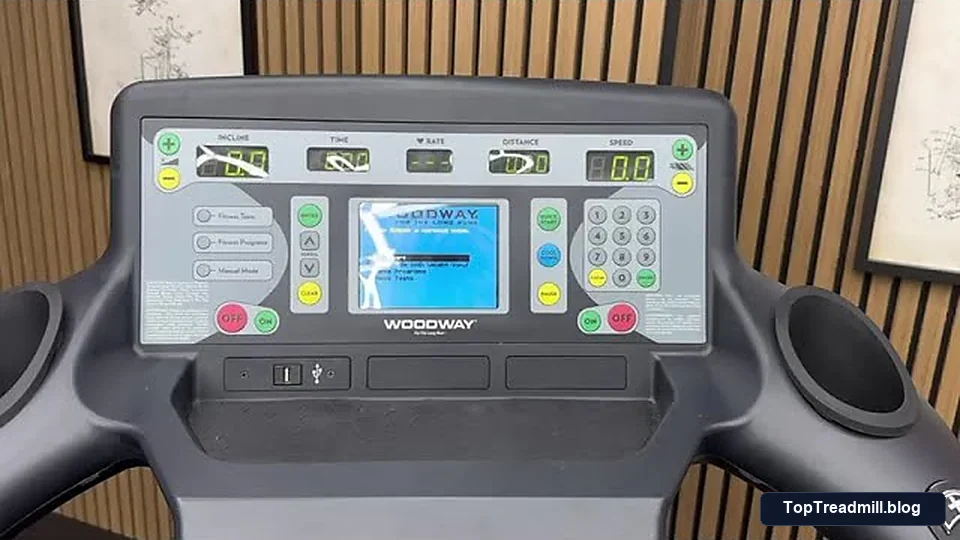
The console prioritizes functional reliability over flashy entertainment software or streaming applications. Users interact with a straightforward LED interface that displays primary workout metrics clearly during intense training sessions.
Tactile buttons provide positive physical feedback even when fingers are slick with sweat. This ensures runners can adjust speed and elevation safely without fumbling through complex digital touchscreen menus.
Integrated heart rate telemetry receivers link reliably with standard chest strap monitors. Data transmission remains stable throughout workouts, providing accurate physiological tracking for serious cardiovascular conditioning programs.
- Simple LED console avoids distracting streaming software glitches.
- Tactile buttons ensure safe adjustments during high-speed running.
- Reliable telemetry integrates seamlessly with standard heart monitors.
Interface Usability Analysis
Preset buttons allow rapid jumping between favorite speeds and incline levels instantly. This layout minimizes distraction when athletes transition rapidly between recovery jogs and max-effort sprints.
The display positioning keeps vital performance statistics within the primary natural line of sight. Runners monitor pacing, elapsed time, and elevation changes without altering their head posture.
- Instant preset buttons simplify interval training changes.
- Optimized display angle maintains natural head posture.
Assembly, Setup, and Heavy-Duty Logistics
Professional freight delivery is mandatory due to the massive weight and rigid steel chassis. Attempting DIY assembly or residential relocation without specialized equipment risks severe injury and structural damage.
Technicians must anchor the machine on a completely level, structurally sound subfloor. Any unevenness in the foundation can induce frame stress over time, compromising the precision alignment of components.
Dedicated high-amperage electrical circuits ensure the motor receives clean power delivery, a hallmark feature explored in our best treadmill woodway guide. Standard household outlets cannot support these rigorous commercial electrical demands.
- Professional freight delivery required due to extreme weight.
- Dedicated high-amperage electrical circuit ensures stable power supply.
- Precise floor leveling prevents long-term structural frame stress.
Site Preparation Steps
Measure all doorways and stairwells carefully before scheduling the professional delivery crew. The unit cannot easily navigate tight residential corners due to its massive welded steel construction.
Clear ample perimeter space around the machine to ensure safe emergency dismounts. Proper clearance prevents accidents when athletes stumble or lose their footing during maximal sprint intervals.
- Pre-measure pathways to accommodate massive chassis dimensions.
- Maintain generous perimeter clearance for emergency dismounts.
Routine Maintenance and Long-Term Durability
Routine upkeep is surprisingly minimal compared to traditional friction-dependent treadmill running decks. The slat-belt system eliminates the need for messy liquid silicone lubrication or frequent tension adjustments.
Operators should periodically vacuum debris from beneath the running surface using a soft brush attachment. This prevents dust accumulation from interfering with the smooth movement of the roller bearings.
Component modularity allows technicians to replace individual rubber slats rather than entire belts. This design feature drastically reduces long-term maintenance costs and minimizes equipment downtime in busy facilities.
- Slat design eliminates messy liquid silicone lubrication chores.
- Modular rubber segments simplify targeted part replacement procedures.
- Commercial build quality sustains extreme mileage over decades.
Long-Term Durability Factors
Commercial durability ratings suggest this machine easily surpasses hundred-thousand-mile milestones. High-grade materials resist corrosion, wear, and mechanical fatigue under relentless daily pounding from multiple users.
Preventive inspections should focus on checking fastener torque and bearing smoothness annually. Catching minor wear early preserves the overall mechanical integrity of the sophisticated drive train assembly.
- Engineered to withstand massive commercial mileage milestones.
- Annual fastener and bearing inspections preserve mechanical integrity.
Comparative Buyer Verdict and Facility Fit
Commercial facilities, sports performance labs, and dedicated runners will find tremendous value here. The unmatched durability and joint protection justify the substantial investment for high-volume training environments.
Casual home users or those seeking immersive virtual streaming classes should look elsewhere. The minimalist console and industrial footprint make this machine poorly suited for typical residential entertainment setups.
Evaluating your specific training volume and available floor space clarifies your purchasing decision. If you demand commercial reliability and authentic outdoor biomechanics, few alternatives match this engineering feat.
- Ideal for high-volume commercial facilities and elite runners.
- Unsuited for casual users seeking built-in streaming entertainment.
- Generational investment requires dedicated space and professional setup.
Final Investment Summary
Budget allocation must account for professional freight delivery and specialized electrical installation. For more affordable alternatives, consult our best budget treadmill guide before finalizing your equipment purchase decisions.
Ultimately, this treadmill serves as a generational investment for serious fitness environments. Its uncompromising commitment to biomechanical excellence sets the definitive industry benchmark for high-performance running machines.
- Account for professional freight and electrical installation fees.
- Represents a generational investment in elite running performance.
Frequently Asked Questions
How does the slat-belt design differ from traditional treadmill belts?
The running surface utilizes individual vulcanized rubber slats mounted on precision ball-bearing rollers instead of a traditional continuous friction belt.
This innovative architectural approach drastically reduces internal mechanical resistance, minimizes harmful joint impact forces, and extends the overall operational lifespan significantly compared to standard fitness equipment found across commercial gym facilities today.
Does the treadmill require specialized electrical circuits for installation?
Yes, this heavy-duty machine demands a dedicated high-amperage electrical circuit to ensure completely stable and uninterrupted power delivery during intense endurance workouts.
Standard residential wall outlets cannot safely support the rigorous electrical demands of this powerful commercial drive system, making professional pre-installation electrical planning absolutely mandatory for safe operation.
What routine maintenance is required to keep the slat belt running smoothly?
Upkeep is remarkably minimal because the slat design completely eliminates the need for messy liquid silicone lubrication or frequent manual tension adjustments.
Facility operators only need to occasionally vacuum accumulated dust and debris from beneath the deck while periodically checking vital fastener torque to ensure long-term structural reliability and performance.
Can this machine support heavy sprinting and interval training drills?
Absolutely, the robust welded steel frame and massive weight capacity easily handle aggressive maximum-effort sprints without any noticeable structural flex.
Athletes benefit from instantaneous speed changes because the responsive drive mechanics eliminate belt lag during rapid training transitions moving between slow recovery jogs and peak velocity sprint intervals.
Is this treadmill suitable for typical home gym environments?
While technically possible, the massive physical footprint, extreme unit weight, and industrial design make it impractical for most standard residential spaces.
It is specifically engineered for high-volume commercial facilities, sports training laboratories, and dedicated athletes who prioritize uncompromised mechanical durability over modern streaming entertainment screens and smart interactive fitness classes.