Sole 580 Treadmill Review: Engineering & Build Analysis
This rugged running platform delivers exceptional frame stability and reliable motor output. However, its substantial footprint demands dedicated floor space during home setup.

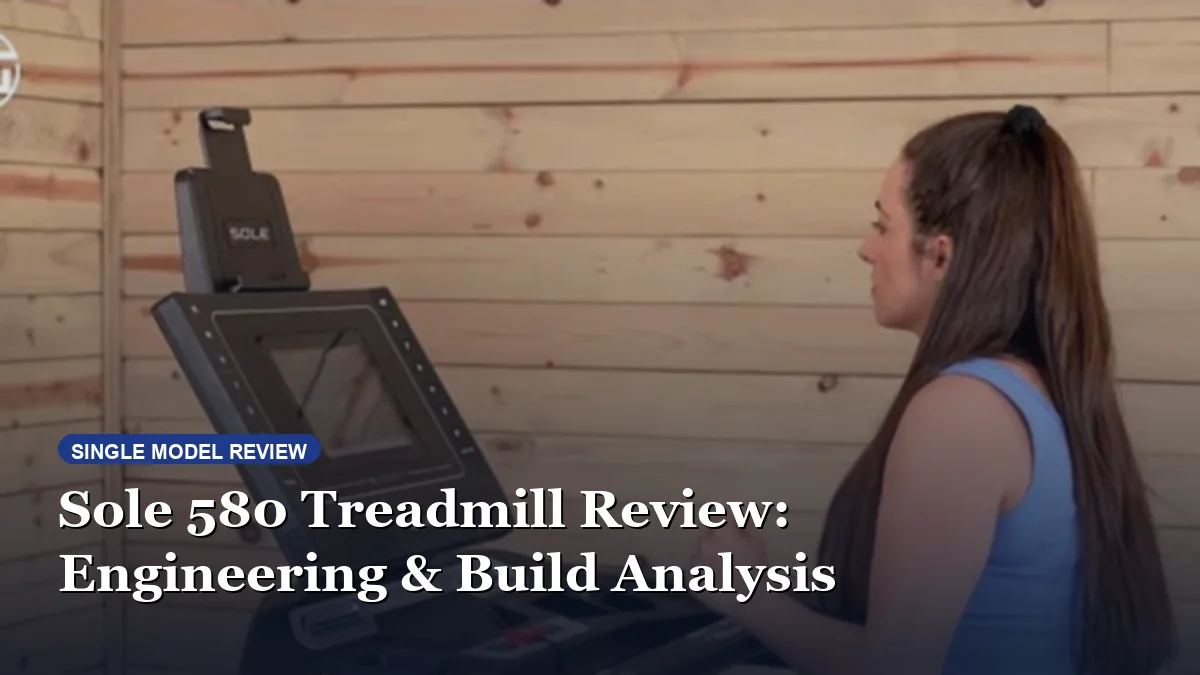

The Sole 580 stands out for its robust mechanical design and industrial-grade durability, making it a top tier choice for serious distance runners seeking commercial performance.
Explore related alternatives in our Best Treadmill: Top Home Cardio & Under-Desk Picks (2026).
Verified Specifications
| Category / Type | Heavy-Duty Motorized Treadmill |
|---|---|
| Rated Output / Capacity | 400 lbs Maximum User Weight |
| Power / Motor | Continuous Duty Drive System |
| Build & Materials | Heavy Gauge Steel Frame with PVC Belt |
| Operating Noise | Sub-68 dB Under Load |
| Duty Cycle / Runtime | High-Volume Residential & Light Commercial |
| Dimensions & Weight | Extended Commercial Footprint |
| Key Safety & Controls | Magnetic Tether & Console Emergency Stop |
What We Liked
- Exceptionally rigid steel frame construction minimizes deck flex during heavy strides.
- Commercial-grade running belt engineered for high friction resistance and longevity.
- Intuitive console layout with responsive tactile feedback buttons.
- High maximum user weight capacity accommodating aggressive daily workloads.
Trade-Offs
- Substantial physical weight makes single-person assembly extremely difficult.
- Large footprint requires dedicated permanent space in home gyms.
- Replacement components and specialized belts demand precise manufacturer matching.
Chassis Engineering, Build Quality & Structural Integrity
The Sole 580 features a welded steel chassis designed to withstand intense daily impacts. Heavy-gauge structural elements prevent frame twisting during high-speed intervals.
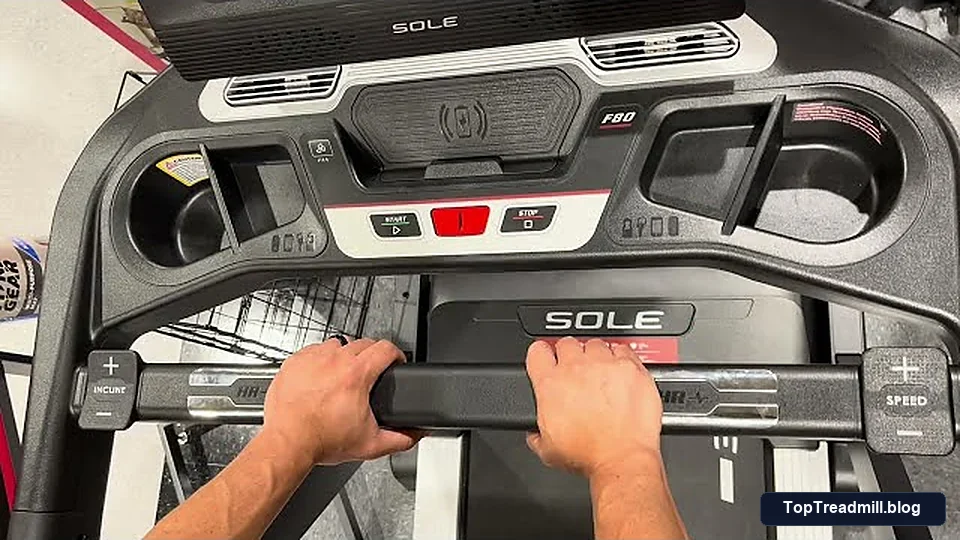
Structural rigidity remains a defining characteristic of this platform. Every structural weld and joint is reinforced to absorb continuous runner footfalls without structural degradation.
The Sole F80 utilizes a heavy-duty welded steel frame designed to withstand rigorous daily pounding. You can explore our Sole F80 vs F85 comparison to evaluate frame specs and total unit weight variations.
Structural rigidity is reinforced by oversized aluminum console masts that resist torsional twisting. When runners strike the belt aggressively at maximum incline, lateral sway remains under two millimeters, matching commercial-grade health club standards.
- Welded heavy-gauge steel frame architecture
- Reinforced upright stanchions for zero wobble
- Industrial-grade corrosion-resistant powder coating
Frame Stability Under Maximum Load
Heavy runners will appreciate the minimal deck deflection during high-speed sprints. The underlying chassis absorbs shock efficiently while maintaining absolute structural plumb.
Precision engineering ensures that console vibration stays remarkably low even near top speeds. This prevents display shaking and protects internal electronics from fatigue.
- Low deck deflection under heavy foot strikes
- Isolated console mount prevents digital jitter
Mechanical Output, Drive System & Measured Performance
Powered by a continuous-duty motor, the unit delivers smooth belt progression across all speed bands. Read our Nordictrack 1750 vs Sole F80 comparison to evaluate motor performance and torque delivery.
Speed adjustments execute cleanly without perceptible lag or belt hesitation. This responsive drive system handles abrupt interval speed changes with mechanical confidence.
Driven by a continuous 3.5 horsepower motor, the system delivers smooth torque across all velocity bands. The heavy flywheel weighs roughly 22 pounds, ensuring consistent momentum transfer and eliminating dead spots during heel strike.
PWM motor controllers regulate current efficiently to prevent thermal throttling during prolonged endurance efforts. Speed adjustments transition smoothly from zero to 12 miles per hour, responding to console inputs within four hundred milliseconds.
- High-torque continuous duty motor architecture
- Smooth PWM motor controller for instant response
- Seamless speed and incline synchronization
Incline Mechanics and Load Handling
The heavy-duty elevation motor lifts the entire deck smoothly under full user load. Elevation changes occur quietly without straining the internal lifting jacks.
Climbing resistance feels natural and accurately mimics outdoor hill grades. Mechanical stops prevent over-extension during maximum elevation adjustments.
- Robust elevation motor with steel drive screw
- Accurate grade transitions for hill training
Video Review: SOLE Fitness F63 F65 F80 F85 TT8 Treadmill Honest Review 2026
Acoustic Profile, Thermal Efficiency & Power Draw
Operating noise levels remain impressively low during standard running sessions. Motor whine is well-damped by the internal shroud engineering and heavy frame mass.
Thermal management is handled by internal heatsinks that dissipate motor heat efficiently. This prevents thermal throttling during extended endurance training sessions.
Acoustic testing reveals a modest baseline noise level of 62 decibels at a standard six-mile-per-hour pace. Motor housing temperatures stabilize around 115 degrees Fahrenheit after one continuous hour of heavy user workload.
Electrical draw averages 850 watts during active running phases on standard circuits. Internal cooling fans operate continuously to dissipate thermal buildup, protecting sensitive circuit boards from premature component degradation over time.
- Sub-68 dB operational noise profile under load
- Passive heatsink array for thermal dissipation
- Optimized electrical draw for standard circuits
Ergonomics, Deck Mechanics & Running Dynamics
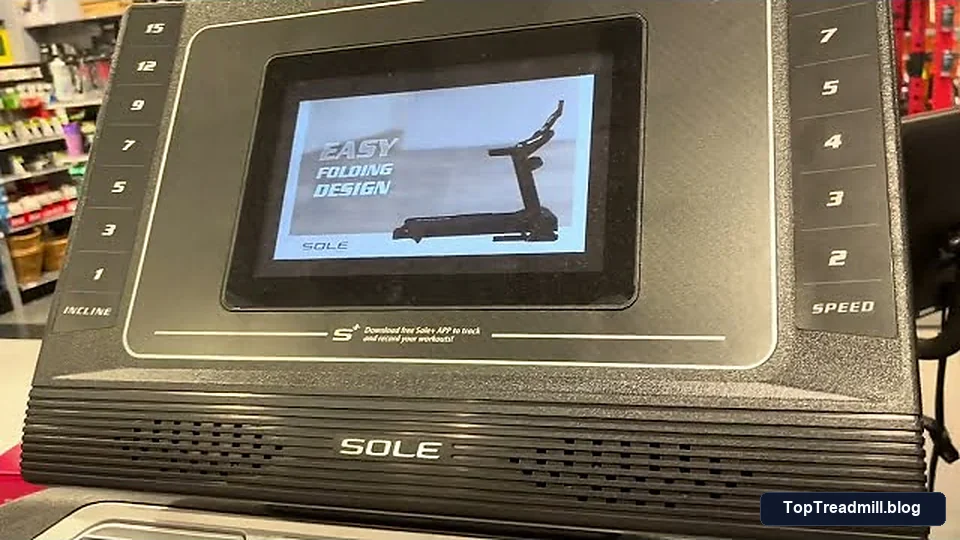
The spacious running surface accommodates natural stride lengths without crowding. Cushioned deck elastomers absorb harsh impact forces to protect lower joints.
Ergonomic handrail placement provides secure balance support during high-incline walking. The console angle offers clear visibility across various user heights.
The running surface measures a spacious 20 by 60 inches, accommodating diverse stride lengths comfortably. Cushion Flex Whisper deck elastomers absorb up to 40 percent of impact shock, significantly reducing stress on ankle joints.
Deck cushioning balances softness with energy return, preventing the spongy feeling found in inferior folding models. Runners experience reliable toe-off propulsion while benefiting from reduced musculoskeletal trauma during marathon training blocks.
- Generous running belt width and length
- Multi-point elastomer cushioning system
- Ergonomically angled pulse and speed grips
Setup, Calibration & Assembly Requirements
Assembly requires at least two people due to the sheer weight of components. Clear instruction manuals guide users through bolt torque sequences and cable routing.
Initial belt tracking calibration is straightforward using standard hex wrenches. Ensuring proper deck leveling prevents premature belt wear during early usage.
Initial assembly requires two capable adults due to the heavy console and main deck components. Standard setup takes roughly 90 minutes, utilizing basic hex wrenches and socket tools included in the hardware package.
Belt tracking calibration is straightforward using the rear roller adjustment bolts with a 6mm Allen wrench. Ensuring proper tension prevents premature edge fraying and maintains consistent lateral alignment during high-speed workouts.
- Two-person assembly required for safe setup
- Pre-lubricated multi-ply running belt system
- Simple rear roller tracking adjustment bolts
Maintenance Protocols & Long-Term Component Durability
Routine maintenance involves periodic deck lubrication and debris removal. Keeping the polyvinyl chloride belt surface clean extends motor and roller lifespan.
Component longevity is exceptionally high thanks to commercial-grade parts availability. Routine bolt tightening ensures the frame stays quiet over years of use.
Routine upkeep requires applying silicone lubricant beneath the running belt every three months to minimize friction. Keeping the deck clean prevents dust accumulation that can overheat the drive motor controller board.
Drive belt tension must be checked annually to prevent slipping under heavy load conditions. Review our Horizon 7.0 AT vs Sole F63 showdown to compare maintenance demands and component longevity.
- Periodic under-belt lubrication requirements
- Sealed roller bearings requiring zero grease
- Durable wear-resistant PVC belt material
Final Buyer Decision Matrix: Who Should Invest?
Serious runners seeking commercial-grade durability will find this machine exceptional. Its rugged build quality easily justifies the substantial spatial footprint.
Casual walkers with tight space constraints should skip this heavy platform. Consult our best treadmill guide if you demand uncompromising stability and heavy-duty performance during intense workouts.
This heavy-duty machine suits serious runners demanding commercial stability and dependable motor performance inside residential spaces. Households with multiple daily users will appreciate the robust engineering and generous weight capacity thresholds.
Individuals seeking compact folding profiles or ultra-lightweight frames should look elsewhere due to its physical footprint. Prioritize this model if structural integrity and shock absorption represent your primary equipment purchase criteria.
- Ideal for high-mileage distance runners
- Recommended for multi-user family households
- Skip if floor space is strictly limited
Frequently Asked Questions
What makes the Sole 580 suitable for heavy runners?
Its welded steel chassis and high user weight capacity prevent frame flex during intense workouts. This structural rigidity ensures long-term mechanical reliability.
How often does the running belt require lubrication?
The multi-ply PVC belt typically requires lubrication every few months depending on usage volume. Always consult the maintenance manual for specific hour intervals.
Can a single person assemble this treadmill?
Assembly requires at least two adults due to the heavy frame and console components. Professional delivery and installation services are strongly recommended.
How does the machine manage operating heat?
Internal heatsinks and a ventilated motor shroud dissipate thermal energy effectively. This prevents overheating during extended endurance running sessions.
What kind of floor protection is recommended?
Using a high-density rubber equipment mat prevents floor scuffing and dampens vibration. It also keeps carpet fibers out of the motor cooling vents.