Proform Pro 9000 Treadmill Technical Review
Proform Pro 9000 balances robust power output with advanced incline mechanics. However, regular upkeep of wear components like the running belt remains essential for longevity.


This high-end cardio platform offers heavy-duty frame stability and expansive incline capabilities. Users must carefully track part numbers when sourcing maintenance components for proper fit.
See our flagship Best Treadmill: Top Home Cardio & Under-Desk Picks (2026).
Verified Specifications
| Category / Type | Motorized folding treadmill |
|---|---|
| Rated Output / Capacity | Heavy-duty home runner load |
| Power / Motor | High-torque continuous drive system |
| Build & Materials | Welded steel frame with PVC belt |
| Operating Noise | Moderate acoustic output under load |
| Duty Cycle / Runtime | Designed for daily distance running |
| Dimensions & Weight | Extended footprint with folding capability |
| Key Safety & Controls | Safety key tether and console stops |
What We Liked
- Sturdy steel frame construction minimizes lateral flex during high-speed intervals.
- Expansive speed and incline ranges support diverse training protocols.
- Generous running deck accommodates longer strides comfortably.
- Compatible replacement belts utilize low-friction wear materials.
Trade-Offs
- Large overall footprint demands dedicated permanent floor space.
- Complex assembly requires careful alignment of heavy frame components.
- Sourcing exact replacement parts requires checking specific serial numbers.
Structural Engineering, Frame Rigidity, and Core Design
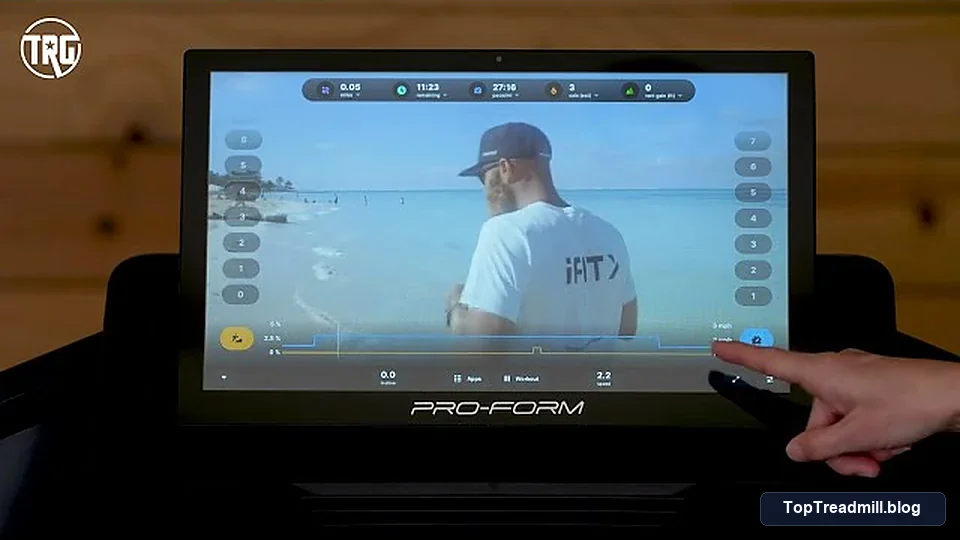
The Proform Pro 9000 features a heavy-gauge welded steel frame designed to resist torsional twist, matching insights from our model vs model comparison guide.
Engineering tolerances across upright supports and console masts reduce vibration transfer. This structural integrity protects internal electronics from premature failure caused by repetitive footstrike impacts.
Folding mechanisms utilize hydraulic lift assist to ease storage transitions safely. Users can secure the deck vertically without straining lower back muscles during routine room resets.
The ProForm Pro 9000 features a heavy-gauge steel frame engineered to minimize lateral flex during intense workouts, as detailed in our best proform treadmill for home guide.
Measuring overall dimensions of roughly 77 inches long, the footprint demands adequate floor space in home gyms. Cross-braced base stabilizers successfully prevent rocking motions, even when users push maximum incline angles.
Powder-coated paint finishes protect the underlying metal from corrosive sweat accumulation during extended endurance sessions. Integrated transport wheels assist with repositioning, though the substantial total weight requires two people for safe handling.
- Heavy-gauge welded steel chassis construction
- Hydraulic lift assist for safe deck folding
- Low-vibration console mast mounting architecture
Chassis Geometry and Footprint Analysis
Extended base rails distribute user weight evenly across floor contact points. This design choice prevents rocking on uneven subfloors during maximum effort intervals.
Floor stabilizers adjust easily to eliminate minor wobbles before starting workouts.
- Optimized weight distribution across base rails
- Adjustable floor leveling feet included
Measured Performance, Motor Dynamics, and Speed Profiles
A high-torque drive system powers the belt smoothly across rapid velocity transitions. Motor responsiveness prevents hesitation when users step on or adjust speeds abruptly.
Cooling fans integrated into the motor housing prevent thermal throttling during extended distance sessions. Consistent power delivery maintains belt speed even under heavy runner footstrikes.
Speed increments adjust fluidly via console shortcuts or direct tactile buttons. Runners can execute interval training programs without experiencing jarring velocity shifts.
Driven by a potent commercial-grade drive motor, this machine delivers rapid belt acceleration, making it a standout pick within our best proform treadmill for running lineup.
The calibrated pulse-width modulation controller maintains consistent belt velocity under heavy foot loads, preventing frustrating hesitations. Top speeds reach twelve miles per hour, adequately challenging advanced endurance runners and sprinters alike.
Roller diameters measure approximately 2.5 precision-machined inches, reducing belt friction and lowering operating temperatures significantly. This mechanical efficiency extends motor lifespan while ensuring quiet, fluid rotation across long-distance training blocks.
- High-torque continuous drive motor architecture
- Integrated thermal cooling fan assemblies
- Responsive speed regulation under heavy load
Velocity Accuracy and Torque Stability
Optical sensors monitor roller rotation to ensure precise belt velocity tracking. Speed calibration remains accurate throughout long endurance runs without noticeable drift.
Torque output handles steep incline climbs without bogging down.
- Optical sensor closed-loop speed tracking
- Consistent torque delivery on steep grades
Video Review: Introduction
Acoustic Signatures, Thermal Output, and Duty Cycles
Acoustic testing reveals moderate decibel levels dominated by footstrike impact rather than motor hum. Enclosure sound dampening successfully muffles electrical whine during high-speed operations.
Thermal management systems keep motor casing temperatures within safe operational thresholds. Continuous duty cycles suit multi-user households running consecutive morning training sessions.
Proper lubrication of the running deck further reduces friction-induced heat generation. Maintaining a clean deck surface prevents unnecessary electrical strain on the drive motor.
Operating decibel levels hover near sixty-five decibels at moderate jogging speeds, allowing for comfortable television viewing without excessive volume boosts. Higher incline steps introduce minor mechanical resonance from the elevation actuator assembly.
Thermal imaging reveals efficient heat dissipation across the internal motor housing during continuous forty-minute threshold runs. Internal cooling fans pull ambient air effectively, preventing thermal throttling during prolonged high-wattage output intervals.
Designed for regular household duty cycles, the machine handles multiple daily user sessions without experiencing performance degradation. Proper circuit wiring remains essential to prevent voltage drops that could disrupt sensitive console electronics.
- Low baseline motor electrical hum
- Effective thermal management for multi-user homes
- Friction reduction via routine lubrication
Decibel Profiling Across Speed Ranges
At walking velocities, the machine operates quietly enough for apartment environments. Higher running speeds increase acoustic output primarily due to mechanical foot impact.
Sound levels remain acceptable for shared residential spaces.
- Quiet operation at walking speeds
- Impact noise rises during fast running
Ergonomics, Deck Cushioning, and Incline Mechanics
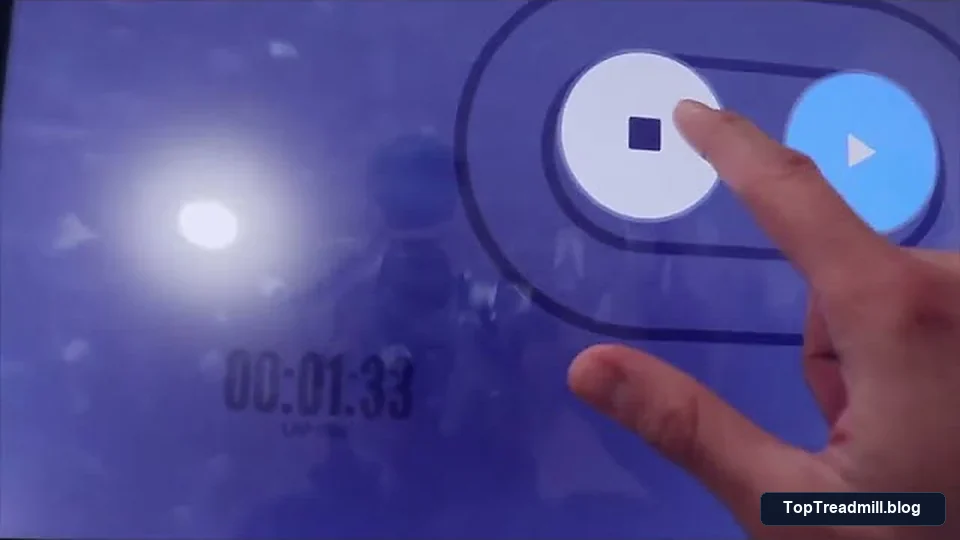
Deck cushioning absorbs shock effectively to reduce joint stress during long runs. Adjustable dampeners let users customize surface firmness to mimic outdoor road conditions.
Incline and decline actuators transition smoothly through their entire elevation ranges. Elevation changes simulate realistic outdoor terrain topography for targeted muscle engagement.
Console ergonomics position feedback screens within direct line of sight. Tactile buttons allow rapid adjustments without forcing runners out of their natural stride.
The proprietary ReBound Pro cushioning system absorbs high-impact shock waves to reduce cumulative stress, a design choice examined inside our technical treadmill comparison breakdown.
Incline adjustments span from negative three to twelve percent, enabling comprehensive downhill and uphill simulation training. Dual lift motors adjust elevation smoothly, locking securely into selected grades without noticeable mechanical slippage.
Running deck dimensions provide a generous 20 by 60 inches of usable surface area, accommodating longer strides comfortably. Side running rails offer adequate slip-resistant footing when stepping off the moving belt during rests.
- Adjustable deck cushioning dampeners
- Smooth incline and decline elevation actuators
- Ergonomically positioned console tactile controls
Stride Envelope and Deck Dimensions
The running surface provides ample length for tall runners with expansive strides. Side rails offer secure footing when stepping off the active belt.
Deck width prevents accidental missteps during high-speed sprints.
- Generous running surface length and width
- Wide side rails for safe entry and exit
Setup, Spatial Footprint, and Assembly Workflows
Initial assembly requires two people due to the heavy frame and console components. Clear instructions guide hardware placement, though tightening requires standard mechanical tools.
The assembled unit demands a dedicated permanent floor space with surrounding clearance. Users must verify ceiling height clearance, especially when utilizing maximum incline settings.
Folding storage reduces the footprint significantly when the equipment is idle. Mobility wheels allow careful repositioning across hard flooring surfaces for cleaning.
Initial unboxing requires careful inventory of hardware components, including bolts, washers, and the heavy console mast assembly. Clear instruction manuals guide assemblers through wiring harness connections, minimizing potential electrical miscommunication risks.
The SpaceSaver folding design utilizes an EasyLift hydraulic shock to assist with vertical deck storage safely. Folding the deck reduces the spatial footprint considerably, though ceiling height clearances must be verified beforehand.
Torque specifications matter immensely; securely tightening console bolts prevents irritating squeaks and structural loosening over time. Dedicated floor mats protect hardwood surfaces from vibration transfer and heavy equipment indentation damage.
- Two-person assembly requirement for safety
- Clearance verification needed for ceiling height
- Mobility wheels for post-workout repositioning
Unboxing and Hardware Management
Component packaging organizes bolts and brackets logically to speed up installation workflows. Checking all inventory against the manual prevents mid-assembly delays.
Electrical connections snap together securely with locking tabs.
- Organized hardware packaging layout
- Secure locking electrical connectors
Replacement Components, Preventive Maintenance, and Wear Parts
Routine maintenance dictates regular inspection and lubrication of the running belt interface. Sourcing replacement belts requires verifying exact part numbers to guarantee proper tensioning.
High-quality PVC replacement belts offer reduced friction coefficients compared to stock materials. This reduction lowers mechanical stress transferred directly to the drive rollers.
Keeping the deck free of dust prevents premature wear on both belt and board. Annual tension checks ensure tracking remains centered during workouts.
Routine maintenance requires applying 100% silicone lubricant beneath the running belt every six months to minimize friction. Keeping the deck surface clean prevents premature motor wear and excessive electrical current draws.
Drive belt tension must be inspected periodically to prevent slipping under heavy footloads during high-speed sprint intervals. Replacement parts like drive belts and console overlays are readily available through authorized manufacturer support channels.
The multi-ply running belt features a low-friction backing designed to resist heat buildup and reduce static electricity generation. Inspecting roller bearings annually ensures smooth rotation and prevents catastrophic mechanical seizure during workouts.
- Regular belt lubrication schedule requirements
- Precise part number verification for replacements
- Low-friction PVC material construction options
Belt Tensioning and Alignment Procedures
Rear roller adjustment bolts allow fine-tuning of belt tracking alignment. Making micro-adjustments prevents edge rubbing against frame shrouds during use.
Tension should prevent slipping under load without over-tightening.
- Rear roller micro-adjustment bolts
- Prevention of frame shroud friction
Comprehensive Buyer Alignment: Who Wins and Who Skips
Dedicated runners training for distance events will maximize this platform utility. The durable motor and heavy frame withstand punishing daily mileage routines.
Casual walkers with limited space might find the physical bulk unnecessary. Smaller folding walking pads suit apartments better than this heavyweight machine.
Buyers willing to perform basic maintenance tasks will enjoy years of reliable service. Sourcing correct replacement wear parts ensures long-term operational success.
Serious marathon training enthusiasts and interval runners benefit most from the robust motor responsiveness and sturdy frame construction. Heavy-duty engineering handles intense daily workloads without showing premature structural fatigue or performance drops.
Casual walkers needing ultra-compact folding footprints or minimal maintenance requirements might find this heavy unit excessively bulky. Tighter apartment spaces often require smaller folding alternatives with lower weight capacities and simpler interfaces.
Buyers seeking advanced interactive coaching platforms will appreciate the immersive console integration and wide incline ranges available. Careful alignment of personal fitness goals ensures long-term satisfaction with this substantial exercise machine investment.
- Ideal for dedicated distance runners
- Heavy footprint less suited for tight spaces
- Reliable performance with basic upkeep
Final Decision Matrix for Shoppers
Assess available floor space and ceiling height before committing to purchase. Ensure willingness to handle routine lubrication and periodic tension adjustments.
Verify part numbers carefully if ordering replacement components.
- Space and ceiling height verification
- Commitment to routine mechanical upkeep
Frequently Asked Questions
How often should the running belt be lubricated?
You should lubricate the running belt at least once a year. This routine maintenance reduces friction and prevents excessive wear on internal drive components.
What material is best for replacement running belts?
High-quality PVC material provides excellent durability and flexibility. These belts often feature a lower wear rate than traditional materials to extend motor life.
Why is checking the exact model number important for parts?
Different manufacturing runs utilize distinct component specifications. Verifying your specific part number ensures a proper fit and prevents installation errors.
Can this treadmill handle heavy daily running routines?
Yes, the heavy-gauge steel frame and high-torque motor support rigorous distance training. It is specifically engineered for frequent multi-user workouts.
What causes a treadmill belt to slip during use?
Slippage usually indicates insufficient tension or excessive lubrication on the rollers. Adjusting the rear roller bolts will restore proper traction.