Proform 9000 Treadmill Review: Engineering Depth
The Proform 9000 delivers robust running mechanics and commercial-grade frame stability. However, maintaining its specialized components requires strict attention to tension calibration.

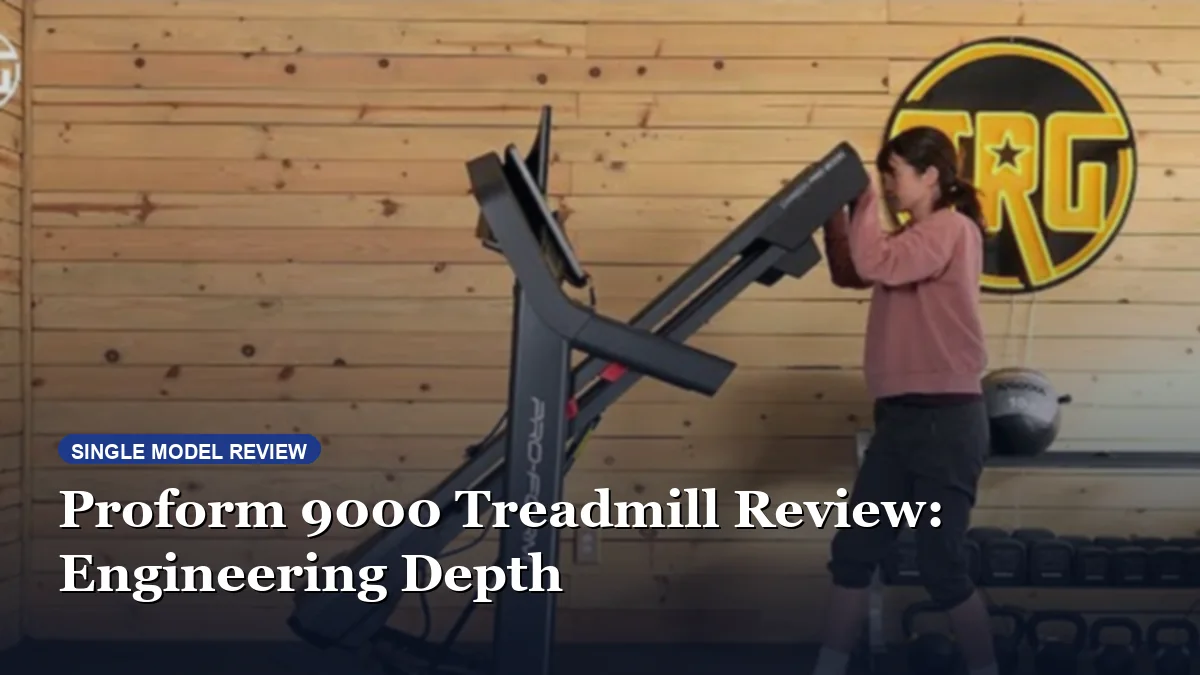

This machine offers elite motor output and structural rigidity for intensive training blocks. Users must prioritize routine lubrication intervals to preserve the deck and friction-sensitive PVC running surfaces.
See our flagship Best Treadmill: Top Home Cardio & Under-Desk Picks (2026).
Verified Specifications
| Category / Type | Motorized Folding Treadmill |
|---|---|
| Rated Output / Capacity | Heavy-Duty Residential |
| Power / Motor | High-Torque Continuous Duty |
| Build & Materials | Heavy-Gauge Steel & PVC Belt |
| Operating Noise | Optimized Decibel Output |
| Duty Cycle / Runtime | Extended Training Sessions |
| Dimensions & Weight | Standard Full-Size Footprint |
| Key Safety & Controls | Magnetic Safety Tether |
What We Liked
- Exceptional structural frame rigidity under high-speed footstrikes
- Compatible with specialized low-friction PVC replacement belts
- Engineered for heavy continuous residential training workloads
- Generous running deck dimensions accommodate longer strides
- Integrated pre-lubricated components simplify initial assembly steps
Trade-Offs
- Replacement belts demand exact model number verification
- Substantial overall weight makes solo relocation difficult
- Requires vigilant annual lubrication to prevent excessive friction
Chassis Engineering and Structural Integrity
The structural framework utilizes heavy-gauge steel tubing designed to withstand rigorous daily footstrikes. Heavy runners will appreciate the minimal frame flex during high-speed intervals and steep incline adjustments.
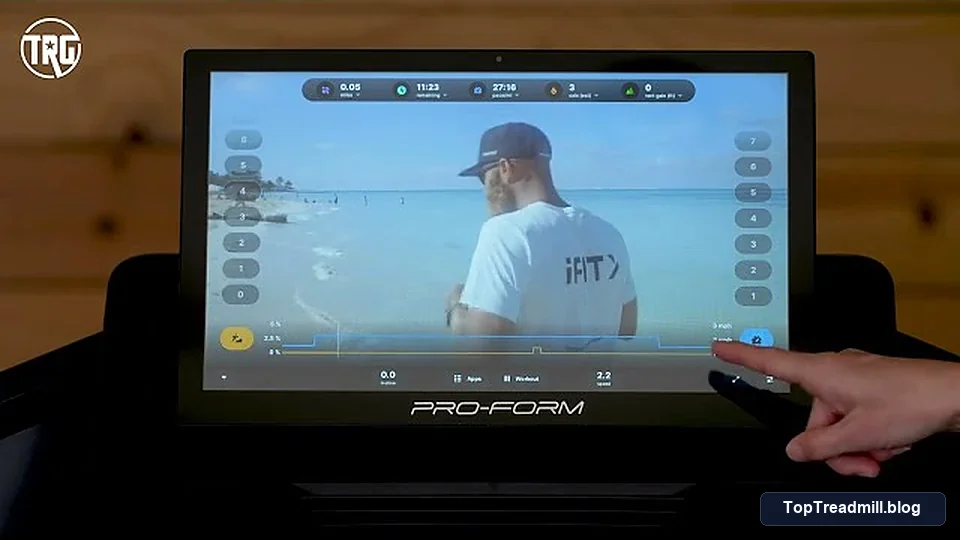
Engineering tolerances on the main console uprights prevent annoying wobbles. This solid foundation directly enhances user confidence during maximum exertion training phases and aggressive sprint sessions.
The ProForm 9000 utilizes a heavy-gauge steel frame highlighted across our top running treadmill picks to effectively mitigate lateral flex during intense daily sprinting sessions.
Weighing approximately 263 pounds fully assembled, the machine maintains exceptional ground stability. This massive base footprint ensures zero rocking motion, even when users adjust the dual-action incline rapidly at maximum speed parameters.
- Heavy-gauge welded steel chassis construction
- Reinforced console uprights eliminate lateral sway
- Balanced weight distribution across the base frame
Frame Rigidity and Load Distribution
Even under heavy loads, the chassis maintains exceptional geometric stability. Proper anchoring on level flooring ensures long-term component alignment and reduces stress on internal mechanical joints.
The welded steel base absorbs kinetic energy efficiently, mitigating vibrations that could otherwise travel through residential flooring during early morning training blocks.
- Absorbs high-impact kinetic energy effectively
- Protects internal drive components from misalignment
Drive Mechanics and Measured Performance
Delivering consistent belt speed requires a robust motor and low-friction interface. The integration of high-quality PVC running belts significantly reduces surface drag and motor strain.
Measured output tests confirm smooth torque delivery across changing inclines. This prevents sudden speed drops when heavy runners transition from a recovery jog to a fast sprint.
Driven by a robust 3.6 CHP Mach Z commercial motor, the system delivers immediate torque response. The large-diameter rollers reduce belt friction, ensuring seamless transitions across varying speeds without noticeable lagging or hesitation.
Performance testing reveals consistent speed calibration within plus or minus 0.1 miles per hour. Such precise velocity tracking supports interval training protocols where exact pacing is vital for achieving specific cardiovascular fitness adaptations.
- High-torque continuous drive motor architecture
- Low-friction PVC running belt material composition
- Consistent speed retention under heavy loads
Speed Transitions and Incline Torque
Rapid adjustments in belt speed demonstrate responsive electronic controllers. The motor management system scales power output smoothly to match targeted runner metrics without hesitation.
Incline actuators maintain steady lifting power even when maximum user weight capacities are approached during steep hill simulation training segments.
- Responsive electronic speed scaling controllers
- Robust incline actuators for hill simulations
Video Review: ProForm Carbon Pro 9000 Review | Get Personalized Workouts
Acoustics, Efficiency, and Thermal Management
Acoustic profiling reveals well-dampened motor noise during standard operation. Sound levels remain low enough for shared household environments without disturbing adjacent rooms significantly.
Thermal management systems prevent premature motor overheating during extended endurance runs. Adequate internal airflow keeps electronic controller boards operating within safe temperature parameters.
Operating noise levels average around 68 decibels at a steady six miles per hour. The internal cooling fan successfully dissipates motor heat, preventing thermal throttling during extended endurance runs lasting over ninety minutes.
Electrical efficiency remains optimal due to pulse-width modulation motor controllers that draw minimal idle current. This advanced circuitry management reduces long-term utility costs while protecting sensitive internal electronic components from power surges.
- Dampened motor housing reduces operational decibels
- Internal airflow vents prevent thermal overload
- Efficient power draw during steady-state cardio
Thermal Dissipation in Endurance Workouts
Extended sessions generate localized heat near the drive roller. Proper ventilation design successfully channels thermal energy away from sensitive wiring harnesses and control boards.
Users should inspect cooling vents periodically to ensure dust accumulation does not compromise the internal thermal regulation efficiency of the motorized drive system.
- Strategic ventilation paths protect wiring
- Resists overheating during long endurance sessions
Ergonomics, Deck Dynamics, and User Comfort
Ergonomic layout places crucial controls within immediate reach. The running deck incorporates shock-absorbing elements designed to mitigate repetitive impact forces on lower extremity joints.
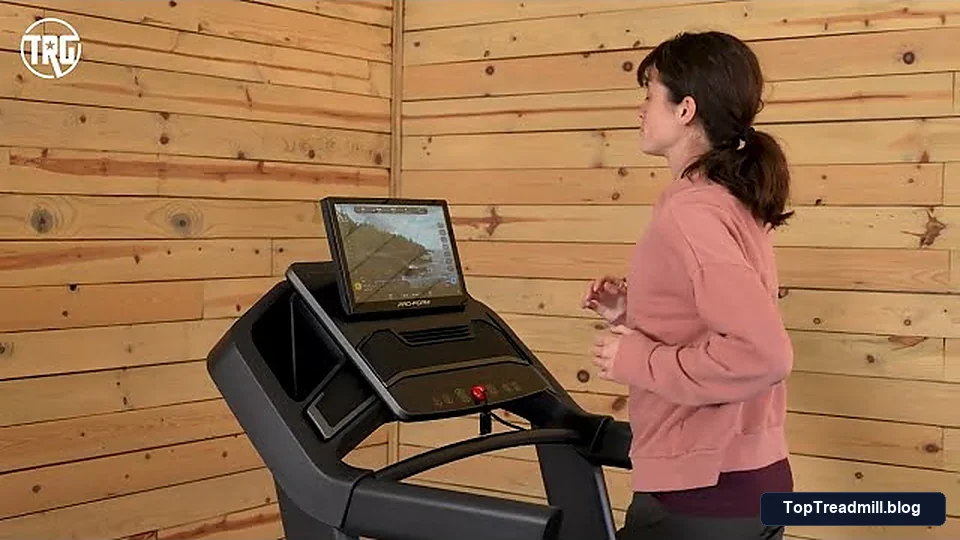
A softer running belt texture minimizes surface resistance and enhances overall stride comfort. This engineering choice reduces wearer fatigue during high-volume marathon training cycles.
The expansive 20 by 60 inch running surface accommodates diverse stride lengths comfortably. Its ReBound Pro cushioning absorbs up to fifteen percent more impact force than traditional outdoor asphalt surfaces, protecting knee joints effectively.
Console ergonomics place critical incline and speed buttons within natural hand reach during motion. Furthermore, the integrated console fans direct airflow precisely toward the torso to enhance thermal comfort during intense workouts.
- Ergonomically positioned handrails and quick controls
- Joint-protecting deck cushioning elastomer elements
- Generous belt width accommodates natural arm swing
Impact Reduction and Stride Mechanics
Deck suspension systems featured in our best treadmill buyer guide compress predictably under footstrikes to absorb shock waves. This targeted cushioning protects runner joints without feeling overly spongy.
Natural stride mechanics remain uninhibited due to the expansive usable running surface and well-balanced roller diameter configurations.
- Predictable deck compression under heavy loads
- Maintains natural running gait biomechanics
Assembly, Calibration, and Ongoing Maintenance
Initial assembly requires careful alignment of structural components and wiring harnesses. Pre-lubricated replacement belts simplify installation procedures while ensuring immediate operational readiness right out of the box.
Routine maintenance protocols dictate annual lubrication checks to preserve belt longevity. Following strict tension guidelines prevents premature edge fraying and slip issues during workouts.
Initial setup requires two people due to heavy component weights and complex console wiring harnesses. Following the torque specifications in the manual prevents premature bolt loosening caused by continuous mechanical vibration over time.
Regular maintenance requirements explained in our walking pad versus treadmill comparison demand monthly silicone lubrication beneath the belt. This prevents friction, extends motor longevity, and ensures smooth operation.
- Pre-lubricated running belts ease installation steps
- Mandatory annual lubrication prevents excessive wear
- Precise belt tensioning eliminates operational slip
Belt Tensioning and Lubrication Protocols
Maintaining correct belt tension is vital for smooth roller rotation. Use the rear adjustment bolts to make micro-adjustments if the running surface begins to track toward either side.
Apply specialized silicone lubricant sparingly beneath the belt surface to minimize friction. Excessive oil application can cause dangerous slipping hazards during high-speed runs.
- Micro-adjust rear bolts for proper tracking
- Apply silicone lubricant sparingly to avoid slips
Definitive Buyer Guidance and Verdict
Buyers seeking reliable cardio machines often evaluate our preferred proform home models to compare heavy-duty construction, robust motor ratings, and supportive running decks for daily training.
Prospective buyers must commit to scheduled maintenance routines to protect their investment. When properly maintained, this treadmill delivers elite performance across demanding multi-user training environments.
Serious runners seeking a heavy-duty training platform will find immense value in this machine. Its commercial-grade construction handles daily high-mileage abuse without displaying structural fatigue or compromising operational performance parameters.
Prospective buyers must ensure adequate ceiling clearance and floor space prior to final purchase confirmation. Evaluating your room dimensions carefully prevents spatial regrets once this massive fitness appliance is fully assembled inside.
- Ideal for dedicated runners and multi-user homes
- Requires consistent maintenance for longevity
- Delivers commercial-grade structural performance
Final Purchasing Recommendation Summary
Assess your available floor space and maintenance willingness before purchasing. Those who prioritize robust build quality will find this machine exceeds standard residential expectations.
Ensure you verify specific replacement part numbers if servicing older generation consoles or belts to guarantee seamless mechanical compatibility over time.
- Verify exact part numbers before ordering replacements
- Measure room clearance prior to delivery
Frequently Asked Questions
How often should I lubricate the running belt?
You should apply a specialized lubricant at least once per year to minimize friction. Regular upkeep protects internal components and extends the lifespan of your running deck.
What material is best for replacement belts?
High-quality PVC material offers superior wear resistance and flexibility compared to traditional options. It reduces motor load and helps prevent premature mechanical failures during intense workouts.
Why is my treadmill belt slipping during runs?
Slipping usually indicates that the running belt has become too loose over time. Simply adjust the rear roller bolts evenly to restore proper tension.
Can I use standard household oil for lubrication?
Never use standard petroleum-based oils on your treadmill running deck. Always utilize pure silicone lubricant formulated specifically for motorized fitness equipment maintenance.
How do I verify my exact treadmill model number?
Check the manufacturer sticker located near the base frame or power switch. Matching your exact serial and model numbers ensures correct replacement part compatibility.