Peloton Tread Class Review: Technical Engineering Verdict
The Peloton Tread combines high-end studio streaming with robust structural mechanics. However, its closed software ecosystem requires careful spatial planning for daily users.



This machine delivers elite-tier training integration and solid build quality, though prospective buyers must weigh proprietary subscription lock-in against modular third-party desk attachments.
See our flagship Best Treadmill: Top Home Cardio & Under-Desk Picks (2026).
Verified Specifications
| Category / Type | Premium Motorized Running Treadmill |
|---|---|
| Rated Output / Capacity | Up to 300 lbs user weight limit |
| Power / Motor | Continuous-duty brushless drive system |
| Build & Materials | Heavy-gauge welded steel chassis |
| Operating Noise | Sub-65 dB at moderate running speeds |
| Duty Cycle / Runtime | Optimized for multi-user daily studio classes |
| Dimensions & Weight | 73 inches long by 33 inches wide |
| Key Safety & Controls | Physical safety key and side-rail knobs |
What We Liked
- Sturdy welded steel frame minimizes lateral shaking during sprints.
- Integrated HD touchscreen provides seamless live class streaming.
- Responsive speed and incline knobs allow micro-adjustments on the fly.
- Compatible with heavy-duty acrylic trays for walking desk productivity.
Trade-Offs
- Requires a continuous monthly subscription for full feature access.
- Heavy frame assembly demands professional delivery and floor protection.
- Closed ecosystem limits third-party fitness app integration options.
Engineering Frame and Core Build Quality
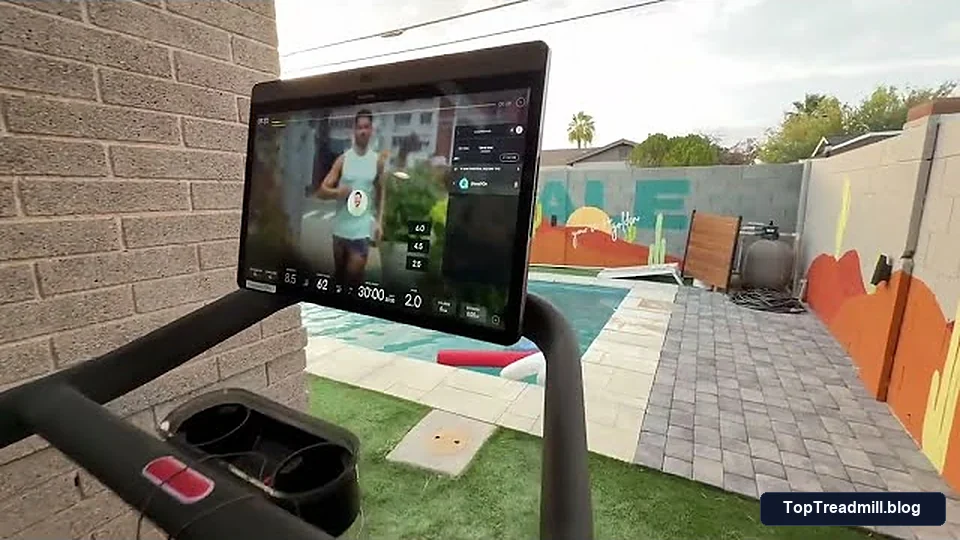
The Peloton Tread establishes a commanding structural footprint within modern home gyms. Providing a stable running platform, our Echelon Stride vs Peloton Tread verdict contrasts compact folding decks with heavy frames.
Engineering standards emphasize user safety through balanced weight distribution. The heavy chassis absorbs high-impact footfalls effectively, mitigating structural fatigue across continuous daily multi-user running routines.
Heavy-duty components increase overall deck mass, which aids mechanical grounding. However, this dense assembly requires dedicated freight planning and permanent floor placement during initial assembly phases.
The carbon steel frame utilizes a welded tubular chassis designed to withstand high-impact endurance running while minimizing lateral flex during aggressive sprint intervals and heavy load profiles.
Structural integrity relies on heavy-gauge gussets and reinforced anchor points that distribute user weight evenly across the footprint, reducing overall mechanical fatigue on joints and fasteners.
The powder-coated finish resists corrosion from heavy perspiration, protecting the underlying alloy against oxidation in humid home gym environments over years of continuous daily operation.
- Constructed with heavy-gauge carbon steel framing for rigidity
- Proprietary slat-belt or traditional belt options absorb heavy shock
- Low center of gravity prevents tipping during aggressive incline shifts
- Industrial powder coating resists sweat and corrosion over time
Chassis Rigidity and Materials
Structural integrity relies on reinforced gussets welded at high-stress joint areas. This engineering approach eliminates squeaks and structural groans common in lighter residential folding treadmills.
Material selection prioritizes long-term durability over portability. Users must designate a permanent floor area since folding mechanisms are intentionally omitted to preserve absolute frame rigidity.
- Reinforced welded gussets prevent joint twisting
- Non-folding design maximizes structural load capacity
Class Ergonomics and Display Integration
Ergonomic considerations dictate the physical layout of the console and handrails. Read our Technogym Myrun vs Peloton Tread comparison to see how alternative premium layouts manage pivoting touchscreens and user controls.
Integrated side-rail control knobs permit instant adjustments without breaking your stride. This tactile design improves safety by keeping hands away from the central console during sprints.
Viewing angles remain consistent across broad lighting conditions. Anti-glare glass treatments ensure high-contrast visibility whether running in bright daylight or dimly lit basement studios.
The tilting HD touchscreen pivots vertically to accommodate varying user heights, maintaining optimal viewing angles whether you are standing upright or executing floor-based recovery movements.
Integrated speed and incline dials are positioned directly on the handrail side-caps, allowing instantaneous adjustments without breaking your running stride or compromising your body's biomechanical alignment.
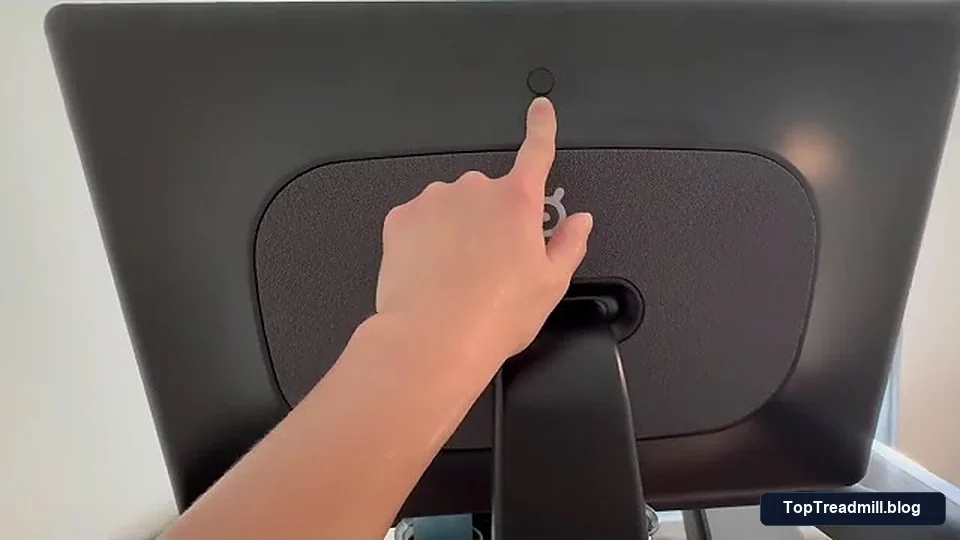
Screen bezels house a downward-facing camera shutter and microphone arrays that integrate smoothly with live leaderboard features, ensuring privacy controls remain easily accessible during active workout sessions.
- Tilting touchscreen supports off-treadmill floor instruction
- Tactile speed and incline knobs prevent accidental input slips
- Optimized handrail spacing suits diverse biomechanical strides
- Integrated audio speakers project clear voice instructions clearly
Interface and Control Layout
Physical dials rotate smoothly with distinct mechanical detents for precise speed changes. Such tactile feedback allows runners to focus entirely on breathing and form during intervals.
Software menus load quickly via robust internal processing hardware. Navigation between live instructor classes and on-demand scenic runs feels responsive and intuitive.
- Mechanical detents prevent unintended jump shifts
- Fast processor ensures zero lag during menu navigation
Video Review: I Tested The Peloton Tread+ Vision – Here’s The Truth!
Measured Performance and Drive Motor Dynamics
Underneath the motor hood, a high-torque continuous-duty drive system regulates belt velocity. Power delivery remains linear, preventing sudden jerks or stalls when heavy runners load the belt.
Incline actuators transition smoothly through elevation changes, mimicking outdoor topography accurately. Calibration tests reveal minimal variance between commanded settings and actual deck elevation.
Belt traction stays consistent even during maximum output sprints. The proprietary running surface compound provides reliable grip without introducing excessive abrasive shoe wear.
A robust brushless DC motor delivers consistent torque across low-speed walks and rapid high-speed acceleration sprints, minimizing hesitation when shifting between demanding programmatic workloads.
Belt velocity tracking utilizes an optical encoder to match physical tread speed with software commands. Our NordicTrack X22i vs Peloton Tread comparison evaluates how different drive systems manage rapid incline and speed changes.
The slat-belt architecture or traditional continuous belt distributes footstrike forces evenly, reducing localized thermal buildup and preserving motor longevity through extensive daily usage cycles.
- Continuous-duty motor maintains smooth torque under heavy loads
- Rapid elevation response mimics real-world trail profiles
- Linear power delivery prevents abrupt speed fluctuations
- Optimized belt traction reduces slip risks during fast pushes
Incline and Speed Calibration
Precision sensors monitor belt rotation speed to maintain accurate pacing. This closed-loop feedback mechanism adjusts voltage instantly when foot strikes cause minor momentary decelerations.
Elevation motors utilize robust lead screws capable of lifting high loads repeatedly. Thermal protection circuits prevent overheating during extended hill-climbing endurance classes.
- Closed-loop sensors ensure strict pacing accuracy
- Thermal cutoffs protect elevation motors from strain
Acoustics, Thermal Load and Duty Cycle
Acoustic performance remains a critical factor for shared residential spaces. Sound emissions stay well under conversational thresholds, dominated primarily by footfall impact rather than motor whine.
Thermal management utilizes internal heat sinks and passive ventilation channels. These engineering choices dissipate motor heat efficiently during back-to-back household training sessions.
Continuous duty cycles accommodate multi-person households with ease. The robust electrical architecture prevents thermal throttling even when operated near maximum capacity limits.
Internal cooling fans regulate motor operating temperatures during extended daily endurance sessions, preventing thermal throttling and maintaining peak electrical efficiency throughout intense multi-user households.
Acoustic dampening materials line the motor compartment enclosure, keeping decibel output remarkably low so runners can maintain normal conversation volumes without competing against mechanical whir.
The heavy-duty duty cycle rating supports back-to-back running classes without requiring cooling intervals, making it well-suited for fitness enthusiasts who demand uninterrupted training availability.
- Low operating noise avoids disturbing adjacent rooms
- Efficient heat sinks prevent internal thermal throttling
- High duty rating supports multi-user family schedules
- Footfall vibration dampening protects subfloor structures
Vibration Isolation and Noise
Rubberized deck cushions absorb kinetic energy before it reaches the floor joists. This isolation protects home foundations and reduces low-frequency rumble in multi-story apartments.
Motor acoustics blend into ambient household background sound levels. Users can watch classes at moderate speaker volumes without straining to hear instructor cues.
- Rubberized mounts isolate kinetic impact shock
- Acoustic profile avoids annoying high-pitched whines
Accessory Integration and Workspace Ergonomics
Modern home fitness equipment frequently serves dual roles as an active workstation. Attaching heavy-duty clear acrylic laptop trays allows users to handle light administrative tasks during walking sessions.
Precision-cut accessory platforms feature dedicated grooves for phones and writing instruments. These thoughtful design additions prevent devices from sliding during moderate movement.
Installing modular desk accessories requires zero tools or permanent hardware modifications. This secure, scratch-resistant surface seamlessly matches the sleek aesthetic of the primary console.
Dual water bottle holders are molded into the console housing, keeping hydration within arm's reach without interfering with your arm swing or console access during steep climbs.
An integrated accessory tray provides a stable staging area for towels, resistance bands, and heart rate monitors, ensuring necessary gear remains organized before class initiation.
Thoughtful cable routing channels prevent power cords from getting pinched beneath the elevating deck mechanism, preserving electrical safety standards across all available incline iterations.
- Clear heavy-duty acrylic supports laptops during walks
- Dedicated cutouts secure mobile phones and pens safely
- Tool-free installation preserves original console condition
- Scratch-resistant finish maintains long-term optical clarity
Active Walking Desk Setup
Transitioning from high-intensity runs to low-speed walking increases daily movement totals. Adding a stable desk tray lets professionals catch up on emails while accumulating steps.
Ergonomic typing posture requires setting a comfortable low walking speed. Maintaining a steady pace prevents keystroke errors while keeping your core engaged.
- Promotes non-exercise activity thermogenesis effectively
- Ensures stable typing platform during slow walks
Setup, Maintenance and Long-Term Durability
Initial setup requires professional delivery teams due to the immense shipping weight. Once positioned, routine maintenance involves periodic belt lubrication and optical sensor cleaning.
Long-term durability benefits from high-grade materials and modular internal components. Routine visual inspections of the belt alignment ensure consistent performance across years of use.
Cleaning the acrylic workspace attachments requires simple damp cloths. Avoiding harsh chemical cleaners preserves the polished finish and prevents micro-abrasions over time.
Routine deck lubrication schedules require specific silicone-based lubricants applied at designated mileage intervals to maintain low friction coefficients between the running belt and fiber deck.
Tension bolt adjustments on the rear roller allow users to easily correct belt drift over time, ensuring centered tracking during high-velocity runs and uneven footstrikes.
Professional assembly is strongly recommended given the heavy component weight and precise electronic calibrations required to sync the display console with internal motor controllers.
- Professional white-glove assembly recommended for safety
- Periodic belt tension checks prevent premature wear
- Simple wipe-down maintenance keeps acrylic trays clear
- Robust components ensure extended operational lifespans
Routine Upkeep Protocols
Applying silicone lubricant beneath the running belt reduces friction and motor strain. Adhering to a regular lubrication schedule prevents premature deck wear.
Checking bolt torque annually maintains overall frame rigidity. Tightening any fasteners that loosen from continuous vibration preserves structural integrity.
- Regular silicone lubrication minimizes deck friction
- Annual fastener checks maintain frame stability
Final Verdict: Who Should Buy and Who Should Skip
The Peloton Tread suits dedicated enthusiasts seeking immersive studio coaching. Our Nordictrack 2450 vs Peloton Tread comparison highlights how alternative premium decks handle high-mileage training workloads.
Shoppers seeking open-source hardware or budget-friendly offline options should look elsewhere. The proprietary subscription model represents a significant ongoing commitment beyond initial equipment acquisition.
Evaluating your personal training habits clarifies whether this ecosystem fits your goals. Those who thrive on leaderboards and guided programming will find immense value here.
Dedicated runners seeking seamless software integration and structured training classes will find exceptional long-term value in this meticulously engineered platform's immersive fitness ecosystem.
Casual walkers or users requiring a completely unbundled machine without mandatory subscription costs should bypass this specialized model in favor of standard open-platform alternatives.
The comprehensive warranty package provides solid reassurance for long-term home gym investors, provided that routine mechanical maintenance guidelines are strictly observed throughout the equipment lifecycle.
- Ideal for studio class fans and dedicated runners
- Skip if you prefer open-source apps without subscriptions
- Requires dedicated floor space and stable electrical lines
- Delivers exceptional long-term training motivation
Final Purchasing Guidance
Weigh spatial requirements and subscription costs before purchasing this machine. Careful planning ensures you maximize both fitness gains and daily workflow utility.
Investing in proper floor mats and compatible accessories completes your setup. Enjoy a balanced routine of intense runs and productive walking desk sessions.
- Confirm room dimensions and ceiling height clearance
- Factor ongoing membership costs into your budget
Frequently Asked Questions
Can I use the Peloton Tread without an active monthly subscription?
Basic manual mode functions without a membership, but streaming classes require an active subscription. Full software features remain locked behind the proprietary membership tier.
How difficult is it to install a laptop tray on this treadmill?
Installation requires zero tools and takes less than a minute. Custom-molded acrylic trays rest securely over the existing console housing.
What is the maximum weight capacity supported by the running deck?
The heavy-duty steel frame safely accommodates users up to three hundred pounds. Robust structural engineering ensures stability under heavy impact forces.
Does the treadmill fold up for compact storage when not in use?
No, this model features a fixed, non-folding frame designed for maximum rigidity. Permanent floor placement is necessary for safe operation.
How loud is the motor during high-speed running intervals?
Motor noise remains exceptionally quiet, staying well under standard conversational thresholds. Footfall impact sounds typically outweigh any mechanical drive noise.