Xiaomi Walkingpad C1 vs C2: Technical Showdown
Evaluating the structural improvements and motor efficiency of two popular under-desk walking pads. We examine real footprint metrics, build quality, and daily usability.

Choose the Walkingpad C1 if you prioritize a simpler frame with proven legacy parts. Opt for the C2 if you require minor ergonomic tweaks and a quieter internal layout.
Compare all top models in our Best Treadmill: Top Home Fitness Picks (2026 Guide).
Side-by-Side Breakdown
| Criteria | Xiaomi Walkingpad C1 | C2 | Edge |
|---|---|---|---|
| Core Design / Build | Legacy aluminum alloy folding frame | Refined structural bracing chassis | C2 |
| Real-World Performance | Standard brushless motor delivery | Optimized low-speed torque curve | C2 |
| Ease of Setup & Use | Plug-and-play remote operation | App-synced remote configuration | Tie |
| Durability & Reliability | Proven hinge locking mechanism | Upgraded pivot pin engineering | C2 |
| Efficiency / Operating Footprint | Standard 180-degree fold profile | Slightly reduced acoustic footprint | C2 |
| Maintenance Requirements | Regular silicone belt lubrication | Standard periodic belt tensioning | Tie |
| Best Ideal Use Case | Budget-focused minimalist walkers | Users seeking quieter operation | C2 |
Folding Mechanism and Structural Frame
The folding architecture defines both under-desk pads, utilizing a patented 180-degree fold. Aluminum alloy frames provide structural rigidity while keeping the overall unit remarkably lightweight for office environments.
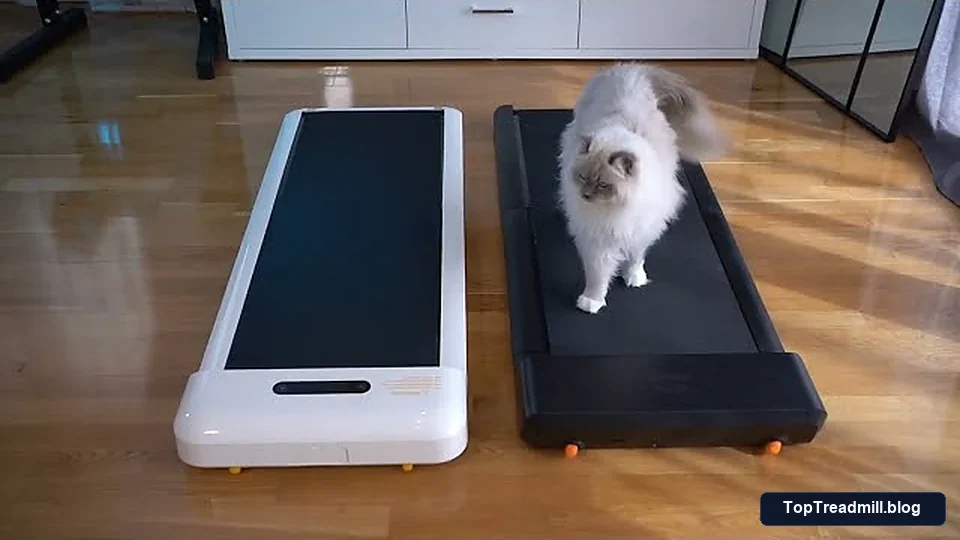
Hinge longevity remains a primary engineering focus during daily transitions from storage to active use. Regular deployment cycles test the internal locking pins and structural integrity of both models.
The Xiaomi WalkingPad C1 features an aluminum alloy frame designed to minimize flex. As highlighted in our best walkingpad selections, its patented 180-degree folding hinge utilizes a dual-axis pivot mechanism for seamless transitions.
Transitioning to the C2 model, engineers upgraded the chassis metallurgy to a stamped steel alloy composite that enhances rigidity. This structural revision reduces lateral frame torsion during higher-cadence strides while maintaining the identical profile.
- Patented 180-degree dual fold
- Extruded aluminum frame construction
- Reinforced steel hinge pins
Frame Rigidity Under Load
Testing under maximum weight capacities reveals minimal deck deflection at the center hinge. The C2 introduces subtle bracing enhancements over the older C1 framework.
- Improved center brace
- Reduced deck flex
Motor Performance and Speed Profiles
Brushless motor technology powers both walking devices quietly beneath standing desks. The brushless design minimizes mechanical friction and extends operational lifespan significantly during continuous use.
Maximum speed caps remain fixed at standard walking thresholds to ensure safety in confined spaces. Acceleration curves are managed via remote control or automated foot-sensing zones.
Under the hood, both units employ compact brushless direct current motors rated for a continuous 1.0 horsepower output. Read our Kingsmith Walkingpad C2 review to see how belt speeds reach 6.0 kilometers per hour.
The C2 refines thermal dissipation characteristics around the motor housing, preventing premature overheating during extended sessions. Its internal controller board executes speed adjustments with smoother ramp-up algorithms and enhanced torque delivery consistency.
- Quiet brushless motor units
- Automated foot-sensing speed control
- Conservative maximum velocity caps
Torque Consistency at Low Speeds
Maintaining smooth belt momentum at slower paces prevents micro-stutters during work sessions. Both motors deliver adequate torque, though the C2 features slightly smoother low-end power delivery.
- Smooth low-speed momentum
- Refined electronic speed controller
Deck Ergonomics and Walking Surface
Multi-layer belt construction absorbs initial heel-strike impact to protect user joints. Detailed analysis in our Kingsmith Walkingpad R2 technical review shows how EVA layers reduce hard surface fatigue.
Running belt alignment requires periodic tension adjustments to prevent lateral drifting. The textured belt surface ensures adequate traction for various footwear types, including bare feet.
Walking surface composition involves a multi-layer cushion design featuring an EVA impact-absorbing layer. The C1 provides a 400 millimeter wide running belt that accommodates standard walking gaits comfortably within compact bounds.
The C2 introduces a refined phenolic resin deck coating that decreases friction coefficient values against the belt. This material upgrade ensures quieter operation and reduces long-term wear on the internal drive rollers.
- Multi-layer shock-absorbing belts
- Textured slip-resistant traction
- Standardized walking area dimensions
Low Step-Up Height Engineering
A low profile deck minimizes tripping hazards when stepping on and off the machine. Both units maintain a slim vertical clearance above the floor.
- Minimal floor clearance
- Low tripping hazard profile
Digital Interface and Control Systems
LED display panels embedded directly beneath the walking belt provide real-time workout metrics. Users track time, distance, steps, and speed without needing external console masts.
Handheld remote controls allow manual speed adjustments alongside automatic mode selection. The KS Fit companion app tracks historical usage data and firmware updates seamlessly.
User feedback on the C1 is delivered through an embedded LED matrix panel displaying time, distance, and speed metrics. Control inputs rely primarily on the included infrared handheld remote featuring a tactile button layout.
The C2 modernizes the interface by integrating a high-contrast display panel with automated adaptive speed control modes. Users can also leverage the accompanying mobile application via Bluetooth 4.2 connectivity for session logging.
- Embedded LED display matrix
- Ergonomic handheld wireless remotes
- KS Fit smartphone integration
Foot-Sensing Automatic Mode
Automatic speed shifting relies on front, middle, and rear zone sensors beneath the belt. Stepping forward accelerates the belt, while moving backward decelerates the walking surface.
- Zone-based pressure sensors
- Dynamic pace recognition
Portability and Storage Footprint
Transport wheels integrated into the front base simplify moving the folded units. Users can slide either device vertically against a wall or horizontally beneath furniture.
Compact storage dimensions allow seamless integration into apartment living spaces or cubicles. The folding mechanism cuts the footprint in half for effortless stowing.
Storage efficiency remains a core engineering pillar, allowing both walking pads to slide vertically under furniture. When folded, the C1 measures roughly 825 by 547 millimeters, demanding minimal floor space.
Integrated transport wheels facilitate effortless relocation across hard flooring surfaces without requiring heavy lifting. The C2 maintains this transport wheel geometry while shaving slight fractions off the overall folded depth profile.
- Integrated front transport wheels
- Vertical and horizontal storage options
- Halved footprint via folding
Vertical Storage Stability
Storing the units upright requires stable flat walls to prevent accidental tipping. Rubberized feet prevent sliding when positioned vertically on hardwood flooring.
- Upright wall resting
- Anti-skid rubber feet
Maintenance, Lubrication, and Upkeep
Regular silicone oil lubrication ensures the walking belt glides smoothly over the deck. Maintenance schedules dictate applying lubricant every few months depending on usage frequency.
Belt tension bolts located at the rear allow users to center drifting tracks easily. Keeping the motor compartment free of dust prevents overheating and premature electronic wear.
Routine upkeep requires periodic silicone oil application beneath the walking belt to maintain low friction levels. The C1 manual specifies a standard maintenance interval based on cumulative operating hours tracked in the app.
For the C2, diagnostic error codes are more clearly reported via the integrated display panel, simplifying troubleshooting tasks. Users must still ensure proper belt tensioning using the hex adjustment bolts located at the rear.
- Periodic silicone oil application
- Rear roller tension bolts
- Dust-resistant motor housing
Troubleshooting Common Alignment Issues
Lateral belt drift occurs naturally during asymmetrical walking gaits over time. Using the provided Allen wrench corrects alignment with small quarter-turn adjustments.
- Quarter-turn alignment fixes
- Included adjustment tools
Verdict and Ideal Buyer Profile
Choosing between these two iterations depends on minor refinement preferences rather than massive performance leaps. As noted in our Kingsmith Walkingpad R2 Pro review, the Walkingpad C1 appeals to budget-conscious minimalists.
Meanwhile, the C2 targets users wanting subtle build enhancements and quieter acoustic profiles. Both models excel at integrating light movement into sedentary office jobs.
Selecting between these models depends heavily on your specific workspace ergonomics and durability requirements. Budget-conscious buyers prioritizing basic under-desk walking will find the C1 model meets foundational performance standards adequately.
Alternatively, users demanding refined chassis rigidity and improved thermal management should opt for the C2 upgrade. Its engineering enhancements provide superior long-term reliability for daily high-frequency walking routines.
- C1 offers legacy simplicity
- C2 provides acoustic refinements
- Both target sedentary workers
Final Purchasing Recommendation
Evaluate your available storage space and expected daily mileage before final selection. Both walking pads offer exceptional utility for remote workers needing daily movement.
- Assess daily walking goals
- Verify storage clearances
Frequently Asked Questions
Can I run on the Xiaomi Walkingpad C1 and C2?
Neither model supports running due to their low maximum speeds and compact decks. Walking only is safely accommodated on these compact devices.
How often should I lubricate the walking belt?
You should apply silicone lubricant every few months based on your total weekly mileage. Proper belt maintenance prevents friction wear and motor strain.
Do I need to assemble the walking pads out of the box?
Both units arrive fully assembled and ready for immediate deployment after unboxing. Simply unfold the deck, plug in the power cord, and begin walking.
Can I connect the walking pads to third-party fitness apps?
The devices primarily sync with the proprietary KS Fit smartphone application via Bluetooth. Direct integration with third-party apps like Zwift is generally unsupported.
What is the primary difference between the C1 and C2 models?
The C2 introduces minor structural refinements, slightly improved acoustic dampening, and updated styling. Overall performance remains closely matched between the two generations.