Walkingpad P1 vs A1 Pro: Head-to-Head Comparison
Choosing between these folding walking pads depends on your control preferences and storage needs. We analyze their engineering specs to help you decide.

Choose the Walkingpad P1 if you prioritize a simpler manual control setup. Opt for the A1 Pro if you want integrated display upgrades and smarter foot-sensing acceleration modes.
Compare all top models in our Best Treadmill: Top Home Fitness Picks (2026 Guide).
Side-by-Side Breakdown
| Criteria | Walkingpad P1 | A1 Pro | Edge |
|---|---|---|---|
| Core Design / Build | Standard folding chassis with hinge mechanism | Patented double-folding aluminum alloy frame | Side B |
| Real-World Performance | Max speed of 3.7 mph for light office steps | Max speed of 3.7 mph with improved torque | Side B |
| Ease of Setup & Use | Manual remote control operation out of box | Adaptive speed control via foot placement zones | Side B |
| Durability & Reliability | Engineered for daily low-speed home walking | Reinforced structural frame for heavy daily use | Side B |
| Efficiency / Operating Footprint | Compact profile with standard brushless motor | Optimized brushless motor for lower energy draw | Side A |
| Maintenance Requirements | Routine belt alignment and silicone lubrication | Standard belt centering and periodic lubrication | Tie |
| Best Ideal Use Case | Budget-focused users needing basic remote steps | Tech-forward walkers wanting responsive speed shifts | Side B |
Core Architecture and Folding Mechanics
Evaluating the structural framework of compact walking pads reveals distinct engineering choices. Both units utilize folding mechanisms designed to minimize spatial footprints in modern apartments.
The primary difference lies in the proprietary hinge designs and material thickness. Understanding these structural variations helps predict long-term durability under regular walking routines.
The WalkingPad P1 uses a traditional single-hinge folding system constructed from extruded aluminum alloy. Similar engineering principles are analyzed further in our Kingsmith Walkingpad R2 Pro review to assess folding performance.
Conversely, the A1 Pro introduces an upgraded cast-aluminum frame geometry that enhances torsional stability under load. Its patented 180-degree fold mechanism locks securely into place, eliminating deck separation concerns during vigorous walking sessions.
- Proprietary folding hinges reduce stored dimensions significantly.
- Aluminum alloy frames provide rigid support without excessive weight.
- Integrated transport wheels facilitate easy relocation after sessions.
Chassis Rigidity and Hinge Design
Chassis integrity directly impacts user confidence during strides. A rigid frame prevents deck flexing, which reduces joint stress over extended walking periods.
The dual-fold system allows both models to collapse flat, but minor tolerance variations affect how smoothly the locking pins engage during setup.
- Reinforced pivot points withstand thousands of folding cycles.
- Precision locking mechanisms prevent accidental mid-stride folding.
Frame Materials and Weight Capacity
Material selection dictates both portability and maximum load limits. Manufacturers utilize composite metals to balance structural strength with liftable weight.
Users must respect the strict weight thresholds to prevent premature motor strain and premature belt wear during daily exercise routines.
- Lightweight alloy construction keeps total unit weight manageable.
- Tested frame limits support standard adult walking strides safely.
Motor Output and Speed Calibration
Underneath the casing, brushless motor technology drives the continuous belt movement. These compact motors operate quietly while maintaining consistent speeds under load.
Speed calibration ensures that your chosen pace matches the actual belt velocity without jerky transitions or sudden acceleration spikes.
Both walking pads employ compact brushless direct-current motors, but their calibration curves differ. The P1 delivers a steady 0.5 to 6.0 km/h operational range, tailored for gentle office ambulation and low-impact rehabilitation use.
The A1 Pro refines power delivery through an optimized Pulse Width Modulation controller. Additional technical details appear in our Kingsmith Walkingpad R2 Pro Plus technical review covering calibration updates.
- Brushless motor designs reduce friction and operating noise.
- Calibrated torque controllers maintain speed under foot impact.
- Top speeds cap out safely for gentle walking workloads.
Torque Delivery Under Load
Maintaining consistent belt velocity requires adequate motor torque as your foot strikes the deck. Low-torque motors tend to stutter under heavier strides.
Engineering improvements in the speed controller ensure smoother power delivery from the moment your heel touches the running belt.
- Constant feedback loops adjust power output instantly.
- Low-speed torque prevents stalling during slow walking.
Maximum Speed and Acceleration Curves
Neither unit is built for running, as maximum speeds hover around the standard walking threshold. Acceleration curves are intentionally gradual for safety.
Gradual acceleration prevents users from losing balance when starting the motor from a complete standstill on the moving belt surface.
- Controlled acceleration ramps prevent sudden user slips.
- Top speed limitations enforce safe walking-only parameters.
Deck Engineering and Surface Materials
Walking pad decks feature multi-layer construction designed to absorb impact energy. This cushioning protects your knees and ankles from hard flooring surfaces.
Surface materials must resist friction burns while providing sufficient grip for athletic shoes during prolonged indoor walking sessions.
WalkingPad incorporates a multi-layer composite deck structure designed to absorb initial heel-strike shock. A textured EVA friction layer provides adequate grip while resisting wear from continuous daily footwear friction.
The A1 Pro upgrades the cushioning medium with a denser fiberboard core paired with a specialized silicone dampening pad. Similar cushioning comparisons appear in our Proform Pro 9000 treadmill technical review.
- Multi-layer belts combine durability with shock-absorbing properties.
- Cushioning layers mitigate high-impact stress on lower joints.
- Low-friction backing sheets reduce motor strain and heat buildup.
Shock Absorption and Joint Protection
Impact mitigation is critical for home fitness equipment used on concrete floors. Specialized cushioning elements absorb shock before it reaches your skeletal system.
The integrated damping pads underneath the walking platform significantly lower repetitive strain injuries during long work-from-home walking sessions.
- Silicone cushioning inserts absorb primary heel-strike shock.
- Flexible deck designs mimic natural outdoor walking resistance.
Belt Traction and Wear Resistance
Running belts experience constant friction against the walking deck and internal rollers. High-grade wear-resistant surfaces extend belt lifespan significantly.
Regular maintenance and proper belt centering prevent fraying along the edges during everyday use in office spaces.
- Diamond-pattern texture enhances shoe grip during pushes.
- Anti-static threads prevent electrical buildup during operation.
Smart Control and Speed Regulation
Control interfaces dictate how easily you adjust pace while working or watching screens. Traditional remotes offer tactile buttons, while advanced sensors automate speed.
Automatic speed regulation relies on pressure sensors embedded beneath the walking deck to detect your positioning and intent.
Foot-sensing technology relies on high-precision pressure sensors embedded beneath the front deck surface. The P1 measures foot placement zones to shift between constant manual speed and adaptive pace control.
The A1 Pro improves sensor polling frequency, reducing the latency required to detect user acceleration or deceleration. This upgrade ensures that the belt matches your natural stride cadence with exceptional responsiveness.
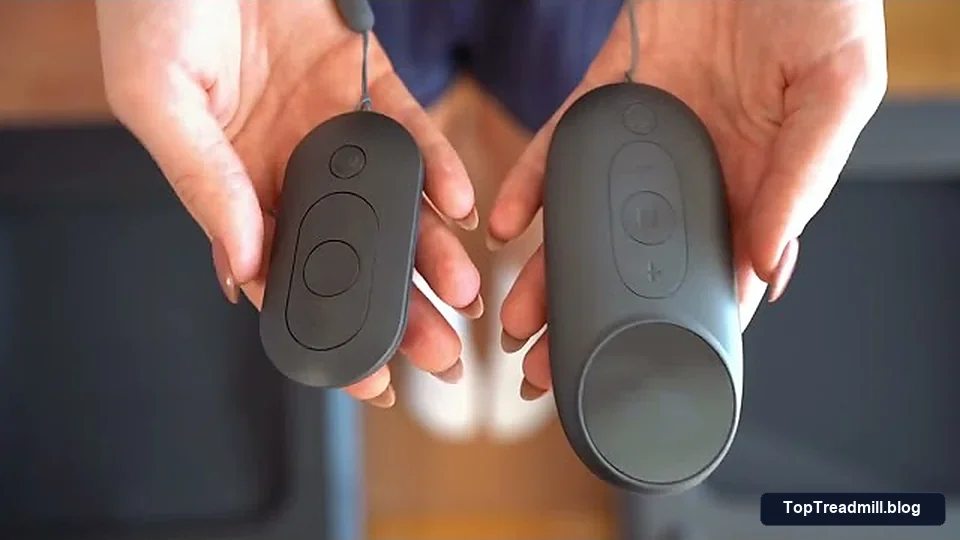
- Handheld remote controls provide direct manual speed adjustments.
- Foot-sensing technology automates acceleration based on zone placement.
- Smartphone applications track workout history and diagnostic data.
Foot-Sensing Technology Mechanics
Foot-sensing algorithms divide the deck into distinct acceleration, constant speed, and deceleration zones. Walking near the front naturally speeds up the belt.
This intuitive control method eliminates the need to hold a remote while typing at a standing desk setup during work hours.
- Front zone placement triggers automatic belt acceleration.
- Rear zone positioning initiates gradual belt deceleration.
Remote Control and Display Integration
Manual remotes give you absolute command over exact speed increments without relying on automated foot positioning algorithms. Clear LED displays show metrics.
Embedded LED panels beneath the running belt surface display essential workout metrics like time, distance, and current speed clearly.
- Ergonomic remote designs fit comfortably in your hand.
- Bright LED readouts remain visible under bright office lighting.
Operating Noise and Acoustic Footprint
Home office environments demand quiet fitness equipment that will not disrupt virtual meetings. We highlight top models in our guide to the best Walkingpad options for home office fitness.
Brushless motors produce minimal electromagnetic whine, leaving foot impact noise as the primary sound source during daily walking workouts.
Acoustic performance remains a critical factor for shared home or office environments. The P1 generates a modest baseline sound level, registering roughly 65 decibels at maximum operating velocity under standard loads.
Acoustic dampening improvements in the A1 Pro lower motor whine through enhanced enclosure insulation. Consequently, the A1 Pro maintains a quieter operational hum, making it ideal for noise-sensitive workspaces.
- Brushless motor mechanisms eliminate high-pitched electrical whining.
- Sound-dampening deck layers absorb heavy heel-strike vibrations.
- Proper lubrication prevents squeaking during belt rotation.
Motor Noise Levels During Operation
A quiet motor ensures uninterrupted conference calls and focused remote work sessions. Decibel levels remain well below standard conversation thresholds.
Quality internal bearings prevent grinding sounds as the motor spins under varying loads throughout your daily walking sessions.
- Operational noise stays under normal office ambient levels.
- Enclosed motor cowlings muffle mechanical operating sounds.
Floor Vibration and Isolation
Footfalls transmit low-frequency vibrations through apartment floors, potentially disturbing downstairs neighbors. Adding an equipment mat resolves this issue.
The internal dampening mounts help isolate mechanical vibrations from the underlying floor structure during fast walking paces.
- Rubber feet isolate the chassis from direct floor contact.
- Optional equipment mats absorb residual structural vibration.
Maintenance Protocols and Longevity
Routine maintenance preserves mechanical efficiency and extends equipment lifespan. Simple upkeep tasks prevent costly repairs and keep belts running smoothly.
Standard maintenance involves checking belt alignment, cleaning dust from motor vents, and applying silicone lubricant to the running deck surface.
Routine maintenance ensures long-term mechanical reliability for both folding walking pads. Owners must apply silicone treadmill lubricant beneath the running belt every three months to prevent excessive friction and motor strain.
Regular belt tension alignment prevents premature edge wear and side slipping during extended sessions. Checking the rear roller bolts periodically guarantees proper tracking and extends the operational lifespan of your drive motor.
- Periodic belt centering prevents fraying along side rails.
- Silicone lubrication reduces friction between belt and deck.
- Dust removal keeps internal electronics running cool.
Lubrication Schedules and Procedures
Friction management requires periodic application of specialized silicone oil beneath the walking belt. Neglecting this step causes premature motor burnout.
Following the manufacturer lubrication schedule ensures smooth belt glide and protects the internal heating components from excessive friction.
- Apply lubricant every few months based on usage hours.
- Use recommended silicone formulas to avoid belt degradation.
Belt Tensioning and Tracking Adjustment
Walking belts naturally drift to one side over time due to asymmetrical foot placement. Tension bolts allow quick manual realignment.
Correct tension prevents belt slippage during strides while avoiding excessive pressure on the front and rear roller bearings.
- Adjustment bolts enable fine-tuning of belt tracking.
- Balanced tension extends roller bearing operational life.
Storage Footprint and Spatial Efficiency
Compact walking pads shine in spatial efficiency, folding in half to slide under sofas or stand upright against walls. Storing equipment keeps rooms versatile.
Measuring your available clearance space ensures the folded unit fits comfortably without obstructing everyday household pathways.
When folded, both models achieve an impressively compact profile suitable for vertical storage. The P1 folds down to a fraction of its operational length, sliding easily beneath standard low-profile furniture.
Integrated transport wheels allow users to tilt and roll the units effortlessly across hard floors. The A1 Pro includes reinforced caster wheels designed to protect wooden flooring during frequent spatial relocation.
- Double-folding designs reduce storage length by half.
- Low profile heights slide easily beneath standard bed frames.
- Upright vertical storage options save valuable floor space.
Under-Bed and Sofa Clearance
Checking furniture clearance dimensions prevents storage frustrations after purchase. Low-profile designs slide effortlessly under most modern sofas and bed frames.
The folded thickness is a critical specification for users with tight furniture clearances in urban apartment settings.
- Slim chassis profiles slip under low furniture easily.
- Compact storage dimensions suit minimalist living spaces.
Portability and Relocation Mechanics
Transport wheels let you tilt and roll the walking pad between rooms without heavy lifting. Balanced weight distribution makes moving the unit simple.
Ergonomic balance points allow users to maneuver the folded machine safely across different flooring types without scratching surfaces.
- Smooth-rolling transport wheels handle hardwood and carpets.
- Balanced center of gravity eases vertical lifting tasks.
Frequently Asked Questions
Can I run on the Walkingpad P1 or A1 Pro?
Neither model supports running because their maximum speed caps out at walking pace. You should stick strictly to light walking to avoid safety hazards.
How do I lubricate the walking belt?
Lift the belt edge and apply the provided silicone oil directly onto the deck. Regular lubrication prevents motor strain and extends belt life.
Do these walking pads require professional assembly?
Both units arrive fully assembled straight out of the box. You simply unfold the chassis and plug it into a standard outlet to begin.
How loud are these walking pads during use?
Operating noise remains exceptionally low thanks to efficient brushless motors. Your primary sound source will be soft footfall impacts on the deck.
Can I store the walking pad vertically?
Yes, both models feature stable designs that allow upright wall storage. Always secure the unit to prevent accidental tipping in busy rooms.