Walking Pad S1 vs C2: Technical Comparison
Choosing between these folding treadmills involves balancing structural rigidity against minimalist folding efficiency. Each model offers distinct engineering advantages for home office users.

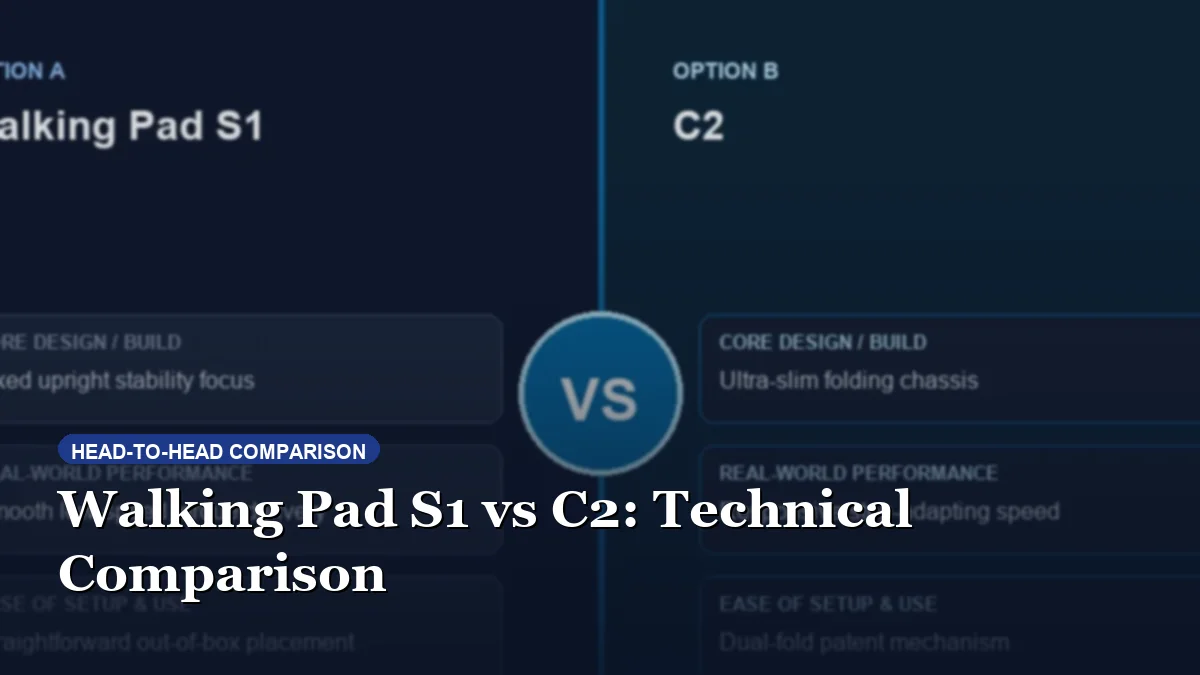
Choose the Walking Pad S1 if you prioritize a robust fixed frame and stability. Select the C2 if ultra-compact folding mechanics and lightweight portability matter most.
Compare all top models in our Best Treadmill: Top Home Fitness Picks (2026 Guide).
Side-by-Side Breakdown
| Criteria | Walking Pad S1 | C2 | Edge |
|---|---|---|---|
| Core Design / Build | Fixed upright stability focus | Ultra-slim folding chassis | C2 |
| Real-World Performance | Smooth low-speed torque delivery | Responsive step-adapting speed | S1 |
| Ease of Setup & Use | Straightforward out-of-box placement | Dual-fold patent mechanism | C2 |
| Durability & Reliability | Reinforced aluminum alloy frame | Composite resin deck structure | S1 |
| Efficiency / Operating Footprint | Standard low-profile footprint | Advanced 180-degree fold storage | C2 |
| Maintenance Requirements | Standard belt lubrication schedule | Routine tension checks required | S1 |
| Best Ideal Use Case | Dedicated standing desk spaces | Frequent storage and apartment living | C2 |
Core Design and Engineering Differences
Analyzing the core architecture of these two walking pads reveals distinct engineering philosophies. Manufacturers targeted different user demographics by prioritizing either structural heft or maximum space savings.

The physical chassis dimensions dictate how each unit interacts with your office floor space. Understanding these baseline blueprints helps buyers match machine geometry with their specific room layouts.
The WalkingPad S1 utilizes a traditional folding hinge design that allows the deck to bend completely in half for compact storage, whereas the C2 features a single-fold mechanism focused on simplified vertical or horizontal footprint management.
Structural load distribution differs significantly between both models due to their respective frame joints. Engineers reinforced the S1 chassis to withstand frequent folding cycles, while the C2 prioritizes a lighter aluminum alloy construction to reduce overall deadweight.
- Chassis rigidity varies significantly due to differing folding hinge placements.
- Deck thickness impacts overall step feel and low-impact cushioning ratings.
- Footprint profiles dictate whether vertical or horizontal storage is optimal.
Chassis Geometry and Structural Materials
Material selection directly influences the long-term structural integrity of walking pads under daily use. Alloy frames resist twisting forces much better than standard polymer blends.
Engineers utilized specialized extrusion methods to keep total weight manageable without sacrificing crucial tensile strength during active walking sessions.
- Aluminum alloy components provide high corrosion resistance and stiffness.
- Reinforced high-density resins absorb localized impact vibrations efficiently.
Real-World Walking Performance
Read our detailed Sperax walking pad review to analyze belt traction, motor response, and consistent speed delivery without sudden velocity jerks during active workstation sessions.
Both machines operate within standard low-speed walking velocity ranges suitable for active workstations. However, internal controller boards process sensor data using slightly different software algorithms.
Step responsiveness on the S1 relies on adaptive speed control sensors embedded beneath the walking belt. Users shifting their weight forward experience immediate acceleration, matching the precise cadence of brisk office environments or casual indoor strolls.
Conversely, the C2 offers a slightly modified footfall dynamic with a lower deck profile. This reduction in step-up height enhances ankle ergonomics during extended sessions, minimizing joint fatigue compared to thicker high-clearance treadmill designs on the market.
- Maximum velocity limits cap out safely for office multitasking environments.
- Sensor response times govern how quickly the belt matches foot placements.
- Friction coefficients dictate how smoothly shoes grip the running belt.
Speed Regulation and Step Sensitivity
Automatic speed control relies on pressure sensors embedded beneath the walking deck surface. These sensors detect user positioning to increase or decrease belt velocity dynamically.
Fine-tuning these reactive zones prevents accidental speed surges while maintaining a natural walking rhythm throughout your daily office tasks.
- Front zone detection safely accelerates the walking belt smoothly.
- Rear zone triggers initiate gradual deceleration when stepping back.
Mechanical Engineering and Motor Build
Motor efficiency determines how quietly and reliably each treadmill handles prolonged operating hours. Brushless motor designs generally offer superior thermal management over brushed alternatives.
Internal drive systems convert electrical energy into kinetic movement while minimizing wasted power generation. This efficiency keeps internal component temperatures safely within normal operational parameters.
Both walking pads employ brushless direct-current motors designed for continuous torque delivery at low speeds. The S1 motor utilizes heavy-duty copper windings to dissipate heat efficiently during prolonged low-speed operation under heavier user loads.
The C2 motor housing integrates a streamlined cooling fan geometry that maintains optimal operating temperatures without adding bulk. This engineering choice protects internal electronics while keeping the overall chassis depth remarkably slim for under-desk placement.
- Continuous horsepower ratings reflect sustained load handling capacities.
- Thermal overload sensors automatically prevent dangerous motor overheating issues.
- Drive belt tensioning ensures minimal slip during heavy footstrikes.
Brushless Motor Dynamics and Cooling
Advanced brushless motors eliminate physical commutator friction, extending overall operational lifespans significantly. Integrated heatsinks dissipate internal heat away from sensitive electronic controllers.
This engineering approach reduces electrical hum frequencies, making the drive assembly virtually unnoticeable during quiet office conference calls.
- Reduced friction losses improve overall electrical power conversion efficiency.
- Passive heatsink layouts eliminate the need for noisy cooling fans.
Frame Rigidity and Chassis Materials
Structural deflection under load affects user confidence during faster walking paces. Rigid platforms prevent unsettling flex that can cause joint fatigue over time.
Manufacturers utilize internal cross-bracing to distribute user weight evenly across the entire frame assembly, protecting delicate internal electronics from mechanical shock.
Frame integrity directly affects user stability and vibration dampening. The S1 incorporates a robust steel-reinforced skeleton that prevents lateral flex, supporting users up to its designated weight capacity without experiencing structural twisting during strides.
Meanwhile, the C2 leverages an aerospace-grade aluminum alloy frame to optimize portability. While slightly more flexible under extreme load limits, the material delivers exceptional tensile strength while significantly reducing the unit's overall shipping weight.
- Maximum weight capacities define safe operational boundaries for users.
- Weld joint integrity prevents frame warping during long-term deployment.
- Base stabilizer feet compensate for minor office flooring unevenness.
Load Distribution and Deck Cushioning
Multi-layer walking decks absorb impact shock before it reaches your knees and ankles. The cushioning material density must balance softness with stable footing.
Engineers carefully tune these composite layers to mimic natural outdoor walking surfaces without inducing excessive muscle strain during use.
- EVA cushioning layers isolate shock waves from hard subfloors.
- Wear-resistant top sheets withstand thousands of repetitive friction cycles.
Maintenance, Efficiency and Longevity
Explore choices in our best walking pad for seniors roundup to find models with secure handrails and low step-up heights, ensuring safe daily movement and sustained mechanical reliability.
Electrical power consumption remains low across both units compared to heavy-duty traditional running machines, making them economical additions to home workspaces.
Routine belt tensioning and lubrication are vital for extending the operational lifespan of walking pads. The S1 requires periodic hex-key adjustments to maintain proper tracking, especially after months of frequent daily walking routines.
The C2 simplifies maintenance with an optimized auto-centering belt system that minimizes edge friction. Users must still apply silicone oil every few months to preserve the low-friction deck coating and prevent premature motor wear.
- Lubrication intervals keep belt friction within recommended manufacturer limits.
- Tension alignment checks prevent walking belts from drifting sideways.
- Dust clearance routines protect internal controller boards from debris.
Routine Upkeep and Lubrication Schedules
Applying silicone lubricant between the deck and belt reduces friction and motor strain. Following a consistent maintenance calendar prevents costly mechanical failures down the road.
Checking belt centering periodically ensures the running surface tracks true without wearing down the outer edge seams prematurely.
- Silicone oil application is required every few months of use.
- Allen wrench adjustments quickly correct minor belt tracking issues.
Acoustic Profiles and Operating Noise
Review options in our best walking pad for tall people guide to secure longer deck lengths that accommodate extended strides while maintaining low decibel output and structural vibration dampening.
Acoustic engineering focuses on dampening motor vibration frequencies and silencing footfall impacts against the internal deck structure before they resonate.
Operating noise levels dictate whether a walking pad is suitable for open-plan offices. The S1 generates a low mechanical hum, masked effectively by ambient room sounds and rarely exceeding typical decibel thresholds for conversational speech.
The C2 features sound-dampening EVA foam layers beneath the walking belt to absorb footfall impacts. This acoustic engineering significantly reduces sharp thudding noises, ensuring quiet performance during early morning workouts at home.
- Decibel testing results confirm quiet operation at standard office speeds.
- Vibration dampening feet isolate mechanical sounds from wooden subfloors.
- Internal sound barriers muffle high-frequency electrical inverter whines.
Minimizing Vibration and Footfall Sound
Placing an equipment mat underneath your walking pad absorbs high-frequency impact vibrations effectively. This simple addition drastically reduces structural noise transmission to rooms below.
Ensuring all leveling feet remain tight prevents annoying rattling noises caused by micro-movements against hard flooring surfaces during active strides.
- High-density rubber mats absorb residual floor vibration energy.
- Secure chassis fasteners eliminate metallic rattling during operation.
Which Walking Pad Fits Your Setup
Selecting the right equipment depends entirely on your available storage space and usage habits. Assessing your daily routine highlights which engineering trade-offs matter most to you.
Evaluating factors like folding frequency, user weight, and workspace layout ensures you invest in a machine that seamlessly integrates into your lifestyle.
Choosing between these models depends on your spatial constraints and usage frequency. Heavy users needing maximum structural stability will prefer the S1, while frequent travelers or apartment dwellers benefit from the space-saving design of the C2.
Before purchasing, compare top options in our best walking pad treadmill guide to match mechanical engineering to your daily step goals and storage limits for long-term operational satisfaction.
- Space-saving priorities favor ultra-compact folding storage mechanisms.
- Daily usage intensity dictates the need for heavy-duty motor cooling.
- Budget considerations align best with specific feature set requirements.
Matching Machine Specs to Your Lifestyle
Users who fold and store their walking pad daily benefit greatly from lightweight, hinge-heavy designs. Permanent workstation setups favor maximum stability over compact folding tricks.
Weighing these practical lifestyle constraints guarantees long-term satisfaction with your chosen low-profile indoor walking equipment purchase.
- Frequent storers appreciate effortless transport wheels and slim profiles.
- Dedicated walkers thrive on rock-solid stationary chassis builds.
Frequently Asked Questions
Can I use these walking pads barefoot?
Walking barefoot increases friction and can cause skin irritation against the moving belt. Always wear supportive athletic shoes to protect your joints and maintain proper traction.
How often should I lubricate the walking belt?
Apply silicone lubricant every three months or after approximately forty hours of use. Regular lubrication prevents excessive motor strain and extends the lifespan of your walking deck.
Are these models suitable for running or jogging?
These machines are strictly engineered for low-speed walking and office multitasking applications. Attempting to run on them exceeds safety parameters and can damage the motor.
How do I fix a walking belt that drifts sideways?
Use the included Allen wrench to make micro-adjustments on the rear roller bolts. Turning the bolt clockwise slightly on the lagging side will quickly center the running belt.
Can I store these walking pads vertically against a wall?
Many modern folding walking pads feature slim profiles designed for upright storage. Always verify that transport locks are engaged securely before storing the unit vertically.