Walking Pad R1 vs R2: Technical Design Breakdown
Comparing two popular folding treadmills reveals distinct engineering shifts. We analyze frame integrity, motor capacity, and everyday usability standards.

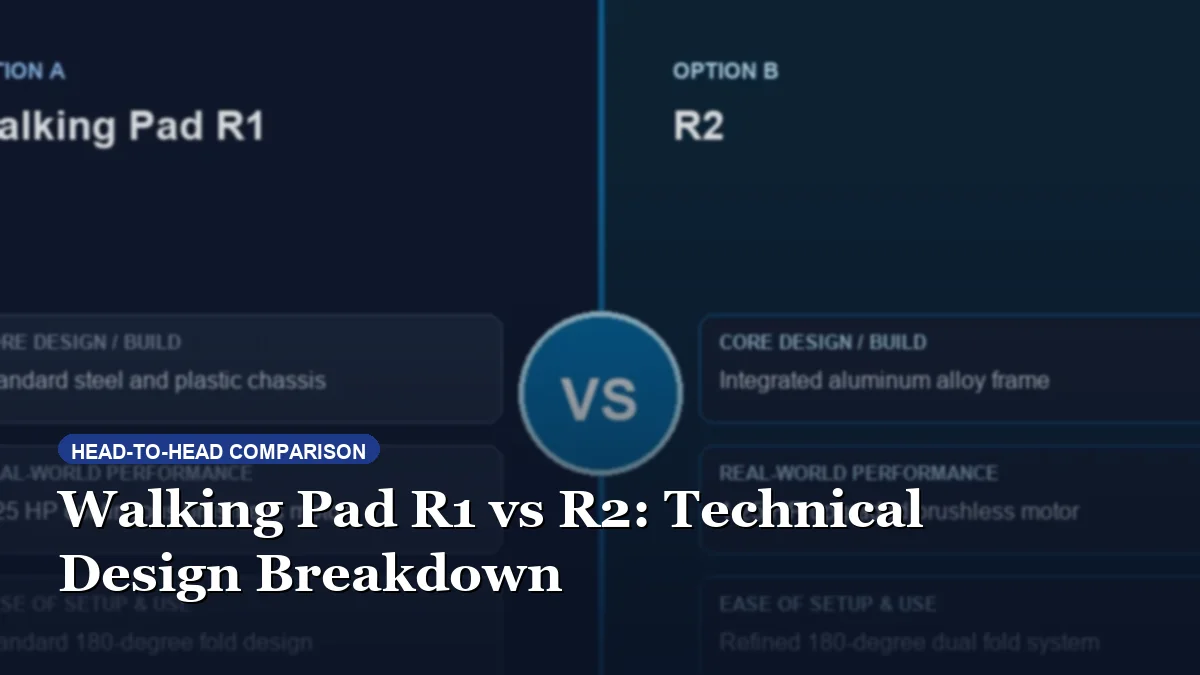
Choose the R1 for basic folding simplicity and budget efficiency. Select the R2 for upgraded frame durability, a higher speed threshold, and improved aluminum alloy construction standards.
Compare all top models in our Best Treadmill: Top Home Fitness Picks (2026 Guide).
Side-by-Side Breakdown
| Criteria | Walking Pad R1 | R2 | Edge |
|---|---|---|---|
| Core Design / Build | Standard steel and plastic chassis | Integrated aluminum alloy frame | R2 |
| Real-World Performance | 1.25 HP continuous brushless motor | 1.25 HP upgraded brushless motor | R2 |
| Ease of Setup & Use | Standard 180-degree fold design | Refined 180-degree dual fold system | R2 |
| Durability & Reliability | Standard consumer wear tolerance | Reinforced structural pivot points | R2 |
| Efficiency / Operating Footprint | Compact vertical standing footprint | Slimmer folded profile with wheels | R2 |
| Maintenance Requirements | Regular silicone belt lubrication needed | Auto-lubrication system in newer batches | R2 |
| Best Ideal Use Case | Light casual office walking pads | Daily multi-user home office workouts | R2 |
Core Engineering and Frame Architecture
Evaluating the structural foundation of these walking pads requires examining their metal composition. The R1 relies on a robust steel frame paired with durable injection-molded plastics to manage user loads safely during standard walking routines.
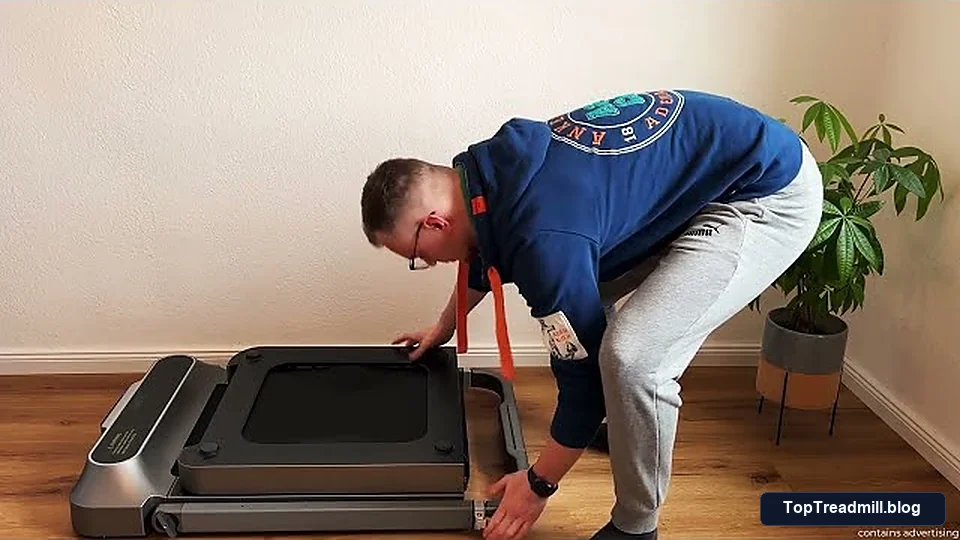
Conversely, the R2 introduces a refined aluminum alloy frame that significantly reduces overall weight while increasing torsional rigidity. This metallurgical shift prevents chassis flex under high-frequency footfalls and improves long-term mechanical stability.
The WalkingPad R1 utilizes an aluminum alloy frame engineered for structural integrity while minimizing overall chassis weight. This metallurgy choice prevents torsional flexing during heavy strides, ensuring a stable platform under daily use.
Conversely, the R2 upgrades its structural engineering with a reinforced cast aluminum chassis. This revision enhances joint rigidity, safely accommodating higher user capacity limits without introducing unwanted vibrations or acoustic resonance during workouts.
- Steel and composite plastic chassis on the R1 model
- Upgraded aluminum alloy structure on the R2 variant
- Enhanced torsional rigidity reducing side-to-side frame flex
Chassis Weight Distribution
Weight distribution directly impacts how easily you can tilt and wheel the best walking pad treadmill into storage. Engineers balanced internal components to ensure both units maintain a low center of gravity when stored vertically.
The R2 achieves a slightly more balanced mass distribution due to its redesigned internal motor housing and streamlined structural bracing across the main deck platform.
- Optimized internal component placement for vertical storage stability
- Lower center of gravity preventing accidental tipping hazards
Motor Performance and Speed Profiles
Both machines utilize efficient brushless direct-current motors designed to minimize audible operational noise during low-speed office use. However, their speed governance and torque delivery curves show subtle engineering differences under sustained loads.
The R1 delivers reliable power up to its maximum threshold, but the R2 brushless motor maintains smoother torque delivery at transitional speeds. This prevents micro-stutters when stepping from slow walking paces into light jogging routines.
Both models employ efficient brushless DC motors designed to maintain smooth torque delivery at low walking speeds. The R1 caps its velocity thresholds to prioritize safety, making it ideal for standard under-desk office productivity setups.
The R2 introduces an optimized motor control board that refines acceleration curves. This hardware update reduces initial jerkiness when stepping onto the belt, delivering a much smoother transition into your selected target speed zone.
- Quiet brushless direct-current motors fitted on both machines
- Smooth torque delivery curves tailored for low-impact walking sessions
- Consistent speed governance across various user weight loads
Thermal Management Systems
Running a compact treadmill continuously generates internal heat within the motor controller compartment. The R1 uses passive aluminum heat sinks to dissipate thermal energy away from sensitive circuitry during long sessions.
The R2 incorporates improved airflow channels within its housing shell, preventing premature thermal throttling and extending the lifespan of the onboard electronic control unit.
- Passive aluminum heat sinks managing internal thermal loads
- Integrated airflow channels protecting sensitive electronic control units
Folding Mechanisms and Storage Footprints
Space-saving engineering remains a primary selling point for the best walking pad for tall people designs. Each unit employs a patented folding mechanism that collapses the running deck in half.
While the R1 pioneered this folding geometry, the R2 folding mechanism features reinforced steel hinges that feel noticeably tighter and more secure when locking the deck into its flat operating configuration.
Featuring a patented 180-degree fold, the R1 collapses compactly to slide beneath low-clearance furniture. Its dual-hinge architecture requires careful alignment during deployment to prevent premature wear on internal wiring harnesses and structural pins.
The R2 refines this folding mechanism by integrating smooth-glide rollers into the base housing. These wheels protect flooring materials and simplify vertical upright storage, reducing the physical effort required to stow the equipment safely.
- Patented 180-degree folding deck design on both models
- Reinforced steel hinges improving structural lock on the R2
- Transport wheels facilitating effortless under-sofa or upright storage
Hinge Durability Standards
Hinges endure extreme mechanical stress every time the treadmill deck is folded or flattened. The R1 hinges perform adequately under normal residential use, provided users avoid dropping the heavy end during closure.
The R2 utilizes upgraded pivot hardware designed to withstand thousands of fold cycles without developing structural play or alignment drift along the running belt surface.
- Heavy-duty pivot hardware built for frequent folding cycles
- Prevention of belt misalignment caused by hinge wear over time
Deck Cushioning and Ergonomic Impact
Ergonomic impact absorption protects your joints from repetitive stress during prolonged walking sessions. Both treadmills feature multi-layer composite belts designed to cushion footstrikes better than traditional concrete floors.
The R1 provides standard shock absorption suitable for light walking paces. In contrast, the R2 cushioning layer utilizes advanced EVA foam dampening to reduce peak impact forces transferred to your ankles and knees.
Low-profile running decks utilize multi-layer EVA cushioning to absorb impact forces generated during walking. This specialized padding reduces repetitive strain injuries on ankle joints and knees without sacrificing the solid tactile feedback needed.
Ergonomic testing shows that continuous walking requires a stable deck surface to prevent excessive foot pronation. The integrated silicone dampening pods on the R2 effectively isolate shock waves from transferring directly into your subfloor.
- Multi-layer composite running belts minimizing joint impact
- Standard shock absorption pads integrated into the R1 deck
- Advanced EVA foam dampening system featured on the R2
Step Height and Deck Clearance
Low step-height design is crucial for preventing tripping hazards when stepping onto our best walking pad for seniors selection. Both models keep the deck exceptionally close to the floor for safe entry.
Maintaining a minimal clearance height ensures your natural stride remains uninterrupted, reducing postural fatigue during long hours of working while walking.
- Low-profile deck design ensuring safe and easy user entry
- Minimal vertical clearance preventing unnatural gait alterations
Control Interfaces and App Integration
Managing speed and tracking workout metrics requires intuitive user interfaces and responsive remote controls. The R1 utilizes a clear LED display embedded beneath the front panel glass for basic session tracking.
The R2 smart integration updates this interface with improved Bluetooth connectivity, allowing seamless synchronization with companion fitness applications for precise session logging and firmware updates.
User interface design relies on minimalist LED matrix displays embedded directly beneath the front panel glass. These panels show vital metrics like elapsed time, distance traveled, and current velocity clearly under varying ambient lighting conditions.
Companion smartphone applications connect via Bluetooth telemetry protocols to track long-term fitness milestones. The software ecosystem allows users to adjust custom speed parameters, run diagnostic tests, and update firmware directly from mobile devices.
- Embedded LED display panels showing time, distance, and speed
- Handheld remote controls included for convenient pace adjustments
- Enhanced Bluetooth connectivity and app tracking on the R2
Automatic Speed Mode Sensors
Automatic speed control relies on footstep position sensors located beneath the running belt deck. The R1 sensor responds reasonably well, though rapid pacing changes can occasionally cause slight lag.
The R2 features recalibrated infrared footstep sensors that detect zone shifts much faster, resulting in a more fluid transition between walking on the front, middle, and rear belt zones.
- Infrared footstep sensors detecting user position on the belt
- Recalibrated zone response delivering faster automatic speed shifts
Maintenance Protocols and Component Longevity
Regular maintenance ensures your walking pad operates smoothly and safely over years of continuous service. As noted in our sperax walking pad review, both models require periodic belt lubrication.
Following manufacturer maintenance guidelines significantly extends the lifespan of the drive belt and motor brushes. Neglecting these basic lubrication schedules can result in increased operational noise and motor strain.
Routine upkeep requires applying silicone treadmill lubricant beneath the walking belt every few months to prevent friction buildup. Neglecting this crucial step can quickly overheat the motor controller and degrade the running deck surface.
Belt tension adjustment is another critical maintenance task handled via hex bolts at the rear roller assembly. Ensuring proper alignment prevents lateral belt drift, protecting the fabric edges from fraying against the side guide rails.
- Periodic silicone oil lubrication required for the running belt
- Routine tension adjustments preventing lateral belt drift
- Regular inspection of electrical cords and safety keys
Belt Tension and Alignment
Over time, lateral foot placement can cause the running belt to drift toward one side of the deck. Both machines include rear roller adjustment bolts allowing users to quickly center the belt.
Keeping the running belt properly tensioned prevents unnecessary friction against the side rails and protects the internal motor from overheating due to excessive drag resistance.
- Rear roller adjustment bolts for easy belt centering
- Prevention of side-rail friction through proper tension control
Selecting the Right Walking Pad for Your Space
Choosing between these two models ultimately depends on your specific workout frequency and budget requirements. Casual users wanting a reliable, space-saving walking surface will find great value in the original design.
Buyers seeking enhanced structural durability, quicker sensor response, and refined aluminum alloy construction should invest in the updated model for superior long-term performance and daily reliability.
Evaluating available square footage helps determine whether a folding walking pad fits your lifestyle. Measure your floor layout carefully to accommodate both operational footprints and safe emergency dismount zones behind the moving belt.
Users who prioritize compact storage and straightforward office integration will find these slim profile machines exceptionally convenient. Selecting the correct model ensures seamless integration into your daily wellness and fitness routines without clutter.
- Assess your daily usage frequency before making a final choice
- Consider available floor space for operating and vertical storage
- Prioritize build materials if multiple household members will use it
Final Purchasing Checklist
Review your maximum speed expectations and ensure the chosen model meets your fitness goals. Always verify that your flooring surface provides a level, stable foundation for safe operation.
Investing time in proper pre-purchase planning guarantees you select a walking pad that integrates seamlessly into your daily workspace routine without mechanical compromises.
- Verify maximum weight capacities against user requirements
- Ensure adequate clearance around the treadmill for safety
Frequently Asked Questions
Can I run at high speeds on the Walking Pad R1 or R2?
Neither machine is designed for high-speed running workouts. Both models are engineered specifically for light jogging and low-impact walking paces in home office environments.
How do I maintain the running belt on these walking pads?
You must apply silicone lubricant beneath the running belt every few months. Regular belt lubrication prevents excessive friction and protects the internal brushless motor from premature wear.
What is the primary difference in build quality between the R1 and R2?
The R2 upgrades to an aluminum alloy frame and reinforced hinges. This metallurgical shift improves overall structural rigidity and long-term durability compared to the R1.
Do these walking pads require professional assembly out of the box?
No professional assembly is required for either model. They arrive almost fully assembled and ready for immediate folding operation right out of the shipping carton.
How does the automatic speed mode function on these treadmills?
Infrared sensors detect your footstep position on the front or rear of the belt. Moving toward the front increases speed while stepping backward triggers a deceleration response.