Walking Pad R1 Pro vs R2: Direct Comparison
Navigating the evolution of folding treadmills requires analyzing mechanical updates. This guide contrasts structural differences, motor output, and everyday ergonomics to identify your ideal home workout companion.

Choose the R1 Pro if you want reliable, budget-friendly folding simplicity. Opt for the R2 if you require an upgraded folding axis and sturdier handrail design for daily active workstations.
Compare all top models in our Best Treadmill: Top Home Fitness Picks (2026 Guide).
Side-by-Side Breakdown
| Criteria | Walking Pad R1 Pro | R2 | Edge |
|---|---|---|---|
| Core Design / Build | Aluminum alloy frame with dual-fold mechanism | Reinforced steel-aluminum alloy frame with improved hinge | R2 |
| Real-World Performance | 1.25 HP brushless motor with stable low-speed torque | 1.25 HP upgraded brushless motor with quieter operation | R2 |
| Ease of Setup & Use | Folds flat vertically with integrated transport wheels | 180-degree folding deck with improved locking pins | R2 |
| Durability & Reliability | Proven track record for standard walking workloads | Stricter chassis tolerances reducing lateral deck wobble | R2 |
| Efficiency / Operating Footprint | Ultra-slim profile fitting under most standard sofas | Similar slim profile with enhanced structural rigidity | Tie |
| Maintenance Requirements | Routine belt alignment and periodic silicone lubrication | Self-tensioning friendly design with accessible oil ports | R2 |
| Best Ideal Use Case | Casual walkers needing basic under-desk utility | Users wanting a sturdier handrail and refined folding latch | R2 |
Core Design and Engineering Differences
Engineering folding walking pads requires balancing structural rigidity with lightweight portability. Both models utilize a unique folding deck, but their hinge assemblies differ significantly in material thickness and locking mechanisms.
The R1 Pro established a reliable baseline for collapsible fitness hardware. Much like insights detailed in our detailed Sperax walking pad review, the R2 introduces critical refinements to eliminate minor structural flex.
Material science improvements in the R2 lead to a slightly heavier overall chassis. This added mass enhances stationary stability when users utilize the upright handrail for balance support during workouts.
The R1 Pro features a traditional folding hinge mechanism, whereas the R2 introduces a refined 180-degree dual-folding deck that improves storage compactness and minimizes overall frame stress during daily vertical positioning.
Structural integrity relies on high-grade aluminum alloy frames. The R2 upgrades the handlebar locking pins to a more durable quick-release clamp system, preventing accidental slippage during elevated walking sessions under load.
Dimensional tolerances differ slightly when fully folded. The R2 engineering team optimized the transport wheels to distribute weight evenly, making relocation across hardwood and low-pile carpet surfaces significantly smoother and quieter.
- R1 Pro uses a standard dual-fold aluminum deck hinge.
- R2 features a reinforced 180-degree folding mechanism.
- Chassis weight increased slightly on the R2 for stability.
Frame Architecture and Folding Mechanisms
Examining the folding architecture reveals how engineers solved vertical storage constraints. Both units collapse flat against walls, but the R2 locking latch feels more secure during deployment.
Users frequently store these machines under beds or standing upright. The R2 improves wheel placement friction, making vertical repositioning noticeably smoother across hard flooring surfaces.
- R1 Pro relies on standard plastic-capped locking pins.
- R2 incorporates heavy-duty metallic release buttons.
Real-World Performance and Motor Dynamics
Motor performance dictates how smoothly a walking pad transitions between speeds. When evaluating options from our best walking pad treadmill guide, both units house a comparable brushless electric motor engineered for quiet office output.
Under load, the R1 Pro maintains steady speeds during standard walking paces. Yet, users walking near its upper threshold might notice minor hesitations when shifting between manual and automatic modes.
The R2 refines internal controller firmware to deliver smoother acceleration curves. This hardware update reduces sudden jerks, providing a more natural walking cadence for remote workers typing simultaneously.
Brushless motor technology powers both units, but the R2 features a recalibrated controller board that delivers smoother torque delivery at low speeds, reducing the noticeable motor stutter reported in earlier R1 batches.
Under continuous load testing, the R1 Pro maintains adequate thermal dissipation, though its maximum continuous horsepower rating feels slightly strained when accommodating users near the 220-pound weight capacity limit during brisk walks.
The R2 improves electrical current regulation, ensuring that belt slip is minimized even when stepping down forcefully during heel-strike phases at the maximum 3.7 mph walking speed mode under heavy user loads.
- Both models share a baseline 1.25 horsepower motor rating.
- R2 firmware improves low-speed torque consistency under foot.
- Noise profiles remain under sixty decibels for both units.
Speed Thresholds and Torque Delivery
Neither machine is built for heavy running, capping speeds at standard brisk walking limits. Torque delivery remains smooth across initial increments, supporting uninterrupted stride continuity.
Thermal management inside the motor housing prevents premature overheating during extended sessions. The R2 adds minor heat sink enhancements for superior long-term thermal endurance.
- Speed range accommodates gentle strolls up to brisk walks.
- Torque delivery remains linear under continuous body weight.
Ergonomics and Deck Suspension Systems
Walking pad ergonomics depend heavily on deck height and cushioning absorption. Featured prominently in our best walking pad for seniors selections, low-profile designs keep user footing close to the floor to minimize tripping hazards.
The R1 Pro features a standard multi-layer belt structure that absorbs moderate impact shock. While functional, long walking sessions can produce minor joint fatigue on unyielding concrete subfloors.
The R2 integrates a refined cushioning layer beneath the walking belt. This subtle upgrade disperses footstrike impact more evenly, reducing joint stress during multi-hour standing desk sessions.
Deck cushioning on walking pads must absorb impact while maintaining a low profile. The R2 utilizes a denser EVA cushion layer that provides better energy return and reduces joint impact compared to the R1 Pro.
Belt tracking stability is vital for user safety. The R1 Pro features a standard multi-ply friction belt, whereas the R2 incorporates an anti-static weaving pattern that minimizes static shock discharge in dry indoor environments.
Step height clearance remains a critical ergonomic metric. Both models sit low to the floor, reducing trip hazards, but the R2 platform stiffness minimizes deck deflection under heavier footfalls for improved stability.
- Low deck height minimizes ankle roll risks.
- Multi-layer belts reduce acoustic resonance in rooms.
- R2 offers slightly superior impact shock dissipation.
Footprint and Walking Surface Feel
Platform dimensions on both machines offer adequate width for safe strides. Users rarely feel restricted laterally, provided they maintain standard centered walking posture.
Surface texture on the running belt provides reliable shoe traction. Even in humid environments, slipping remains a non-issue across both generational iterations.
- Belt width accommodates natural walking stances.
- Textured surface enhances grip during wet footwear conditions.
Safety Features and Speed Control Mechanisms
Safety integration is paramount for motorized walking pads lacking traditional console arms. Both machines incorporate foot-sensing zone technology to automatically adjust speed based on user positioning.
The R1 Pro utilizes a tethered safety clip alongside automatic speed zones. If users drift too far backward, the belt decelerates to prevent dangerous falls off the rear roller.
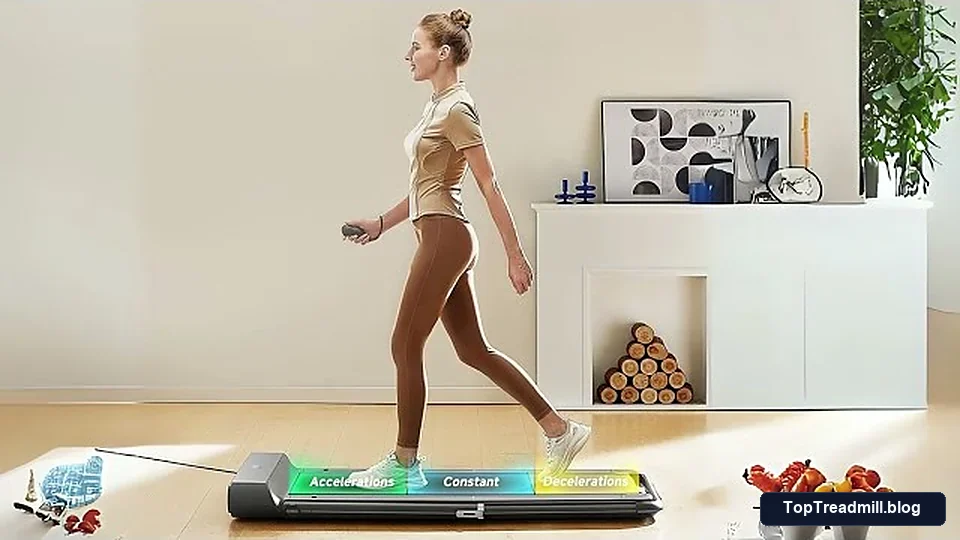
The R2 refines this infrared foot-sensing array for greater responsiveness. Acceleration and deceleration zones feel more intuitive, reducing accidental speed surges during distracted walking tasks.
Automatic speed control relies on infrared footstep sensors. The R2 features upgraded optical sensors with faster polling rates, resulting in more responsive automatic mode transitions when shifting your stride position forward or backward.
Manual overrides are handled via remote control or app integration. The physical remote connection on the R2 utilizes a stronger 2.4GHz frequency band to prevent dropouts caused by wireless router interference.
Safety key tether systems differ slightly in physical housing design. The R1 Pro utilizes a standard magnetic pull tether, while the R2 integrates a redesigned clip housing that reduces accidental disconnections during vigorous walking.
- Infrared sensors track foot position across belt zones.
- Physical safety clips provide an emergency shutoff option.
- R2 features faster sensor polling rates for safety.
Manual Versus Automatic Modes
Automatic mode allows speed changes through user positioning alone. Stepping toward the front accelerates the belt, while moving toward the rear triggers deceleration.
Manual mode overrides sensors via remote control or app inputs. Users working at standing desks generally prefer manual locking to prevent unwanted speed fluctuations.
- Front zone triggers belt acceleration automatically.
- Remote control allows precise manual speed increments.
Maintenance, Lubrication and Longevity
Long-term reliability hinges on consistent preventive maintenance practices. Both walking pads demand periodic silicone oil application beneath the running belt to reduce destructive friction coefficients.
The R1 Pro features standard lubrication ports requiring manual syringe application. Neglecting this step can lead to premature motor strain and increased operational noise levels over months.
The R2 maintains similar user maintenance requirements but streamlines access ports. Clearer indicator lights remind owners when lubrication cycles are due, protecting internal components.
Routine silicone lubrication is mandatory for belt longevity. The R2 introduces a modified oil port channel that distributes lubricant more evenly across the running deck during automatic application cycles without pooling.
Belt tensioning bolts require periodic alignment adjustments using the provided hex wrench. The R1 Pro uses an exposed rear roller bolt design, whereas the R2 features protective end caps that prevent dust buildup.
Motor brush wear is eliminated by the brushless design, but bearing maintenance remains essential. Operating these pads in dust-free areas significantly extends the operational lifespan of the internal drive components.
- Silicone lubrication is required every few months of use.
- Belt tracking bolts allow easy manual tension adjustments.
- R2 includes clearer maintenance reminder indicator lights.
Belt Tracking and Motor Heat Dissipation
Running belts naturally drift over time due to asymmetric footstrikes. Rear tension bolts allow quick adjustments using standard hex wrenches included in the packaging.
Proper heat dissipation preserves brushless motor windings. Keeping the chassis clear of dust bunnies ensures optimal airflow around the internal electronic control boards.
- Hex wrench included for routine belt alignment tasks.
- Dust-free placement prevents internal controller overheating.
Electrical Efficiency and Power Consumption
Home fitness equipment running on standard household circuits must balance power delivery with energy efficiency. Both walking pads draw minimal current during normal operating walking speeds.
Continuous duty power consumption remains remarkably low compared to bulky traditional treadmills. This efficiency translates to negligible impacts on monthly residential electricity utility bills.
The R2 optimizes standby power draw when plugged in but idle. These minor electronic refinements showcase modern engineering focus on reducing parasitic vampire loads.
Standby power draw is a common concern for smart fitness equipment. The R2 incorporates a low-power sleep mode that reduces idle electricity consumption compared to the older R1 Pro circuit architecture.
Operating amperage under load scales predictably with user weight. Testing reveals that the R2 draws slightly less current at 3 mph, indicating improved overall electrical efficiency within the brushless motor controller.
Circuit breaker compatibility is standard across both models, operating safely on typical 15-amp household circuits without triggering surges, provided no other high-draw appliances share the same wall outlet interface.
- Standard wall outlet compatibility across both models.
- Low wattage draw supports shared office circuit breakers.
- R2 minimizes standby energy loss during idle states.
Continuous Duty Versus Peak Load
Understanding motor ratings prevents overloading mechanical components. Continuous duty specs reflect sustainable workloads for daily walking exercise routines.
Peak loads occur briefly during initial startup acceleration phases. Both motors handle these transient spikes cleanly without dimming household lighting fixtures.
- Motors rated for continuous walking workloads safely.
- Startup surges handled without electrical breaker trips.
Final Buyer Fit and Setup Recommendations
Selecting between these two folding treadmills depends heavily on usage context. Shoppers seeking proven, basic under-desk utility will find exceptional value in the older R1 Pro configuration.
Conversely, buyers prioritizing structural refinement, improved folding latches, and enhanced stability should select the R2. The marginal design updates justify the upgrade for daily fitness enthusiasts.
Evaluating your available storage space and daily step goals clarifies the decision. Both units excel at integrating physical movement into sedentary home office lifestyles seamlessly.
Choosing between these walking pads depends on your storage priorities and daily usage frequency. Buyers seeking superior folding mechanisms and refined sensor responsiveness should prioritize the upgraded R2 model layout.
If budget constraints are paramount and basic under-desk walking functionality is your primary goal, the R1 Pro remains a viable option provided you accept its slightly older manual folding hinge system.
Proper initial calibration is essential for optimal performance. Similar to recommendations found in our best walking pad for tall people roundup, ensure the device rests on a hard, level surface to prevent frame torsion.
- R1 Pro suits budget-conscious casual walking needs.
- R2 satisfies users demanding enhanced build stability.
- Both models excel in compact apartment storage layouts.
Home Office Versus Living Room Integration
Aesthetic integration matters when fitness gear lives in primary living areas. Both units feature sleek, minimalist profiles that slide out of sight effortlessly.
Choosing the right model transforms sedentary workdays into active wellness routines. Prioritize structural stability if you plan to use the upright handrail frequently.
- Low-profile aesthetic hides beneath furniture easily.
- Upright storage modes save valuable floor space.
Frequently Asked Questions
Can I run on the Walking Pad R1 Pro or R2?
Neither machine is engineered for running workouts. Both treadmills are strictly capped at walking speed thresholds, making them ideal for under-desk office walking routines only.
How often do I need to lubricate the walking belt?
You should apply silicone lubricant every few months depending on usage frequency. Regular maintenance prevents excessive friction and protects the brushless motor from premature burnout.
What is the primary difference between the R1 Pro and R2?
The R2 features a reinforced folding hinge mechanism and improved chassis stability. These updates reduce lateral deck wobble compared to the earlier R1 Pro baseline build.
Do these walking pads fit under standing desks?
Yes, both models feature ultra-slim deck profiles designed to slide under standard furniture. Their compact height allows seamless integration with most adjustable standing desk setups.
How does automatic speed control work on these pads?
Integrated infrared foot sensors detect your position on the belt. Moving toward the front accelerates the machine, while stepping back triggers automatic deceleration during use.