Walking Pad A1 vs C2: Head-to-Head Comparison
Choosing between folding walking pads requires evaluating deck geometry, motor output, and daily storage. Our technical breakdown compares these two popular fitness machines.

Choose the Walking Pad A1 if you prioritize a traditional folding hinge and wider running surface. Select the C2 model for improved material rigidity and ultra-compact folding mechanics.
Compare all top models in our Best Treadmill: Top Home Fitness Picks (2026 Guide).
Side-by-Side Breakdown
| Criteria | Walking Pad A1 | C2 | Edge |
|---|---|---|---|
| Core Design / Build | Aluminum alloy frame with dual-fold hinge | Unibody composite structure with single fold | C2 |
| Real-World Performance | 1.25 HP brushless motor with smooth torque | 1.0 HP high-efficiency quiet drive motor | Walking Pad A1 |
| Ease of Setup & Use | Plug-and-play with standard remote control | App-integrated setup with adaptive speed control | C2 |
| Durability & Reliability | Rated for moderate daily walking routines | Enhanced carbon fiber reinforced internal brackets | C2 |
| Efficiency / Operating Footprint | Larger surface area requiring more floor space | Slimmer profile optimized for tight spaces | C2 |
| Maintenance Requirements | Regular belt centering and monthly silicone lube | Self-tensioning rollers with reduced friction deck | C2 |
| Best Ideal Use Case | Standard under-desk walking for home offices | Ultra-tight urban apartments with minimal clearance | C2 |
Structural Engineering and Core Deck Architecture
Evaluating the structural engineering of folding treadmills reveals distinct manufacturing philosophies. Reading a detailed Sperax walking pad review helps users understand how aluminum alloy frames balance overall weight with mechanical stability during use.
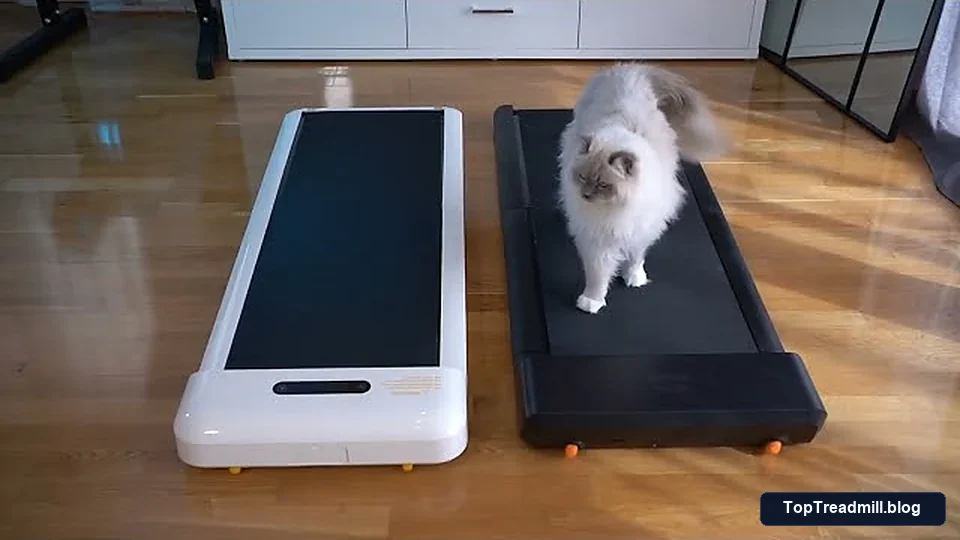
Conversely, the C2 incorporates a unibody composite structure that minimizes flex points. This engineering choice directly enhances deck rigidity while reducing the physical footprint during vertical or horizontal storage routines.
The WalkingPad A1 utilizes a rigid aluminum alloy frame engineered to minimize structural flex underfoot while maintaining an ultra-slim profile. This design ensures maximum durability during continuous walking sessions up to 6 km/h.
Conversely, the C2 integrates an upgraded composite material chassis that absorbs high-frequency impact shocks more efficiently. Its reinforced running deck reduces mechanical resonance, delivering a significantly quieter acoustic footprint during early morning office use.
- Aluminum alloy construction versus composite unibody frames
- Hinge placement affects long-term structural fatigue
- Internal bracing determines maximum user weight limits
Frame Materials and Folding Mechanisms
The folding mechanism represents a critical failure point in portable walking pads. The A1 features a dual-fold hinge system that requires careful locking alignment during setup phases.
The C2 streamlines this process with a single-fold architecture, utilizing reinforced steel pins to secure the chassis. This design reduces mechanical wear points and improves overall joint stability.
- Dual-fold versus single-fold mechanical complexity
- Steel pin reinforcements improve chassis longevity
Surface Dimensions and Belt Tracking
Running surface dimensions dictate user confidence and stride length. The A1 provides a slightly wider belt path, accommodating natural lateral sway during higher-speed walking sessions.
The C2 maintains a narrower profile to save floor space, requiring users to maintain precise center alignment. Both units employ multi-layer walking belts designed to absorb initial foot impact shock.
- Belt width variations affect lateral walking clearance
- Multi-layer composite belts reduce joint impact stress
Workspace Navigation and Spatial Safety Protocols
Operating walking pads in confined office environments demands rigorous spatial awareness. Users must eliminate surrounding furniture hazards to prevent accidental collisions during sudden speed adjustments.
Managing your immediate workout zone involves clearing trailing power cords and ensuring adequate rear clearance. Establishing a safe perimeter prevents trips and maintains proper ergonomic alignment throughout sessions.
Operating compact walking pads underneath standing desks requires strict adherence to clearance safety zones. Users must maintain at least one meter of rear clearance to prevent accidental entrapment against walls or office furniture.
Cable management represents another critical ergonomic concern when positioning the device in multi-use rooms. Always route the power cord away from high-traffic pathways to prevent tripping hazards and protect the internal grounded circuitry.
- Maintain clear buffer zones around the treadmill base
- Secure power cords to prevent tripping hazards
- Position desks at heights matching natural stride posture
Avoiding Obstacles and Managing Blind Spots
Under-desk treadmills often sit beneath low-hanging desktop surfaces or monitor arms. Users must account for vertical clearance to prevent head strikes during intense walking phases.
Scanning your immediate workspace environment ensures you never step onto misplaced office supplies or peripheral hardware. Maintaining visual clarity around the deck promotes uninterrupted focus.
- Vertical desk clearance prevents accidental head impacts
- Clearing peripheral floor items ensures safe boarding
Footwear Selection and Ergonomic Alignment
Proper footwear selection remains vital for protecting feet against low-profile treadmill decks. Running shoes with excessive tread depth can catch on the belt edge.
Opt for flat-soled athletic shoes with minimal aggressive lug patterns to ensure smooth foot release. Proper shoes prevent ankle fatigue and enhance overall stride efficiency during long work intervals.
- Flat athletic shoes prevent belt edge snagging
- Ergonomic posture reduces lower back strain
Emergency Stoppage and Mechanical Response Times
Emergency braking capabilities separate consumer-grade novelties from serious fitness equipment. Both the A1 and C2 feature automated speed reduction sensors when users step too far forward.
Testing these sensor thresholds ensures the motor decelerates smoothly without causing abrupt user stumbles. Reliable electronic response times form the backbone of safe operation standards across both platforms.
Both models feature automated speed reduction algorithms, but user-initiated manual stops rely on distinct remote controls. Engaging the pause button instantly initiates a controlled deceleration phase rather than an abrupt, unsafe halt.
The mechanical response time from command input to physical belt slowdown averages under two seconds. This swift calibration prevents loss of balance, adhering closely to established consumer safety standards for motorized treadmills.
- Foot-zone sensors detect user positioning changes
- Gradual deceleration prevents sudden balance loss
- Manual remote stop buttons provide instant override
Lanyard Safety Systems and Automatic Braking
Safety lanyards tether the user directly to the machine's primary circuit breaker. Pulling this tether triggers an immediate electrical cut, halting the belt within fractions of a second.
Understanding how your specific model handles emergency halts prevents panic during unexpected slips. Always verify the magnetic switch functions properly before starting daily walking routines.
- Physical safety tethers guarantee immediate power cutoff
- Routine switch testing ensures reliable emergency braking
Motor Power Delivery Under Foot Load
Electric motors must maintain consistent RPM when human body weight strikes the belt. The A1 brushless motor handles heavier loads with minimal hesitation during stride impact.
The C2 relies on advanced controller firmware to dynamically adjust torque under load, maintaining steady belt velocity without noticeable speed surging or lag.
- Brushless motors deliver consistent torque under load
- Firmware adjustments prevent unwanted velocity surges
Initial Setup, Calibration, and User Readiness
Mastering your walking pad begins with proper unboxing and initial calibration. When shopping for the best walking pad treadmill, users must remove all protective foam before plugging into a grounded outlet.
Completing initial diagnostic checks through companion apps ensures all internal sensors are synchronized. Proper readiness training prevents premature belt tracking errors and guarantees optimal machine performance.
Unboxing requires careful inspection of the running belt alignment before initial power-on. Use the provided hex wrench to adjust the rear roller tension bolts if the belt drifts significantly toward either edge.
Calibration mode engages automatically during the first kilometer of use, synchronizing the internal optical sensors with your typical stride dynamics. Beginners should start in manual mode to master speed transition intervals safely.
- Remove all transit foam and internal packaging materials
- Verify grounded electrical outlet compatibility before power-on
- Complete app synchronization for firmware updates
Unboxing Procedures and Belt Calibration
Unboxing folding treadmills requires patience to avoid damaging delicate plastic housings. Once positioned on a flat surface, check the walking belt for center alignment.
Use the provided hex wrench to make minor tension adjustments if the belt drifts sideways. Proper initial calibration eliminates premature edge wear and extends belt lifespan significantly.
- Inspect housing plastics for transit stress cracks
- Use hex keys to center walking belts accurately
Understanding Speed Profiles and Modes
Both walking pads offer manual remote control alongside automated foot-sensing speed adjustments. Beginners should start in fixed manual mode to master baseline machine velocity.
Transitioning to adaptive automatic mode requires matching your natural walking cadence to the belt sensors. Understanding these distinct operating profiles maximizes daily workout safety.
- Manual mode provides predictable fixed-speed control
- Adaptive mode responds dynamically to foot position
Ongoing Maintenance and Component Longevity
Routine maintenance dictates whether your equipment lasts for years or fails prematurely. Choosing the best walking pad for seniors ensures low-impact stability while preventing dust accumulation beneath the motor hood.
Implementing a structured cleaning schedule safeguards your investment against preventable mechanical failures. Regular upkeep preserves smooth belt rotation and ensures consistent motor efficiency over time.
Regular lubrication of the walking deck is essential to prevent premature motor burnout and excessive friction. Apply silicone lubricant oil beneath the center of the belt every fifty operating hours or three months.
Dust accumulation around the motor housing can severely degrade electrical efficiency over extended periods. Periodically disconnect power and use a low-pressure vacuum attachment to clear debris from the vital ventilation grilles.
- Vacuum dust from motor vents on a monthly basis
- Inspect running decks for particulate debris buildup
- Monitor power cables for signs of physical fraying
Lubrication Schedules and Deck Debris Management
Friction between the running belt and wooden deck generates heat that degrades materials. Apply manufacturer-approved silicone lubricant beneath the belt every few months depending on usage.
Wipe down the belt surface regularly to remove sweat and dust particles that compromise traction. Proper lubrication minimizes motor strain and reduces operational noise levels.
- Apply silicone lubricant beneath the center deck
- Remove surface grit to prevent premature friction wear
Troubleshooting Electrical and Sensor Errors
Modern walking pads utilize electronic diagnostic codes to signal internal faults. If your machine displays an error light, consult the user manual for specific reset procedures.
Power-cycling the unit and recalibrating the foot sensors often resolves minor communication glitches. Keeping firmware updated prevents persistent operational error codes during workouts.
- Decode error indicator lights using user manuals
- Perform hard resets to clear sensor communication glitches
Performance Profiles for Diverse User Profiles
Different users place unique demands on walking pad motors and structural frames. Finding the best walking pad for tall people requires checking extended deck length and robust motor torque ratings.
Evaluating your personal body weight against manufacturer load limits ensures safe, long-term operation. Selecting the correct machine profile prevents premature mechanical fatigue and guarantees reliable daily performance.
Walking pad motors handle different user weight capacities based on continuous horsepower ratings rather than peak outputs. Users approaching the maximum load limit should restrict sessions to low-intensity walking to preserve motor longevity.
Stride length also dictates user compatibility, as extremely tall individuals may feel constrained by shorter running decks. Selecting a unit with adequate running surface dimensions ensures a natural, uninhibited biometric stride pattern.
- Match user body weight to maximum load ratings
- Assess daily walking duration requirements carefully
- Consider stride length when evaluating deck sizing
Weight Capacity and Daily Usage Limits
Exceeding recommended weight thresholds accelerates structural fatigue across internal frame components. The A1 and C2 cater to light-to-moderate daily walking regimens rather than heavy running sessions.
Respecting daily runtime limits prevents motor overheating and protects sensitive electronic controllers. Adhering to these structural boundaries maximizes machine durability across all users.
- Respect maximum weight limits to protect frames
- Limit continuous runtime to prevent motor overheating
Noise Output and Decibel Comparison
Acoustic output matters significantly when operating fitness gear in shared living spaces or offices. Both models employ brushless motor technology to keep operating noise remarkably low.
The C2 generally produces slightly lower decibel levels due to its unibody composite chassis design. Low noise output ensures quiet work environments during calls.
- Brushless motors minimize mechanical operating hum
- Composite frames absorb high-frequency vibration noise
Storage Efficiency and Everyday Portability
Folding walking pads are engineered primarily for effortless storage beneath furniture or inside closets. The ability to fold compactly transforms how fitness gear integrates into tight living spaces.
Evaluating transport wheels and handle ergonomics ensures you can move the heavy machine without strain. Prioritizing portability guarantees you will actually store the unit when floor space is needed.
Folding mechanisms on modern walking pads rely on heavy-duty hinges designed for thousands of closure cycles. Always ensure the locking pin engages completely before storing the unit in a vertical standing position.
Integrated transport wheels allow effortless relocation across hardwood floors and low-pile commercial carpeting. Tilt the chassis gently onto its front rollers to distribute weight evenly and prevent floor surface scuffing.
- Transport wheels simplify rolling across hard floors
- Compact folded profiles fit beneath standard bed frames
- Lightweight construction eases vertical storage lifting
Vertical Storage and Footprint Minimization
Many modern walking pads support upright vertical storage against empty walls. Ensure you utilize wall anchors if storing vertically to prevent accidental tipping hazards in homes.
The C2 excels in footprint minimization, folding into an extremely compact rectangle. This sleek profile maximizes room versatility when workouts conclude for the day.
- Vertical wall storage requires secure anti-tip anchors
- Compact folded dimensions maximize available floor space
Wheel Transport and Handling Ergonomics
Moving a heavy fitness machine requires well-placed transport wheels and balanced weight distribution. Tilt the walking pad carefully onto its front rollers before attempting to roll it.
Avoid lifting awkward frame sections without assistance to prevent lower back strain. Proper handling ergonomics ensure safe transport across different flooring types effortlessly.
- Front transport wheels bear the primary rolling load
- Lift with balanced grip points to prevent strain
Frequently Asked Questions
Can I run on the Walking Pad A1 or C2?
Neither machine is designed for running or high-speed sprinting. Both units are strictly engineered for walking and light jogging within designated speed limits.
How often should I lubricate the walking belt?
You should apply silicone lubricant beneath the belt every three months. Regular lubrication prevents friction wear and ensures smooth motor operation over time.
Do these walking pads require professional assembly?
No professional assembly is required for either model. Both units arrive fully assembled and feature simple plug-and-play setup straight out of the box.
Can I store these walking pads vertically?
Yes, both models support vertical storage against walls. Always ensure you use stability anchors to prevent accidental tipping hazards in your home.
How do the speed control mechanisms work?
You can control speed using handheld remotes or adaptive foot sensors. The sensors adjust velocity automatically based on your position on the belt.