Under Desk Treadmill vs Standard Treadmill
Choosing between a compact walking pad and a heavy-duty running machine depends entirely on your daily fitness goals. Evaluate your workspace limitations before buying.

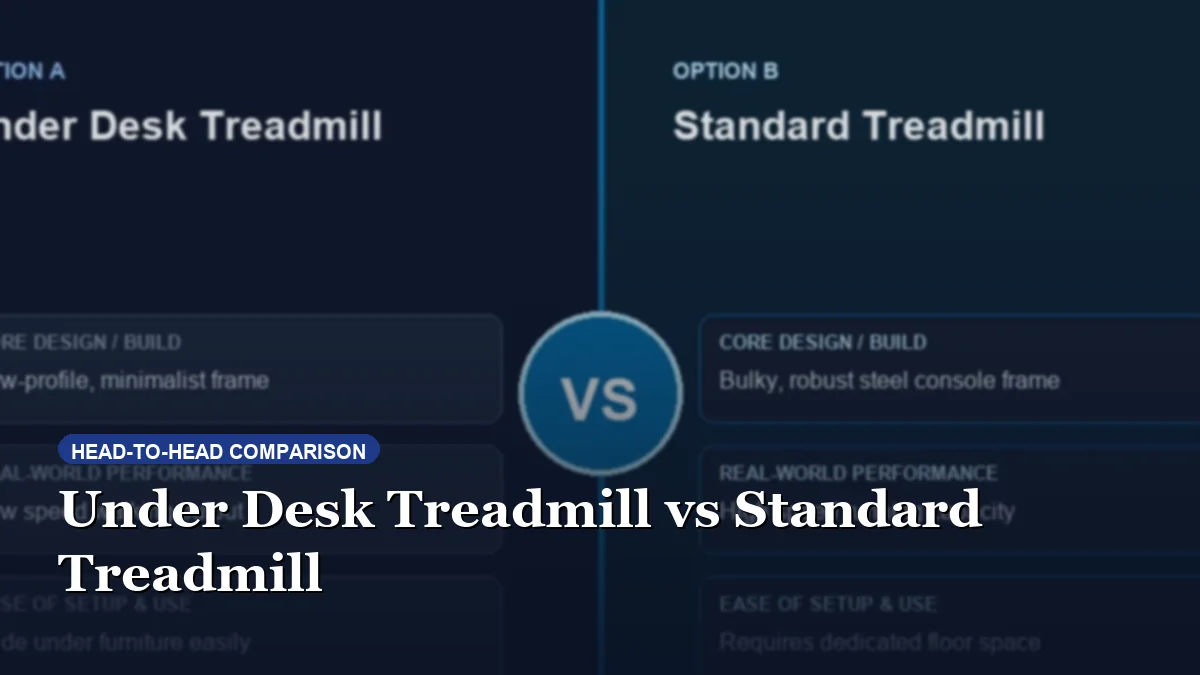
Office workers seeking low-impact movement should choose under desk treadmills for seamless multitasking. Serious runners requiring high speeds and incline capabilities must select standard treadmills.
Compare all top models in our Best Treadmill: Top Home Fitness Picks (2026 Guide).
Side-by-Side Breakdown
| Criteria | Under Desk Treadmill | Standard Treadmill | Edge |
|---|---|---|---|
| Core Design / Build | Low-profile, minimalist frame | Bulky, robust steel console frame | Split |
| Real-World Performance | Low speed walking output | High speed running capacity | Standard Treadmill |
| Ease of Setup & Use | Slide under furniture easily | Requires dedicated floor space | Under Desk Treadmill |
| Durability & Reliability | Light duty internal components | Heavy duty commercial motors | Standard Treadmill |
| Efficiency / Operating Footprint | Compact storage profile | Permanent room installation | Under Desk Treadmill |
| Maintenance Requirements | Frequent lubrication checks | Standard bi-annual servicing | Standard Treadmill |
| Best Ideal Use Case | Multitasking while working | Dedicated cardiovascular training | Split |
Core Engineering and Structural Integrity
Many heavy duty under desk models utilize ultra-slim steel frames designed to reduce overall weight. This minimalist engineering allows users to slide the unit beneath furniture without complicated assembly steps.
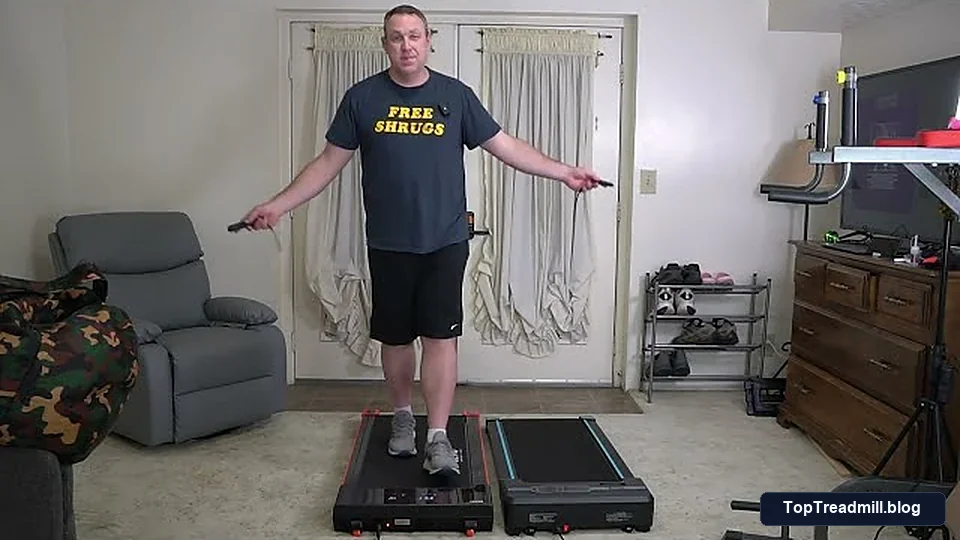
Standard running machines feature heavy welded steel consoles and reinforced upright arms. Such massive structural designs support high-intensity sprinting by preventing lateral sway and absorbing intense vertical foot strikes safely.
- Walking pads prioritize lightweight portability over heavy steel reinforcement.
- Standard models use heavy-gauge steel to handle aggressive running forces.
- Frame geometry dictates whether a machine fits under office furniture.
Materials and Frame Construction
Manufacturers construct walking pads using lightweight aluminum alloys and engineered plastics. These materials minimize overall weight while maintaining adequate structural integrity for light walking paces during work hours.
Standard units rely on heavy carbon steel and thick composite plastics to withstand rigorous daily pounding. This robust material selection ensures structural longevity during high-speed training sessions.
- Aluminum alloys reduce transport weight for office walking pads.
- Carbon steel prevents dangerous frame flexing during running.
Motor Power Output and Speed Capabilities
Units featured in our best treadmill for under desk roundup typically feature compact brushless motors rated between one point five and two horsepower. These low-torque drives operate quietly at low walking speeds.
Standard fitness machines incorporate powerful continuous-duty motors exceeding three horsepower. Such robust electrical systems deliver smooth belt acceleration and maintain consistent speeds under heavy runner weight loads.
- Walking pads cap out around four miles per hour for safety.
- Standard treadmills reach speeds surpassing twelve miles per hour easily.
Torque Delivery and Heat Dissipation
Compact motors found in walking pads generate minimal torque since they only support walking speeds. Their small cooling fans suffice because continuous electrical draw remains remarkably low throughout office shifts.
Large drive motors on standard machines require massive internal heat sinks and dual cooling fans. This prevents thermal overload during prolonged running sessions at maximum incline levels.
- Brushless designs reduce noise levels in shared office environments.
- Heavy-duty flywheels maintain momentum during heavy foot strikes.
Ergonomic Footprint and Workspace Integration
Walking pads boast extremely low deck heights to prevent ceiling clearance issues under standard desks. Their compact dimensions integrate seamlessly into modern home offices without demanding permanent room dedication.
Standard treadmills feature prominent console masts and safety handrails that preclude office desk integration. They demand dedicated fitness room real estate due to their expansive length and wide operating footprints.
- Low-profile decks prevent tripping hazards around computer desks.
- Console attachments on standard models block monitor viewing angles.
Storage and Portability Solutions
Most affordable under desk treadmills include integrated transport wheels and folding handles for vertical storage. Users can quickly stow the slim equipment beneath a sofa or upright against a closet wall.
Standard models often feature hydraulic folding decks, but their immense weight makes relocation difficult. Moving a standard machine usually requires two people and protective flooring mats.
- Transport wheels simplify moving walking pads across carpeted floors.
- Hydraulic assist mechanisms ease the burden of folding heavy decks.
Shock Absorption and Joint Protection Standards
Walking pads offer minimal deck cushioning because walking generates significantly lower impact forces on joints. The thin elastomer pads provide just enough shock attenuation for low-speed ergonomic movement.
Standard treadmills incorporate advanced multi-zone elastomer cushioning systems engineered to absorb high impact forces. These shock-absorbing decks protect runner knees and ankles from repetitive stress injuries during long runs.
- Minimalist cushioning suits low-impact daily walking routines.
- Advanced shock absorption protects joints from high-speed running trauma.
Deck Flexibility and Impact Reduction
Engineers tune walking pad decks for rigid stability to maintain typing posture. Excessive deck bounce would make reading screens and operating keyboards extremely difficult during active work sessions.
Standard running decks flex intentionally near the front strike zone to mimic outdoor pavement. This controlled give reduces cumulative skeletal shock during marathon training preparations.
- Rigid walking decks prevent screen shaking while typing emails.
- Flexible running decks reduce cumulative skeletal impact forces.
Maintenance Protocols and Belt Longevity
Compact walking pads require frequent lubrication checks due to tight belt tolerances and smaller rollers. Neglecting maintenance quickly leads to premature friction wear on the running belt and motor board.
Standard treadmills feature larger roller diameters that distribute friction forces across wider surfaces. This superior engineering extends belt lifespan and reduces the frequency of required silicone lubrication intervals.
- Small rollers on walking pads demand regular silicone oil applications.
- Large rollers on standard machines reduce overall mechanical friction.
Belt Alignment and Tension Adjustments
Narrow walking belts drift out of alignment more easily under shifting foot pressure. Users must frequently adjust the rear tension bolts using a hex wrench to keep the belt centered.
Wide commercial-grade belts on standard units utilize self-centering crown rollers. These robust tracking systems maintain proper alignment even during aggressive side-to-side running movements.
- Frequent manual adjustments keep narrow walking belts centered properly.
- Crown rollers automatically correct belt drift on standard equipment.
Control Interfaces and Safety Mechanisms
Many tall person under desk options rely on wireless handheld remotes or automated step-rate sensors for speed control. Lacking traditional handrails, they incorporate automatic standby modes to halt movement.
Standard machines feature comprehensive physical console displays with safety key lanyards. Emergency stop clips instantly cut power to the motor if a runner loses their balance or trips.
- Wireless remotes allow discreet speed adjustments during work calls.
- Physical safety lanyards protect runners from dangerous accidental falls.
Display Metrics and Workout Tracking
Minimalist LED readouts embedded directly in the walking deck display basic workout metrics. Users monitor steps, distance, and elapsed time without distracting towering console structures blocking their workspace view.
Standard consoles provide sprawling backlit LCD screens with heart rate monitors and preset programs. These comprehensive dashboards track calories, elevation gain, and speed intervals with exceptional metric precision.
- Embedded LED displays offer clutter-free workout metric tracking.
- Sprawling console panels display advanced cardiovascular training data.
Choosing the Right Machine for Your Routine
Selecting the ideal equipment requires honest evaluation of your primary physical fitness objectives. Assess whether you want to accumulate passive daily steps or pursue serious cardiovascular running training.
Budget constraints and available room dimensions further narrow down your purchasing decision. Prioritize ergonomics and safety features that align with your specific daily living environment and habits.
- Match machine capabilities directly to your primary daily fitness goals.
- Measure available floor and desk clearance before purchasing equipment.
Final Decision Matrix for Buyers
Remote workers with limited space benefit immensely from acquiring a versatile walking pad. These low-speed units transform sedentary office hours into productive movement opportunities without disrupting workflow.
Athletes and dedicated runners must invest in standard fitness treadmills for proper conditioning. Their superior motors and shock absorption safely accommodate high-intensity cardiovascular training programs.
- Office workers should prioritize compact and quiet walking pads.
- Runners require powerful motors and advanced deck cushioning systems.
Frequently Asked Questions
Can you actually run on an under desk treadmill safely?
Most under desk walking pads limit top speeds to four miles per hour to prevent injuries. Attempting to run on these compact minimalist decks is unsafe due to absent handrails and minimal motor torque.
Do under desk treadmills fit beneath all standing desks?
These compact machines feature low profiles designed to slide under standard standing furniture easily. However, you should always measure your desk frame clearance and overall height before purchasing any walking pad.
How often should you lubricate a walking pad belt?
Compact walking pads require silicone lubrication every three months under normal usage conditions. Neglecting this essential maintenance schedule increases friction and causes premature motor burnout.
Why are standard treadmills so much larger than walking pads?
Standard fitness machines incorporate heavy steel frames and massive continuous-duty motors to handle high-speed running. This robust construction absorbs intense impact forces while supporting incline adjustments safely.
Can standard treadmills be used safely in home offices?
Standard units feature tall console masts that block computer monitors and prevent desk integration. Their large footprints also require dedicated room space rather than temporary office placement.