TrueForm Runner vs Woodway Curve: Technical Comparison
Manual curved treadmills offer unmatched biomechanical training. Choosing between these elite models requires analyzing mechanical engineering, surface materials, and structural footprints.


Select the TrueForm Runner for strict gait correction and exterior durability. Choose the Woodway Curve if you prioritize low-friction slat belt responsiveness during maximal sprint intervals.
Compare all top models in our Best Treadmill: Top Home Fitness Picks (2026 Guide).
Side-by-Side Breakdown
| Criteria | TrueForm Runner | Woodway Curve | Edge |
|---|---|---|---|
| Core Design / Build | Curved steel frame with a reactive rubber tread | Heavy-duty steel chassis with proprietary slat belts | Woodway Curve |
| Real-World Performance | High-resistance curve emphasizing form correction | Low-friction bearing system optimized for top-end speed | Split |
| Ease of Setup & Use | Manual self-powered operation with intuitive mechanics | Gravity-driven propulsion requiring zero electrical setup | TrueForm Runner |
| Durability & Reliability | Commercial-grade powder-coated heavy steel framework | Slat belt engineering designed for extreme mileage | Woodway Curve |
| Efficiency / Operating Footprint | Compact footprint running entirely off user power | Slightly larger structural base requiring adequate clearance | TrueForm Runner |
| Maintenance Requirements | Minimal lubrication and straightforward component checks | Periodic slat alignment and debris clearing routines | TrueForm Runner |
| Best Ideal Use Case | Gait analysis and athletic conditioning facilities | High-velocity sprint training and athletic clubs | Split |
Mechanical Engineering and Slat Belt Design
Unpowered curved treadmills rely entirely on user biomechanics to drive the running surface. Both machines eliminate motorized belts, replacing them with specialized curved decks designed to mimic outdoor running dynamics.
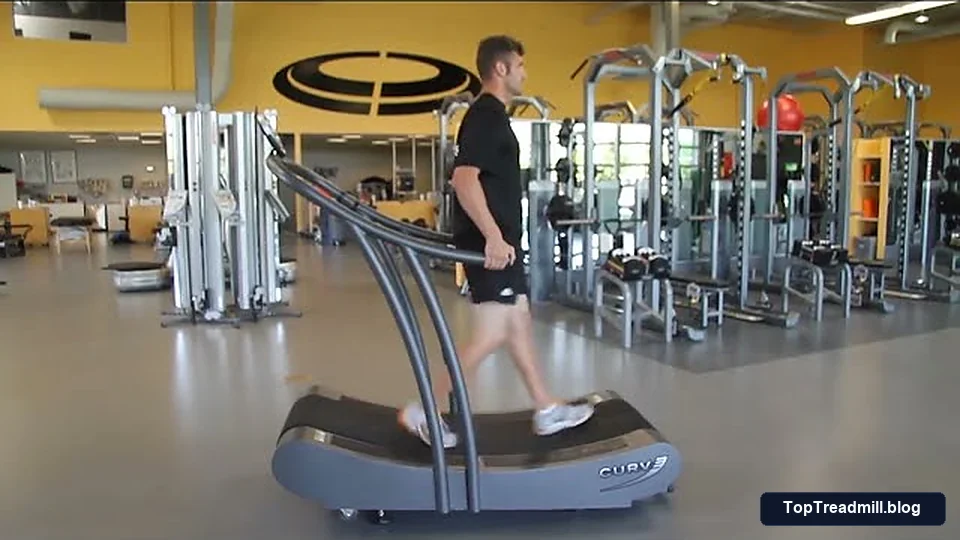
The TrueForm Runner utilizes a distinctive shallow curve radius. For a lighter alternative, read our trueform trainer review to see how alternative unpowered decks handle daily run training.
Conversely, the Woodway Curve features a deeper curvature profile paired with independent rubber slats. This engineering minimizes mechanical resistance, allowing athletes to transition seamlessly into immediate all-out sprints.
The TrueForm Runner utilizes a curved, manual slat design relying entirely on user propulsion. Its curved running deck forces a natural midfoot strike by elevating both the front and rear perimeters.
Conversely, the Woodway Curve incorporates a patented rubber slat belt system mounted on precision ball bearings. This construction dramatically reduces internal friction, allowing for extremely smooth acceleration during high-intensity sprint intervals.
Both systems eliminate motorized rollers, yet their engineering approaches differ regarding bearing durability. Woodway relies on a massive array of individual bearings, whereas TrueForm emphasizes structural simplicity to withstand brutal commercial multi-user demands.
- Zero electricity required for standard belt propulsion systems
- Proprietary slat designs reduce joint impact forces significantly
- Curved geometries dictate natural foot strike placements
Surface Materials and Traction
Treadmill surface composition dictates overall grip, slip resistance, and tactile feedback. The TrueForm utilizes a textured rubber tread that provides aggressive friction for intense conditioning drills.
Woodway implements individual vulcanized rubber slats mounted onto precision ball bearings. This construction drastically lowers internal friction, delivering an exceptionally smooth glide during continuous distance efforts.
- Textured rubber enhances secure foot placement during sled pushes
- Ball-bearing slat arrays eliminate friction-related thermal buildup
Biomechanical Accuracy and Form Training
Mastering running mechanics requires immediate tactile feedback from the equipment. Beginners checking options can browse our best treadmill for beginner runner selections to safely build proper form and confidence.
The TrueForm Runner acts as a strict diagnostic tool. If your center of mass drifts too far backward, the machine slows down instantly, making running form errors immediately obvious.
The Woodway Curve accommodates higher top-end speeds with less initial resistance. While it still demands unpowered propulsion, the smoother bearing system feels more forgiving during fatigue.
Non-motorized curved treadmills inherently alter running mechanics by requiring users to pull the belt backward. This mechanism strengthens the posterior chain, specifically engaging the hamstrings and glutes far more than traditional motorized running equipment.
The TrueForm Runner specifically rewards upright posture and forward lean. If a runner drops their chest or overstrides, the tread accelerates awkwardly, providing immediate kinesthetic feedback that forces immediate neuromuscular correction of running form.
Woodway Curve units offer a slightly different curve radius that accommodates diverse stride lengths seamlessly. Athletes can transition from endurance jogs to maximal sprints without fighting the belt geometry, preserving natural gait mechanics across varying speeds.
- Instantaneous feedback prevents overstriding and poor posture
- User-driven acceleration naturally builds explosive sprinting power
- Postural discipline translates directly to outdoor running efficiency
Stride Rate and Cadence Control
Cadence management differs noticeably due to internal resistance profiles. TrueForm demands a more deliberate stride to maintain momentum across the shallower deck radius.
Woodway allows rapid leg turnover, making it a preferred choice for track athletes focusing on maximum speed development and high-frequency leg turnover drills.
- Deliberate resistance builds foundational lower-body strength
- Rapid turnover capability supports elite sprinting protocols
Frame Construction and Footprint Metrics
Commercial fitness equipment demands robust structural integrity to withstand heavy daily use. Both units utilize heavy-gauge steel frameworks designed for high-impact training environments and demanding athletes.
The TrueForm Runner weighs roughly three hundred pounds, featuring a solid welded steel frame. Its substantial mass prevents any structural shifting or rocking during aggressive sprinting.
The Woodway Curve matches this heavy-duty ethos with an oversized steel base. However, its slightly larger overall footprint requires careful spatial planning within residential or commercial facility layouts.
Heavy-duty steel fabrication forms the structural backbone of both commercial treadmills. The TrueForm Runner features a welded heavy gauge steel frame designed to resist flexing under heavy multi-directional loads and aggressive athletic training sessions.
Similarly, the Woodway Curve employs an oversized structural steel chassis to handle intense institutional abuse. Its substantial unit weight ensures absolute stability, preventing any frame rocking during maximal-effort sprint training sessions by heavy athletes.
Floor space requirements demand careful facility planning. The TrueForm measures roughly 64 inches in length, whereas the Woodway extends slightly longer, requiring dedicated clearance zones for safe user mounting and emergency dismounts during workouts.
- Heavy-gauge welded steel resists torsional flexing under load
- Substantial base weight ensures absolute stability during sprints
- Integrated transport wheels assist with occasional floor repositioning
Spatial Requirements and Clearance
Allocating adequate floor space ensures safe entry and exit during intense workouts. Both machines require clear zones behind the running deck for safe dismounting after sprints.
Ceiling clearance is equally critical due to the elevated running position on curved decks. Operators must account for vertical height when positioning units in basement gyms.
- Adequate rear safety zones prevent accidental tripping hazards
- Vertical clearance considerations apply to taller runners
Maintenance Protocols and Component Longevity
Eliminating traditional motor assemblies and electronic circuit boards drastically reduces routine maintenance liabilities. Both manual treadmills rely on mechanical assemblies designed for longevity.
The TrueForm Runner features a remarkably simple design with minimal moving parts. Routine upkeep primarily involves inspecting the running belt and cleaning debris from the deck.
The Woodway Curve requires periodic alignment checks on its individual slat assemblies. Ensuring the multi-bearing track remains clear prevents premature wear on the moving components.
Manual curved treadmills drastically reduce routine maintenance by eliminating drive motors, incline motors, and running deck waxing. However, the individual slat components require periodic inspection to ensure structural integrity and prevent unexpected mechanical failures.
Woodway systems require regular cleaning of the rubber slat surface and occasional bearing lubrication. The multi-bearing design demands scheduled maintenance checks to maintain the signature frictionless glide expected in high-end commercial fitness facilities.
TrueForm units feature replaceable tread surfaces that simplify long-term upkeep. Facility managers can swap worn components quickly, ensuring minimal equipment downtime and maximizing the operational lifespan of the overall cardiovascular training asset.
- Absence of drive motors eliminates costly electrical repairs
- Simple mechanical inspections replace complex diagnostic troubleshooting
- Durable exterior coatings resist sweat and environmental corrosion
Wear and Tear Analysis
Continuous friction eventually impacts all mechanical fitness equipment. TrueForm rubber treads endure thousands of miles of heavy footwear without degradation.
Woodway slat systems distribute impact across numerous independent segments, allowing targeted replacement of individual slats rather than the entire running belt surface. Read our woodway 4front review for elite engineering details.
- Modular slat replacement reduces long-term service expenses
- High-density rubber compounds withstand aggressive spiked footwear
Console Technology and Data Metrics
Manual treadmills typically feature streamlined consoles focused on essential metrics rather than streaming entertainment. Both manufacturers keep displays functional and straightforward.
The TrueForm Runner offers basic battery-powered displays tracking core metrics. Buyers researching self-powered units should explore our best air runner treadmill roundup for top manual picks and console specs.
The Woodway Curve utilizes clear digital readouts providing comprehensive workout feedback. These consoles integrate smoothly with popular heart rate monitors and facility management software.
Display options on manual treadmills prioritize simplicity and essential performance metrics. The TrueForm integrates a battery-operated display tracking speed, distance, elapsed time, and heart rate data via standard wireless telemetry receivers.
Woodway Curve consoles often incorporate specialized software tailored for group training and athletic performance tracking. These interfaces deliver precise wattage output metrics, allowing coaches to quantify exact user exertion during interval workouts.
Neither machine relies on complex electrical grid power for basic operation. Their minimalist electronic requirements mean consoles run on small batteries or low-draw circuits, enhancing energy efficiency across large commercial fitness floor layouts.
- Battery operation avoids messy power cords across gym floors
- Essential performance metrics track immediate training intensity
- Heart rate telemetry integration supports structured interval training
Connectivity and Data Export
Modern athletes demand accurate data tracking for performance analysis. Both consoles allow basic metric visibility without requiring distracting touchscreen displays.
Compatibility with third-party training applications ensures users can record their manual treadmill workouts seamlessly into digital fitness platforms.
- Bluetooth and ANT+ connectivity support external training apps
- Distraction-free displays maintain focus on running mechanics
Commercial Environment and Facility Integration
Outfitters designing high-performance training spaces must evaluate equipment durability and user throughput. Both treadmills excel in demanding commercial gym settings.
The TrueForm Runner is a staple in specialized athletic performance centers. Coaches rely on its strict form-teaching capabilities to correct inefficient running styles.
The Woodway Curve dominates high-volume commercial fitness clubs. Its smooth glide and familiar slat system attract members seeking top-tier sprint training equipment.
Integrating non-motorized treadmills into commercial facilities transforms high-intensity training offerings. These machines attract elite athletes and strength coaches seeking authentic resistance running tools that challenge cardiovascular conditioning without electrical limitations.
Facility layout planners appreciate the absence of dedicated 20-amp power drops for each machine. Without cords running across walking paths, gyms reduce tripping hazards and enjoy greater flexibility in floor plan configurations for strength zones.
Member onboarding requires brief instructional sessions because manual curved treadmills feel radically different from motorized belts. Educating users on positioning ensures safe operation and maximizes the training return on these premium capital investments.
- Designed to withstand round-the-clock commercial facility usage
- Attracts elite athletes and dedicated running enthusiasts alike
- Enhances facility reputation with premier conditioning tools
User Onboarding and Safety
Transitioning members from motorized to manual treadmills requires a brief learning curve. Clear handrails on both units provide necessary stability during initial onboarding.
Instructors should guide new users on starting and stopping mechanics safely to prevent abrupt halts or loss of balance on the curved deck.
- Ergonomic side handrails offer reliable stability support
- Brief familiarization prevents awkward transitions for novices
Frequently Asked Questions
How do manual curved treadmills differ from standard motorized units?
Manual treadmills are powered entirely by your own leg drive rather than an electric motor. This mechanical design promotes natural gait mechanics and engages posterior chain muscles more effectively.
Which treadmill is better for strict running form correction?
The TrueForm Runner features a shallower curve radius that immediately highlights overstriding and poor posture. It serves as an exceptional diagnostic tool for refining outdoor running technique.
Do these manual treadmills require any external electrical power sources?
Neither machine requires standard electrical wall outlets for belt propulsion. The simple battery consoles only power the small performance displays tracking time, speed, and distance.
Which model is better suited for high-speed sprint intervals?
The Woodway Curve utilizes a low-friction bearing system and deeper curve profile. This engineering accommodates rapid leg turnover and explosive acceleration during maximal sprint efforts.
What kind of ongoing maintenance do these curved treadmills require?
Routine upkeep is minimal due to the absence of motors. Operators primarily perform simple component cleaning and occasional checks on the belt or slat alignment.