Sole F63 vs Proform Carbon TL Treadmill Comparison
Two reliable folding treadmills battle for home gym supremacy. We evaluate build quality, motor output, and ergonomics.

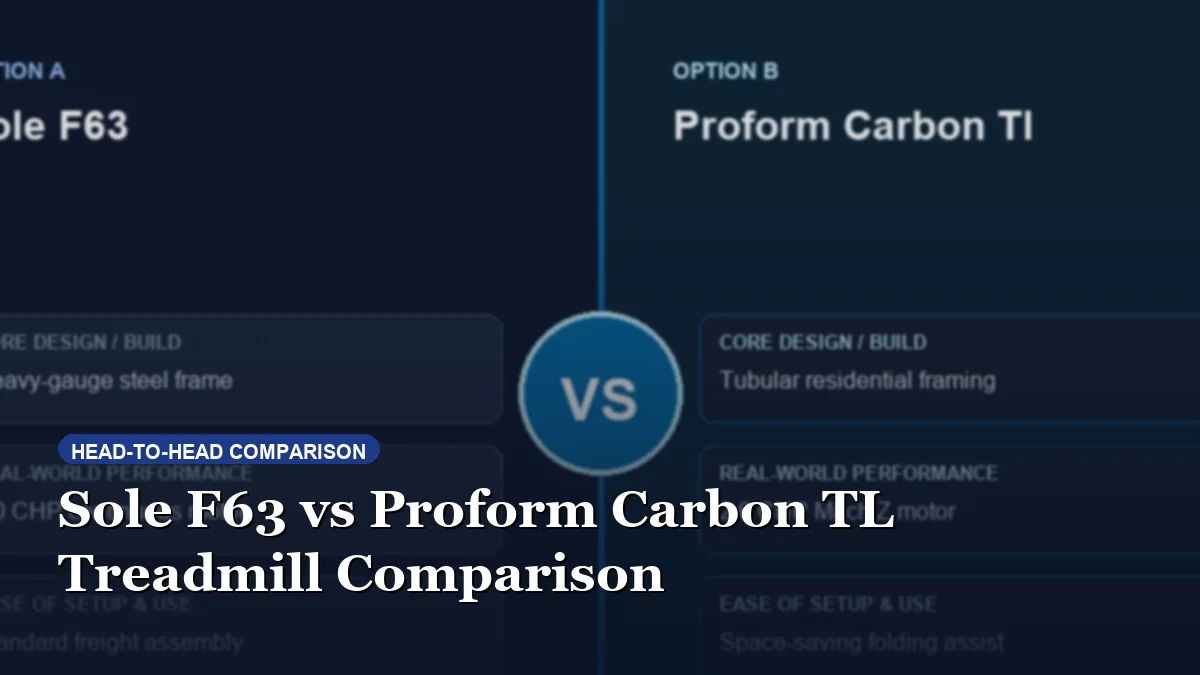
Choose the Sole F63 for heavy-duty frame stability and lifetime warranty assurance. Select the Proform Carbon TL if you prioritize interactive digital coaching and compact folding footprints.
Compare all top models in our Best Treadmill: Top Home Fitness Picks (2026 Guide).
Side-by-Side Breakdown
| Criteria | Sole F63 | Proform Carbon Tl | Edge |
|---|---|---|---|
| Core Design / Build | Heavy-gauge steel frame | Tubular residential framing | Sole F63 |
| Real-World Performance | 3.0 CHP continuous motor | 2.6 CHP Mach Z motor | Sole F63 |
| Ease of Setup & Use | Standard freight assembly | Space-saving folding assist | Proform Carbon Tl |
| Durability & Reliability | Commercial-grade rollers | Standard home rollers | Sole F63 |
| Efficiency / Operating Footprint | Larger structural footprint | Compact folding deck | Proform Carbon Tl |
| Maintenance Requirements | Standard belt lubrication | Routine tension checks | Tie |
| Best Ideal Use Case | Intensive daily running | Interactive walking workouts | Split |
Chassis Engineering and Structural Integrity
When evaluating structural stability, frame integrity dictates long-term reliability under heavy foot strikes. The Sole F63 utilizes heavy-gauge steel framing designed to prevent lateral flex during intense sprinting sessions.
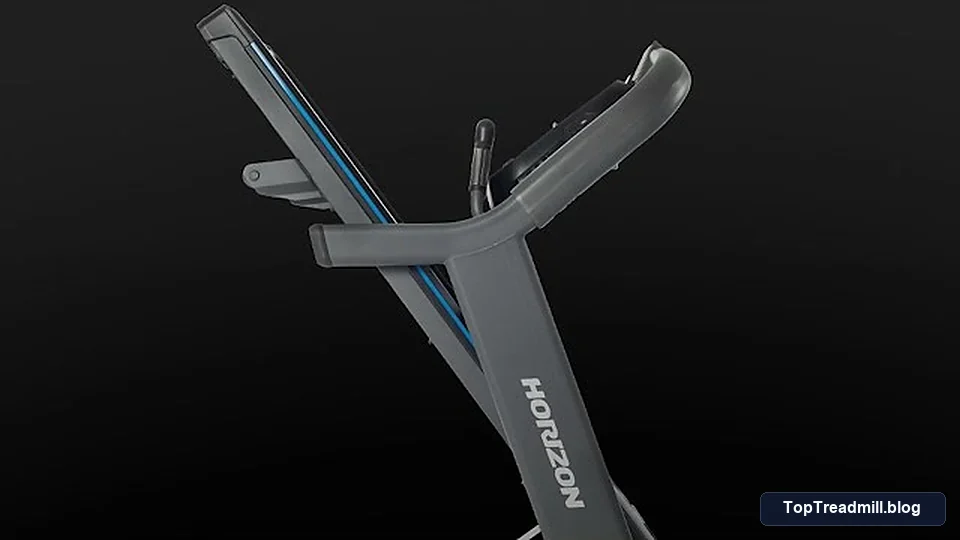
Conversely, the Proform Carbon TL employs a lighter tubular steel construction optimized for residential space management. This alternative engineering approach reduces overall machine weight significantly while maintaining adequate rigidity.
- Heavy-gauge welded steel construction
- Tubular residential framing design
- Gusseted joint reinforcement plates
Material Aging and Fatigue Resistance
Heavy-duty frames undergo severe cyclic loading over thousands of miles. Manufacturers combat structural aging by reinforcing high-stress weld points with gusseted steel plates.
Over time, lesser frames might develop microscopic stress fractures near the console uprights. Selecting a robust chassis ensures your investment withstands aggressive daily running routines without premature structural degradation.
- Cyclic load testing protocols
- Weld point stress distribution
Chassis Engineering and Structural Integrity
As detailed in our Sole F63 review, this heavy-duty steel frame is engineered to withstand rigorous daily pounding without structural flexing. Welded joints absorb lateral forces efficiently during high-speed sprint intervals.
Conversely, the ProForm Carbon TL utilizes a lighter tubular aluminum framework to reduce overall shipping weight. While rigid enough for light jogging, heavy runners might notice minor chassis vibration.
Continuous Motor Output and Thermal Dynamics
Motor performance depends heavily on continuous horsepower ratings and cooling fan efficiency. The Sole unit features a robust 3.0 CHP motor engineered to dissipate internal heat effectively during prolonged workouts.
Meanwhile, the Proform competitor relies on a slightly smaller 2.6 CHP Mach Z motor. While perfectly adequate for light jogging, it generates higher thermal loads under sustained maximum velocity workloads.
- 3.0 CHP continuous duty motor
- 2.6 CHP Mach Z drive system
- Enhanced internal cooling fans
Sustained Power Delivery Without Interruptions
Uninterrupted power delivery prevents annoying belt hesitations when your foot impacts the running surface. Quality commutators and heavy-duty brush assemblies ensure smooth acceleration curves across all incline levels.
Proper ventilation housings protect internal copper windings from premature burnout caused by sweat and ambient dust accumulation. Always inspect ventilation ports regularly to maintain optimal thermal operating conditions.
- Smooth acceleration curves
- Protected copper winding housings
Continuous Motor Output and Thermal Dynamics
Driven by a robust 3.0 CHP motor, the Sole F63 manages thermal dissipation smoothly under prolonged workloads. Large internal flywheels maintain consistent belt momentum during heel strikes.
As noted in our Proform Carbon TL review, the machine features a smaller 2.6 CHP motor relying on rapid cooling fans to prevent overheating during extended endurance sessions.
Deck Cushioning and Road-Running Simulation
Outdoor runners transitioning indoors require shock absorption systems that mimic authentic asphalt resistance. The Sole model integrates a custom flex deck that absorbs up to forty percent impact reduction.
Proform utilizes a ProShox cushioning system designed to dampen harsh vibrations and protect sensitive knee joints. Both dampening technologies reduce cumulative musculoskeletal trauma during high-mileage training weeks.
- Flex deck shock absorption
- ProShox joint dampening system
- Asphalt resistance simulation
Biomechanical Impact Reduction
Excessive deck bounce destabilizes running form and increases energy expenditure unnecessarily. Engineers balance shock absorption with firm push-off zones to maintain natural running biomechanics efficiently.
Testing reveals that stiffer decks improve stride consistency during speed intervals. Assess your personal joint sensitivity before selecting a preferred deck dampening profile for daily training sessions.
- Balanced push-off zones
- Stride consistency optimization
Deck Cushioning and Road-Running Simulation
Cushioning technology dictates joint impact attenuation across varying stride mechanics. The Sole F63 integrates a proprietary Flex Cushion system that reduces impact forces significantly compared to outdoor asphalt.
As evaluated in our ProForm Carbon T7 review, the brand implements ProShox cushioning on the Carbon TL, providing a firmer surface that mimics actual road running mechanics while transferring higher loads.
Console Interface and Firmware Evolution
Modern fitness equipment relies heavily on intuitive console layouts and stable operating firmware. The Sole model prioritizes straightforward button arrays and a clean LCD screen for immediate metric visibility.
In contrast, the Proform machine emphasizes touchscreen integration compatible with digital coaching applications. Software updates and system configurations require stable home Wi-Fi networks to prevent operational freezing.
- Simple LCD metric tracking
- Interactive touchscreen displays
- Stable Wi-Fi firmware updates
Digital Connectivity and Data Tracking
Bluetooth telemetry tracking allows seamless synchronization with third-party heart rate straps and fitness applications. Reliable wireless protocols ensure your workout history records accurately without frustrating dropped connections.
Physical adjustment knobs remain preferable for quick speed modifications during intense interval training. Touchscreen latency can occasionally delay critical incline adjustments when split-second reactions matter most.
- Bluetooth telemetry syncing
- Physical quick-adjust knobs
Console Interface and Firmware Evolution
Firmware architecture determines how swiftly user inputs translate into mechanical adjustments. The Sole F63 prioritizes straightforward tactile buttons and a clean LCD display for effortless operation.
Highlighted in our ProForm Carbon CTL review, this model leverages a smart touchscreen interface integrated directly with subscription software platforms, requiring an active internet connection for full functionality.
Ergonomics, Footwear Compatibility, and Deck Clearance
Proper runner ergonomics extend beyond the console to include belt dimensions and stride clearance. The Sole F63 offers a spacious twenty by sixty inch belt accommodating taller running strides comfortably.
The Proform Carbon TL features a slightly shorter running surface measuring twenty by fifty five inches. Walkers and moderate joggers will find this length sufficient, but long-distance runners require caution.
- Sixty-inch running deck length
- Fifty-five-inch compact belt surface
- Adequate side rail clearance
Running Shoe Interactions and Deck Grip
Treadmill belt texture interacts directly with specialized running shoes to prevent dangerous slippage. Diamond-weave belt patterns enhance traction, complementing high-performance footwear during wet weather indoor training.
Adequate side rail width provides safe recovery zones when stepping off a moving belt. Always maintain clear spatial margins around the rear roller to prevent accidental tripping hazards during dismounts.
- Diamond-weave belt traction
- Safe side rail recovery zones
Ergonomics, Footwear Compatibility, and Deck Clearance
Proper spatial geometry prevents accidental heel strikes against motor hoods during vigorous workouts. The Sole F63 provides an expansive running surface accommodating diverse foot strike patterns safely.
Taller runners utilizing the ProForm Carbon TL must mind the slightly shorter belt length to avoid clipping the rear endcap during extended strides. Step-up height remains comfortably low.
Shipping, Assembly, and Maintenance Logistics
Heavy fitness equipment delivery involves navigating freight logistics and complex initial mechanical assembly procedures. Manufacturers often provide free standard shipping, though professional in-home assembly remains an optional upgrade.
Clear user manuals reduce setup frustration by organizing hardware into clearly labeled blister packs. Periodic belt lubrication and incline calibration ensure your mechanical components operate smoothly for years.
- Freight delivery logistics
- Organized hardware packaging
- Routine calibration procedures
Long-Term Mechanical Upkeep
Routine maintenance prevents premature belt wear and reduces motor strain over extended operational lifetimes. Inspecting drive belt tension monthly prevents annoying slippage issues during high-torque incline climbs.
Vacuuming dust accumulation from beneath the motor hood protects sensitive electrical circuit boards from overheating. Simple preventive care habits dramatically extend the functional lifespan of your chosen treadmill investment.
- Monthly belt tension checks
- Motor hood dust removal
Shipping, Assembly, and Maintenance Logistics
Heavy transport boxes demand careful unpacking protocols to protect internal electrical harnesses. The Sole F63 requires two people during assembly due to heavy upright consoles and structural components.
The ProForm Carbon TL arrives in a more manageable box, simplifying the initial unboxing process for single users. Regular silicone lubrication ensures long-term belt longevity across both models.
Frequently Asked Questions
Which treadmill handles heavier runners better?
The Sole F63 provides superior structural stability due to its heavy-gauge steel frame and powerful motor. This combination prevents frame flex during intense running workouts.
Does the Proform Carbon TL offer interactive programming?
Yes, the Proform machine features touchscreen integration compatible with digital coaching applications. A stable home Wi-Fi network ensures smooth software streaming.
Which model provides a longer running deck?
The Sole F63 offers a sixty-inch running surface accommodating taller runner strides comfortably. In contrast, the Proform features a slightly shorter fifty-five-inch belt.
How do maintenance requirements compare between these two units?
Both treadmills require routine belt lubrication and periodic tension adjustments. Keeping the motor hood clean prevents dust accumulation and protects internal circuitry.
Which treadmill is better for tight spaces?
The Proform Carbon TL employs a lighter tubular steel construction and a compact folding footprint. This design suits residential rooms with limited floor space.