ProForm Carbon T7 vs ProForm Pro 2000 Comparison
Choosing between these folding treadmills depends on motor capacity and structural engineering. Compare heavy-duty performance against space-saving value for your home gym setup.

Choose the Carbon T7 for lightweight daily walking and tight spaces. Opt for the Pro 2000 if you need robust running longevity, heavier frames, and advanced incline control.
Compare all top models in our Best Treadmill: Top Home Fitness Picks (2026 Guide).
Side-by-Side Breakdown
| Criteria | Proform Carbon T7 | Proform Pro 2000 | Edge |
|---|---|---|---|
| Core Design / Build | Standard steel frame with compact folding footprint | Heavy-duty commercial-gauge steel with reinforced welding | Side B |
| Real-World Performance | Handles walking and light jogging efficiently | Supports intense distance running and interval training | Side B |
| Ease of Setup & Use | Lighter components simplify unpacking and placement | Heavier structural chassis requires dual-person assembly | Side A |
| Durability & Reliability | Good for moderate household usage patterns | Built for high-mileage runners and multi-user families | Side B |
| Efficiency / Operating Footprint | Smaller deck saves valuable floor square footage | Larger running surface demands wider clearance space | Side A |
| Maintenance Requirements | Standard belt lubrication and alignment checks | Requires rigorous belt tensioning and dust removal | Side A |
| Best Ideal Use Case | Budget-conscious walkers and casual home fitness | Dedicated marathoners and serious runners wanting performance | Side B |
Core Design & Engineering Differences
Engineering philosophies shape every aspect of these two popular fitness machines. Structural stability varies significantly when examining their respective steel chassis designs and overall weight capacities.
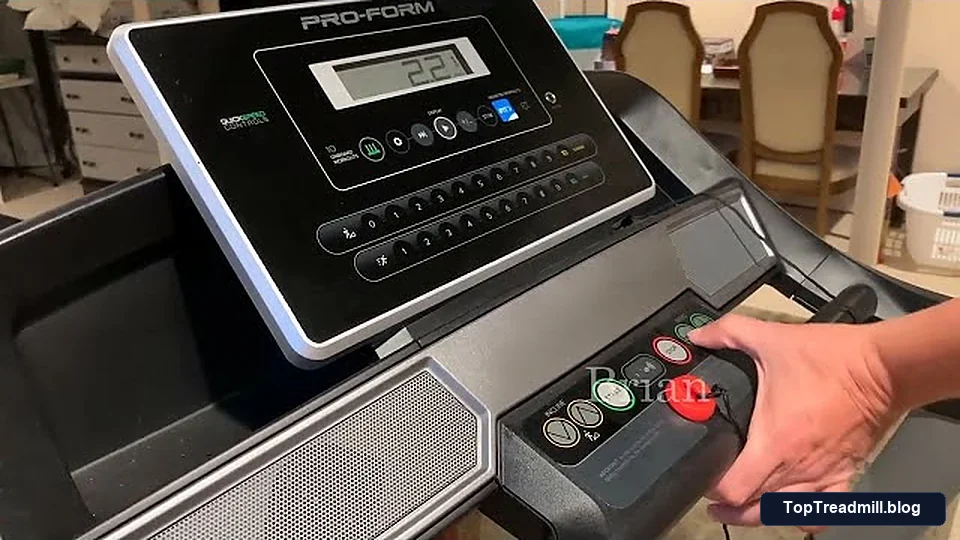
The Carbon T7 prioritizes a compact footprint suited for modern apartments, while the ProForm Pro 2000 review details a heavier frame engineered to withstand high-impact running without noticeable shaking.
Examining the structural framing reveals distinct engineering choices. The Carbon T7 utilizes a lighter footprint with a folding frame mechanism, whereas the Pro 2000 integrates heavy-duty steel components for ultimate stability during intense sessions.
Console architecture also differs significantly between these two models. While the Carbon T7 features a compact display interface, the Pro 2000 mounts a much larger HD touchscreen designed to optimize immersive workout programming seamlessly.
- Carbon T7 utilizes a lighter 2.0 CHP motor system
- Pro 2000 incorporates a robust 3.25 CHP continuous duty motor
- Frame weight differs by over fifty pounds between models
Chassis Stability and Footprint
Footprint dimensions dictate where you can safely position your equipment. Floor clearance remains critical for emergency dismounts during high-speed intervals.
The Pro 2000 demands a wider safety zone due to its extended deck length. Carbon T7 owners enjoy easier maneuverability within restricted room layouts.
- Carbon T7 fits easily into standard spare bedrooms
- Pro 2000 requires dedicated basement or garage placement
Real-World Performance Comparison
Putting these treadmills through daily workouts reveals distinct mechanical behaviors. Belt slip can occur on lighter units during aggressive sprinting phases.
The Pro 2000 maintains consistent belt speed under heavy foot strikes, whereas the ProForm Pro 9000 review explores an even larger platform. Meanwhile, the Carbon T7 performs admirably during brisk walks.
Operational testing highlights how each machine handles vigorous running styles. The Carbon T7 suits moderate jogging regimens, but aggressive runners will appreciate the Pro 2000 and its robust speed and incline transitions engineered for endurance.
Transition speeds between incline and decline settings dictate overall workout fluidity. The Pro 2000 incorporates rapid response actuators, ensuring seamless shifts compared to the slightly slower gear ratios found within the Carbon T7 base assembly.
- Pro 2000 supports decline training down to minus three percent
- Carbon T7 focuses purely on standard incline adjustments up to ten percent
- Roller sizing differs significantly impacting heat dissipation
Speed and Incline Responsiveness
Transitioning between incline levels tests the onboard drive motor. Rapid adjustments help maintain heart rate targets during interval training sessions.
The Pro 2000 executes grade changes noticeably faster than its smaller competitor. This responsiveness benefits users following structured digital coaching programs.
- Digital quick keys allow instant speed modifications
- Incline motors utilize calibrated linear actuators
Motor Capacity & Power Delivery
Drive motors represent the beating heart of any motorized fitness equipment. Continuous horsepower ratings determine how long a machine can run continuously without overheating.
Carbon T7 relies on a modest motor tailored for casual users. Pro 2000 deploys a heavy-duty motor capable of sustaining high speeds for extended periods.
Motor specifications dictate continuous duty ratings and thermal management. The Carbon T7 relies on a standard motor, while the Pro 2000 steps up to a larger Mach Z commercial motor built for sustained heavy usage.
Sustained power delivery prevents hesitation under heavy footstrikes during sprinting intervals. Heavy-duty armatures inside the Pro 2000 maintain steady belt speeds, whereas the Carbon T7 motor may experience minor torque drops under extreme runner loads.
- Larger commutators on the Pro 2000 reduce electrical resistance
- Cooling fans inside the Pro 2000 extend motor lifespan
- Carbon T7 operates quietly under low-load conditions
Electrical Efficiency and Heat
Managing internal operating temperatures prevents premature electrical failure. Thermal overload protection safeguards the motor during prolonged marathon training blocks.
The Pro 2000 incorporates superior ventilation channels around its housing shroud. Carbon T7 users should limit continuous high-speed sessions to prevent strain.
- Proper circuit grounding protects sensitive console electronics
- Consistent voltage supply ensures smooth belt rotation
Deck Cushioning & Biomechanical Impact
Joint protection remains a primary concern for runners logging high weekly mileage. Shock absorption systems reduce cumulative stress on ankles, knees, and lower back vertebrae.
Pro 2000 features adjustable dampeners that let you customize firmness. Carbon T7 offers a fixed-rate cushioning deck that suits moderate walking routines.
Joint protection relies heavily on proprietary deck suspension technologies. As highlighted in our Carbon TL review, ProForm equips basic models with standard cushioning, while the Pro 2000 features adjustable ProShox cushioning.
Biomechanical load reduction directly impacts post-run recovery times for distance athletes. Softer settings absorb high-impact shock waves, reducing joint stress, whereas firmer settings replicate authentic road running mechanics for targeted conditioning.
- Adjustable isolators mimic outdoor road running feel
- Firm decks provide energy return for efficient toe-off
- Deck thickness influences overall acoustic noise dampening
Running Surface Dimensions
Belt length and width dictate your natural stride freedom. Running surface area prevents accidental missteps during high-velocity sprint workouts.
Taller runners will appreciate the extended deck found on the Pro 2000. Carbon T7 works well for average-height strides and walking gaits.
- Multi-ply belts resist stretching over years of use
- Low-friction deck boards minimize motor drag
Maintenance, Efficiency & Longevity
Long-term ownership costs depend heavily on routine upkeep requirements. Lubrication schedules keep walking belts moving smoothly across the deck surface.
Pro 2000 requires slightly more attention due to its high-mileage capabilities. Carbon T7 demands minimal maintenance when used strictly for walking.
Long-term reliability depends on routine upkeep, lubrication schedules, and component quality. The Carbon T7 requires standard belt alignments, whereas the Pro 2000 utilizes commercial-grade rollers designed to minimize friction and extend overall belt lifespan.
Electrical efficiency and heat dissipation also influence the lifespan of internal drive boards. Proper ventilation housings on the Pro 2000 protect sensitive circuits from dust, ensuring reliable performance across thousands of training miles.
- Silicone lubricant application prevents premature belt wear
- Regular belt alignment stops friction against side rails
- Dust removal protects internal optical sensors
Wear Component Replacement
Drive belts and running belts eventually degrade under normal friction. Routine inspections help catch minor fraying before complete mechanical failure occurs.
Replacement parts are readily accessible for both ProForm product lines. Professional technician assistance may be required for heavy deck swaps.
- Inspect drive belts annually for cracking signs
- Check roller bearings for unusual grinding noises
Which Option Fits Your Setup
Selecting the right equipment comes down to matching specs with your goals. User weight and intended weekly mileage should guide your final purchasing decision.
Invest in the Pro 2000 if multiple household members plan to run daily. Choose the Carbon T7 for a streamlined walking experience.
Selecting the ideal machine requires balancing spatial constraints with your fitness objectives. Small home gyms benefit from the compact footprint of the Carbon T7, whereas dedicated spaces accommodate the larger dimensions of the Pro 2000.
Budget-conscious users seeking reliable cardio equipment will find tremendous value in the Carbon T7, but serious athletes should examine the ProForm 2000 review for advanced performance metrics and engineering profiles.
- Assess available ceiling height for incline workouts
- Consider doorway widths when planning room placement
- Evaluate local electrical outlet capacity needs
Making Your Final Choice
Balancing upfront investment with long-term utility ensures satisfaction. Performance capabilities outweigh minor aesthetic differences for dedicated athletes.
Take accurate measurements of your workout space before ordering either unit. Proper planning guarantees a smooth installation and unhindered training sessions.
- Measure ceiling clearance plus user height at max incline
- Ensure dedicated circuit breaker availability
Frequently Asked Questions
Can both treadmills connect to fitness apps?
Yes, both models support interactive digital training software via Bluetooth. Smart connectivity enables automatic trainer control during virtual studio workouts.
What is the primary difference in motor power?
The Carbon T7 features a modest motor suited for walking. Continuous horsepower is significantly higher on the Pro 2000 for running.
Do these treadmills fold for easy storage?
Both units utilize hydraulic assist mechanisms for vertical deck folding. Hydraulic folding helps save floor space when not in active use.
How often should the running belt be lubricated?
Apply silicone lubricant every six months under normal operating conditions. Routine maintenance prevents excessive friction and prolongs motor life.
Which model is better suited for heavy runners?
The Pro 2000 offers a sturdier frame and higher weight capacity. Heavy-duty construction handles intense daily pounding much better.