Peloton Treadmill vs Nordictrack 2450: Expert Comparison
Two premium fitness machines clash for home gym supremacy. Compare structural engineering, motor specs, incline ranges, and software ecosystems.

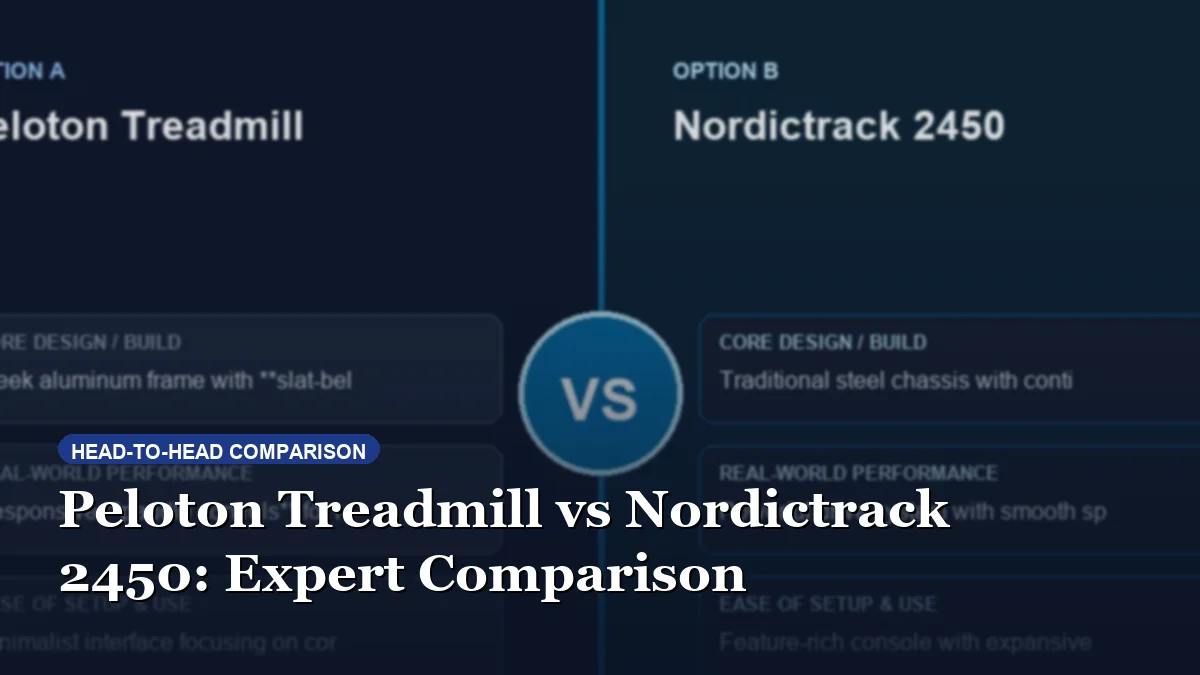
Choose the Peloton Treadmill for streamlined instructor-led studio classes, or pick the NordicTrack 2450 for versatile outdoor terrain simulation and adjustable cushioning.
Compare all top models in our Best Treadmill: Top Home Fitness Picks (2026 Guide).
Side-by-Side Breakdown
| Criteria | Peloton Treadmill | Nordictrack 2450 | Edge |
|---|---|---|---|
| Core Design / Build | Sleek aluminum frame with slat-belt design | Traditional steel chassis with continuous belt | Peloton |
| Real-World Performance | Responsive paddle controls for rapid adjustments | Powerful drive system with smooth speed scaling | Nordictrack |
| Ease of Setup & Use | Minimalist interface focusing on core metrics | Feature-rich console with expansive HD screen | Nordictrack |
| Durability & Reliability | Heavy-duty commercial construction rated for daily use | Robust frame built to handle intense family training | Tie |
| Efficiency / Operating Footprint | Compact footprint with integrated transport wheels | Larger storage footprint requiring ample clearance | Peloton |
| Maintenance Requirements | Requires periodic slat inspection and belt tensioning | Standard deck lubrication and routine belt alignment | Tie |
| Best Ideal Use Case | Dedicated runners loving group fitness classes | Cross-training enthusiasts exploring global terrains | Nordictrack |
Core Design and Structural Engineering
Engineering a high-end running machine requires balancing dead weight with dynamic load stability. The structural design dictates how well the chassis absorbs high-impact foot strikes during intense speed intervals.
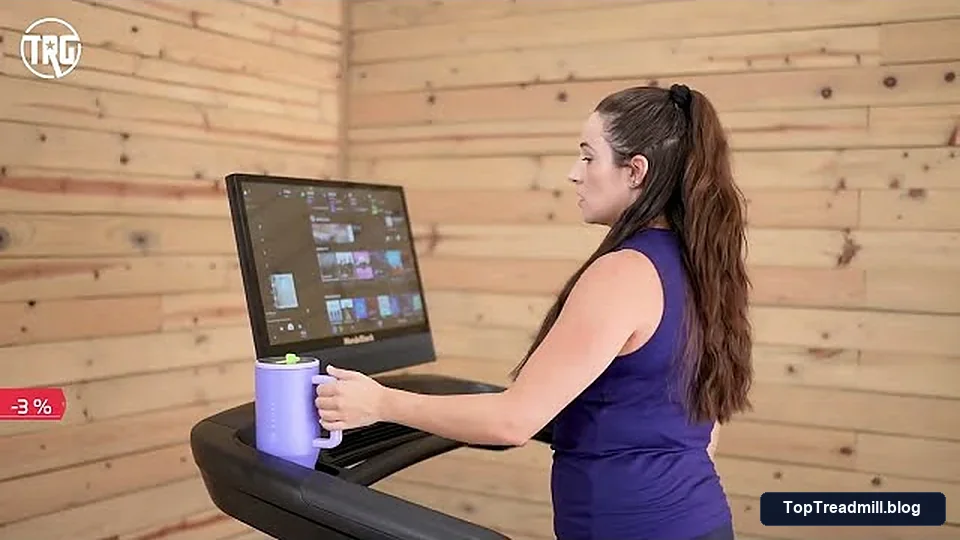
Heavy-gauge framing materials eliminate wobbling during maximum exertion, as detailed in our NordicTrack Commercial 2450 review. However, physical geometry and footprint dimensions cater to distinct home workout environments.
Selecting the right structural configuration depends heavily on your available floor space and ceiling height clearance. Understanding these foundational builds prevents costly installation mistakes in tight workout rooms.
- Heavy-gauge steel and aluminum structural framing elements
- Optimized center of gravity for maximum stability during sprints
- Clearance requirements for safe entry and exit paths
Chassis Rigidity and Frame Materials
Rigid frames prevent torsional flexing when users push past ten miles per hour. Heavy steel pillars anchor the console mast securely to the main platform.
Aluminum accents reduce overall dead weight while maintaining crucial structural integrity under heavy loads. This manufacturing approach ensures long-term reliability across thousands of running miles.
- Powder-coated steel resists sweat and corrosion over time
- Reinforced welded joints prevent structural squeaks
Footprint and Spatial Requirements
Measuring your dedicated workout area ensures safe clearance around the entire perimeter of the running deck. Ceiling height must also accommodate your maximum user elevation.
Compact folding mechanisms help save valuable floor space when the equipment remains idle between daily training sessions.
- Minimum recommended ceiling height formulas
- Safe clearance zones behind the rear roller
Real-World Performance and Motor Dynamics
Motor output and drive system efficiency determine belt smoothness under heavy foot pressure, which we analyzed in the Peloton Treadmill review. Continuous horsepower ratings indicate true motor capabilities.
Instantaneous torque delivery prevents lagging when runners strike the belt during heavy sprint intervals. High-performance cooling fans prevent thermal overload during extended endurance sessions.
Evaluating real-world performance requires looking beyond raw wattage numbers into actual belt response times under load. Smooth acceleration curves protect sensitive knee joints from sudden jarring forces.
- Continuous horsepower ratings for sustained endurance pacing
- Thermal management systems preventing premature motor burnout
- Torque delivery metrics under heavy runner foot strikes
Drive System Power and Torque
Powerful drive motors maintain consistent belt velocity even when heavy runners strike aggressively. Low-end torque prevents annoying hesitation during rapid interval training changes.
Advanced pulse-width modulation controllers ensure silky-smooth power delivery across every single operating speed increment.
- High-torque brushless motor configurations
- Precise PWM speed regulation circuits
Speed Calibration and Responsiveness
Rapid speed transitions allow athletes to execute complex interval programs without frustrating mechanical delays. Calibrated optical sensors monitor exact belt rotation speeds constantly.
Instant adjustments keep your stride locked securely into demanding high-intensity workout profiles.
- Optical encoder feedback loops for precision
- Rapid command execution speeds
Incline, Decline and Terrain Simulation
Simulating outdoor topography requires robust elevation systems capable of shifting angles smoothly during active workouts, as highlighted in our NordicTrack 2450 review. Elevation changes recruit different muscle groups.
Steep incline settings force glutes and hamstrings to work harder without requiring dangerous speed increases. Integrated decline features prepare runners effectively for challenging downhill race profiles.
Mechanical lift actuators must operate quietly while lifting heavy loads under active runner weights. Smooth grade transitions prevent sudden posture shifts that could trigger lower back strain.
- Maximum incline angles for intense hill climbing simulations
- Decline capabilities preparing users for varied outdoor routes
- Lift actuator duty cycles for long-term mechanical reliability
Elevation Actuator Performance
Heavy-duty lift motors handle rapid grade transitions safely while supporting substantial runner body weights. Linear actuators provide precise incremental height adjustments without noticeable shudder.
Reinforced pivot points distribute elevation stress evenly across the entire structural base platform.
- High-thrust linear elevation motors
- Reinforced pivot pin construction
Terrain Mimicry and Automated Grading
Automated terrain simulation syncs belt elevation directly with virtual outdoor landscape video feeds. This immersive feature keeps indoor training engaging through changing virtual geography.
Manual override buttons remain accessible for quick elevation adjustments during custom workout sessions.
- Virtual route synchronization protocols
- Manual grade override response times
Console Interface and Software Ecosystems
Modern fitness displays serve as interactive portals connecting users to virtual instructor libraries and metrics, noted in the NordicTrack EXP 7i review. High-resolution touchscreens display comprehensive workout data clearly.
Software navigation menus must remain intuitive so fatigued runners can adjust settings easily mid-stride. Reliable wireless connectivity ensures seamless video streaming and automatic performance tracking updates.
Choosing between closed software ecosystems and open platforms dictates your long-term content subscription flexibility. Proprietary training platforms offer immersive studio classes with synchronized leaderboards.
- High-definition touchscreen display clarity and touch sensitivity
- Wireless network stability for buffer-free video streaming
- User profile management and performance metric tracking
Display Technology and Usability
Anti-glare screen coatings maintain clear visibility under bright overhead home gym lighting fixtures. Responsive capacitive touch panels register inputs instantly even with sweaty fingers.
Simplified dashboard layouts prioritize essential metrics like elapsed time, heart rate, and current pace.
- Capacitive touch panels with anti-glare finishes
- Customizable data metric display layouts
Subscription Content and Connectivity
Comprehensive training libraries supply endless motivation through professional instructor-led classes. Bluetooth audio pairing lets users connect their favorite wireless headphones easily.
Automatic software updates deliver fresh features and security patches directly to the console.
- Bluetooth 5.0 audio and heart rate strap pairing
- Over-the-air firmware update capabilities
Ergonomics, Deck Cushioning and Joint Safety
Protecting runner joints from repetitive impact trauma remains a primary engineering goal for premium running decks. Absorbing shock effectively reduces cumulative stress on ankles, knees, and lumbar spines.
Deck cushioning systems balance soft impact absorption with stable energy return for efficient toe-offs. Adjustable damping allows users to customize shock absorption levels to match personal preferences.
Ergonomic handrail placement provides safety support without interfering with natural arm swing mechanics during fast sprints. Proper deck geometry encourages natural foot strike patterns for every user.
- Shock absorption elastomers reducing impact force on joints
- Adjustable deck firmness for personalized running comfort
- Natural stride ergonomics and spacious running surface dimensions
Shock Absorption and Elastomer Design
Strategic elastomer placement beneath the running deck absorbs harsh initial impact shock efficiently. High-grade rubber compounds maintain their resilience over years of heavy daily use.
Reducing peak impact forces helps runners log higher weekly mileage with significantly lower injury rates.
- Multi-zone elastomer cushioning arrays
- Resilient rubber compound longevity tests
Running Surface Dimensions and Freedom
Generous belt width and length dimensions provide ample clearance for taller runners with long strides. Spacious decks prevent accidental missteps during high-speed running intervals.
Low step-up heights make mounting and dismounting the running platform safe and effortless.
- Extended belt length accommodating high-speed sprints
- Low-profile step-up height for safe mounting
Maintenance, Efficiency and Long-Term Longevity
Routine maintenance routines preserve mechanical efficiency and extend the operational lifespan of your investment. Keeping drive components clean prevents dust accumulation and thermal overheating issues.
Belt lubrication schedules and tension checks ensure smooth, friction-free running performance over the years. High-quality electrical components resist power surges and maintain energy efficiency.
Evaluating long-term reliability involves reviewing manufacturer warranty coverage for motors, frames, and electronic consoles. Proper upkeep safeguards your workout routine against unexpected mechanical failures.
- Routine belt tensioning and deck lubrication procedures
- Dust prevention protocols for internal electrical components
- Comprehensive manufacturer warranty protection terms
Preventative Care and Servicing
Regularly wiping down running surfaces prevents sweat from corroding sensitive electronic sensors and frame welds. Inspecting drive belts periodically catches wear issues before failures occur.
Keeping ventilation ports clear maintains optimal airflow around the drive motor housing.
- Sweat corrosion prevention cleaning habits
- Drive belt wear inspection guidelines
Energy Efficiency and Power Draw
Modern motor controllers optimize electrical power draw during idle and active operating states. Energy-saving standby modes reduce unnecessary household electricity consumption when idle.
Standard dedicated electrical circuits prevent tripping household breakers during peak motor loads.
- Low-draw standby power management modes
- Dedicated electrical circuit requirements
Which Option Fits Your Specific Home Setup
Selecting the ideal fitness equipment requires matching machine specifications to your personal workout goals and physical space. Assessing your training habits highlights which feature set provides maximum value.
Studio class enthusiasts benefit immensely from closed ecosystem platforms offering immersive group fitness communities. Outdoor simulation fans prefer versatile machines featuring extensive terrain grading capabilities.
Reviewing your budget, available room dimensions, and software preferences ensures complete satisfaction with your final choice. Investing in the right machine transforms your home fitness journey permanently.
- Matching machine capabilities to personal running objectives
- Evaluating software ecosystem lock-in versus open flexibility
- Assessing physical room dimensions and doorway clearance limits
Matching Machine Specs to Training Styles
Dedicated marathon trainers require robust motor durability and spacious belt dimensions for long runs. Interval enthusiasts prioritize rapid speed and incline transition responsiveness above all else.
Identifying your primary training style simplifies the final product selection process significantly.
- Endurance training durability requirements
- Interval training responsiveness priorities
Making the Final Investment Decision
Weighing warranty protections against expected usage frequency ensures long-term operational peace of mind. Prioritize structural build quality and core performance metrics over flashy novelty features.
Choosing the right machine guarantees years of reliable, enjoyable indoor running workouts.
- Warranty coverage evaluation strategies
- Focusing on core mechanical reliability
Frequently Asked Questions
What is the primary mechanical difference between these two treadmills?
The primary difference lies in their drive and belt engineering, with slat-belt designs offering unique road-like feels while traditional belts rely on standard continuous rolling friction.
Do both models require ongoing deck maintenance and lubrication?
Yes, both running machines require periodic upkeep such as belt tension checks and routine cleaning to ensure optimal mechanical efficiency and longevity.
Can I use these treadmills without an active software subscription?
Basic manual mode operation is typically available without a subscription, though full console features and instructor classes require ongoing monthly memberships.
How much space should I clear around each machine for safe usage?
You should maintain at least six feet of clear space behind the rear roller and two feet on each side for safe emergency dismounts during workouts.
Which treadmill is better suited for intense interval and speed training?
Both handle high speeds well, but models featuring rapid paddle controls allow for faster gear changes during intense interval running sessions.