NordicTrack Exp 7i vs Horizon 7.0 AT: Technical Face-Off
Choosing between these popular mid-range treadmills requires examining core motor specs and software ecosystems. Our engineering review breaks down structural and electronic differences.

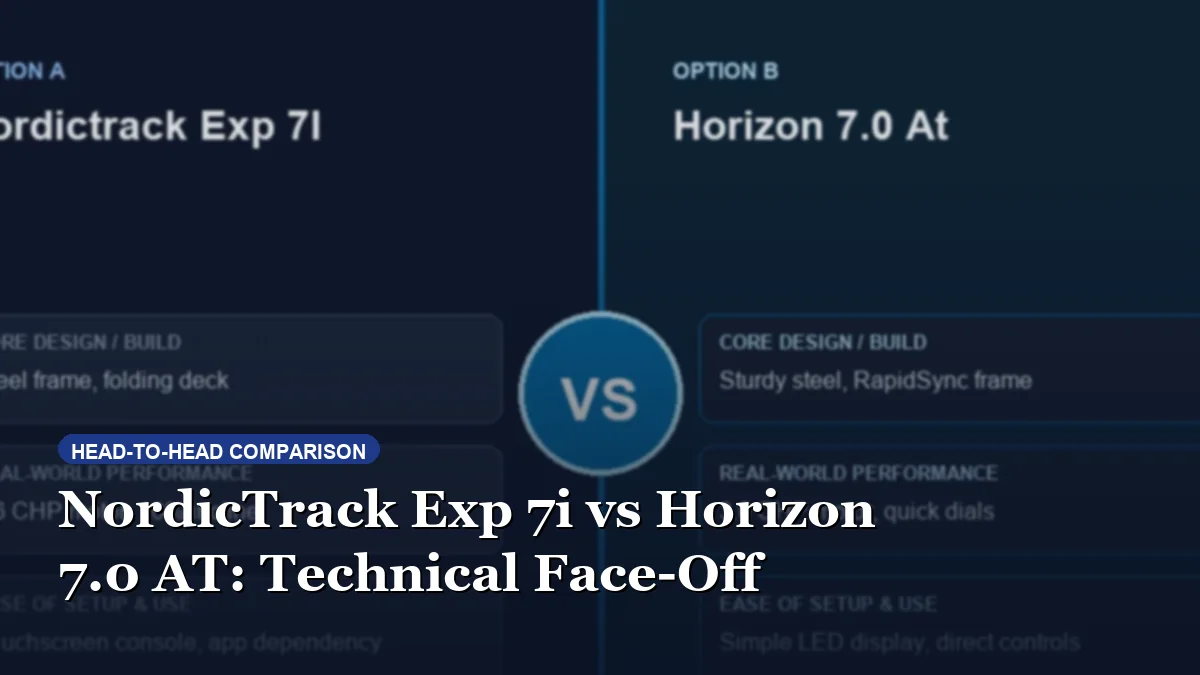
Choose the NordicTrack Exp 7i for immersive iFit programming and automated incline adjustments. Select the Horizon 7.0 AT for rapid response dials and subscription-free device connectivity.
Compare all top models in our Best Treadmill: Top Home Fitness Picks (2026 Guide).
Side-by-Side Breakdown
| Criteria | Nordictrack Exp 7I | Horizon 7.0 At | Edge |
|---|---|---|---|
| Core Design / Build | Steel frame, folding deck | Sturdy steel, RapidSync frame | Horizon 7.0 At |
| Real-World Performance | 2.6 CHP motor, 10% incline | 3.0 CHP motor, quick dials | Horizon 7.0 At |
| Ease of Setup & Use | Touchscreen console, app dependency | Simple LED display, direct controls | Nordictrack Exp 7I |
| Durability & Reliability | Solid mechanical build, good welds | Heavy-duty frame, durable belt | Horizon 7.0 At |
| Efficiency / Operating Footprint | Standard home electrical draw | Optimized motor cooling technology | Horizon 7.0 At |
| Maintenance Requirements | Regular belt lubrication required | Low-maintenance silicone-infused belt | Horizon 7.0 At |
| Best Ideal Use Case | Interactive guided running workouts | Interval training and BYOD setups | Horizon 7.0 At |
Core Design & Engineering Differences
Evaluating mid-range treadmills demands a close look at structural integrity and engineering foundations. Both machines utilize steel framing, but their architectural execution diverges significantly in folding mechanisms and weight distribution.

Detailed insights in our nordictrack exp 71 review show a traditional hydraulic folding drop system with a compact footprint. Conversely, the Horizon unit emphasizes heavy-duty structural stability using reinforced uprights.
- NordicTrack utilizes a SpaceSaver folding design with EasyLift assist.
- Horizon incorporates a three-zone variable response cushioning system.
- Frame weights differ, impacting overall stability during intense sprints.
Frame Geometry and Folding Mechanisms
Structural rigidity dictates how a treadmill handles high-speed impact forces. The Horizon chassis provides exceptional lateral stability, minimizing frame wobble during aggressive sprinting intervals and heavy footstrikes.
NordicTrack balances structural integrity with easy domestic storage capabilities. Its folding deck locks securely into an upright position, freeing up valuable floor space in shared residential environments.
- Hydraulic assist struts simplify lifting heavy running decks safely.
- Reinforced welded joints prevent premature structural fatigue over time.
Motor Engineering and Horsepower Metrics
Motor output directly determines sustained performance limits during long endurance sessions. Horizon equips its platform with a robust 3.0 continuous horsepower motor designed for rapid speed changes.
NordicTrack opts for a slightly smaller continuous duty motor optimized for automated trainer control. While capable, it relies heavily on software calibration to manage high load demands efficiently.
- Continuous horsepower ratings indicate true sustained output capabilities.
- Motor cooling fans prevent thermal overload during extended running sessions.
Real-World Performance Comparison
User experience depends heavily on how smoothly a treadmill executes speed and elevation commands. Mechanical responsiveness dictates whether interval training feels seamless or frustratingly sluggish.
Testers evaluate motor torque, belt slip under heavy foot loads, and overall noise levels during operation. Both machines perform admirably, but target distinct training styles and user preferences.
- Horizon features RapidSync technology for instant speed adjustments.
- NordicTrack integrates automated incline and decline control ranges.
- Belt slip is minimized through precision-machined, balanced drive rollers.
Speed and Incline Transition Speeds
Quick speed adjustments are crucial for high-intensity interval training enthusiasts. Horizon excels here by utilizing custom roller dials that alter pace instantly without cumbersome multiple button presses.
As noted in our nordictrack exp 7 review, the console prioritizes automated terrain simulation over instant manual transitions, communicating directly with software programming to adjust gradients automatically during virtual workouts.
- Roller dials allow rapid micro-adjustments during sprints.
- Automated elevation changes sync seamlessly with virtual route profiles.
Deck Cushioning and Impact Absorption
Joint protection remains a primary concern for runners logging high weekly mileage totals. Horizon incorporates variable cushioning zones that absorb impact at touchdown and firm up at push-off.
NordicTrack employs a proprietary cushioning system designed to mimic outdoor road running. Users can easily adjust deck firmness to reduce joint strain or replicate firmer asphalt surfaces.
- Variable response decks absorb initial footstrike impact effectively.
- Adjustable firmness caters to individual joint sensitivity needs.
Console Technology and Software Ecosystems
Console interfaces define modern fitness equipment interaction and long-term user engagement. Software integration can either enhance daily training motivation or create frustrating subscription paywalls.
Manufacturers approach user displays from entirely opposite operational philosophies. Hardware choices dictate whether you rely on built-in streaming or your own personal tablet devices.
- NordicTrack features an integrated HD touchscreen running proprietary software.
- Horizon uses a simple LED display with a convenient device ledge.
- Subscription models dictate access to structured trainer-led video classes.
Integrated Touchscreens versus Device Trays
Highlighted in our nordictrack exp 7i review, built-in touchscreens offer immersive visual environments for virtual course exploration. NordicTrack leverages its embedded display to deliver rich, instructor-led programming without complications.
Horizon takes a bring-your-own-device approach, featuring a sturdy media rack. Users place tablets or phones on the console while retaining full control over streaming apps and entertainment choices.
- Embedded touch displays eliminate the need for external tablets.
- Integrated device ledges accommodate various personal phone and tablet sizes.
Subscription Requirements and Free Modes
Ongoing software costs significantly impact the true total cost of ownership. NordicTrack heavily encourages continuous subscription membership to unlock the full potential of its interactive training platform.
Horizon operates entirely free of mandatory subscription fees for core operational metrics. Runners can jump on immediately, execute manual workouts, and connect third-party fitness apps via Bluetooth.
- Subscription platforms provide continuous streams of new trainer content.
- Manual modes allow immediate operation without signing up for accounts.
Maintenance, Efficiency & Longevity
Long-term equipment reliability depends on routine maintenance practices and component quality. Understanding mechanical upkeep requirements helps protect your investment over years of regular use.
Thermal management and friction reduction dictate motor lifespan and belt longevity. Proper engineering minimizes wear on moving parts during high-mileage training regimens.
- Horizon utilizes a silicone-infused belt reducing routine friction.
- NordicTrack requires standard periodic lubrication checks for optimal performance.
- Drive motors feature internal cooling fans to prevent overheating.
Belt Construction and Lubrication Intervals
Running belt maintenance is a critical factor in preventing premature motor strain. Horizon includes a low-maintenance belt surface designed to minimize friction and extend overall mechanical lifespan.
NordicTrack specifies regular application of proprietary lubricant beneath the walking deck. Adhering to this maintenance schedule prevents belt binding and protects the primary drive board electronics.
- Low-friction running belts reduce cumulative strain on drive motors.
- Periodic lubrication schedules prevent premature deck and belt wear.
Electrical Efficiency and Thermal Management
Electrical draw and internal heat generation affect home utility costs and hardware durability. Both brands employ efficient cooling fans inside the motor hood to dissipate thermal buildup safely.
Power supplies are engineered to handle standard residential electrical circuits without tripping breakers. Proper grounding and surge protection remain essential for safeguarding sensitive console microprocessors.
- Efficient motor controllers regulate power delivery under heavy loads.
- Internal heat sinks protect electronic circuit boards from thermal damage.
Ergonomics, Safety, and User Accommodation
Ergonomic design ensures comfortable mechanics across diverse runner heights and stride lengths. Safety features must provide reliable emergency stopping capabilities during unexpected loss of balance.
Console layout and handlebar positioning impact overall user confidence during fast sprints. Thoughtful engineering prevents accidental contact with moving side rails during intense workouts.
- Safety keys provide immediate emergency braking when detached.
- Handrail controls allow effortless adjustments without reaching forward.
- Generous deck dimensions accommodate varied running stride patterns.
Handrail Controls and Emergency Stops
Conveniently placed handlebar buttons enhance user safety during fast-paced interval sessions. Horizon features intuitive roller controls integrated directly into the side handrail structures.
NordicTrack places quick-touch console buttons within easy reach of the primary running zone. Magnetic safety tethers connect securely to clothing, cutting motor power instantly if dislodged.
- Handrail buttons let users adjust speed without leaning forward.
- Magnetic safety lanyards stop the running belt instantly during slips.
Running Surface Dimensions and Stride Clearances
Deck dimensions dictate whether taller runners feel secure during maximum speed efforts. Both treadmills offer adequate belt length and width to accommodate comfortable running mechanics safely.
Side rail platforms provide safe standing zones for mounting and dismounting between intervals. Proper clearance prevents tripping hazards and accommodates natural arm swing movements.
- Wide running belts accommodate natural lateral shifting during runs.
- Extended deck lengths provide ample clearance for tall running strides.
Which Option Fits Your Setup
Selecting the ideal treadmill ultimately depends on your specific training environment and workout goals. Assessing available floor space and software preferences clarifies the final purchasing decision.
Consider whether you prefer guided virtual coaching or independent interval execution. Your daily workout habits dictate which mechanical philosophy serves your fitness journey best.
- Choose NordicTrack for automated terrain simulation and classes.
- Select Horizon for subscription-free training and fast dials.
- Evaluate room dimensions to ensure adequate ceiling height clearance.
Space-Saving and Assembly Considerations
Home gym layouts require careful measurement of floor space and folding clearance. Both units require standard assembly procedures, often benefiting from a two-person installation team.
Ceiling height clearance is especially critical when utilizing inclined elevation settings. Ensure your workout room accommodates both the machine height and your maximum vertical step.
- Precise room measurements prevent unexpected clearance issues.
- Hydraulic folding frames simplify vertical storage in tight spaces.
Final Engineering Verdict for Home Gyms
Our technical evaluation within our nordictrack exp 7i treadmill review highlights distinct strengths. Horizon wins for raw durability, while NordicTrack excels in immersive software integration.
- Match machine capabilities directly to your personal training style.
- Prioritize either built-in software or external device compatibility.
Frequently Asked Questions
Can I use the Horizon 7.0 AT without an internet connection?
Yes, the Horizon 7.0 AT operates fully in manual mode without any internet connection. You can execute standard workouts using the built-in LED display and direct console controls.
Does the NordicTrack Exp 7i require an ongoing subscription?
The NordicTrack Exp 7i functions without a subscription for basic manual workouts. However, you need an active membership to unlock full trainer-led programming and automated terrain controls.
Which treadmill is better for high-intensity interval training?
The Horizon 7.0 AT excels at interval training due to its rapid response speed dials. These controls allow instant pace changes without cycling through multiple incremental buttons.
How do the motor sizes compare between these models?
The Horizon 7.0 AT features a slightly larger 3.0 continuous horsepower motor for sustained durability. NordicTrack uses a smaller motor optimized specifically for automated software adjustments.
Are both treadmills easy to fold and store at home?
Both models feature reliable folding mechanisms designed for residential space management. They utilize hydraulic assist systems to make raising and lowering the running deck straightforward.