NordicTrack Commercial 1750 vs Bowflex 10: Showdown
Choosing between these two heavy-duty cardio machines requires analyzing deck engineering, incline capabilities, and software ecosystems. Our technical breakdown guides your final purchasing decision.

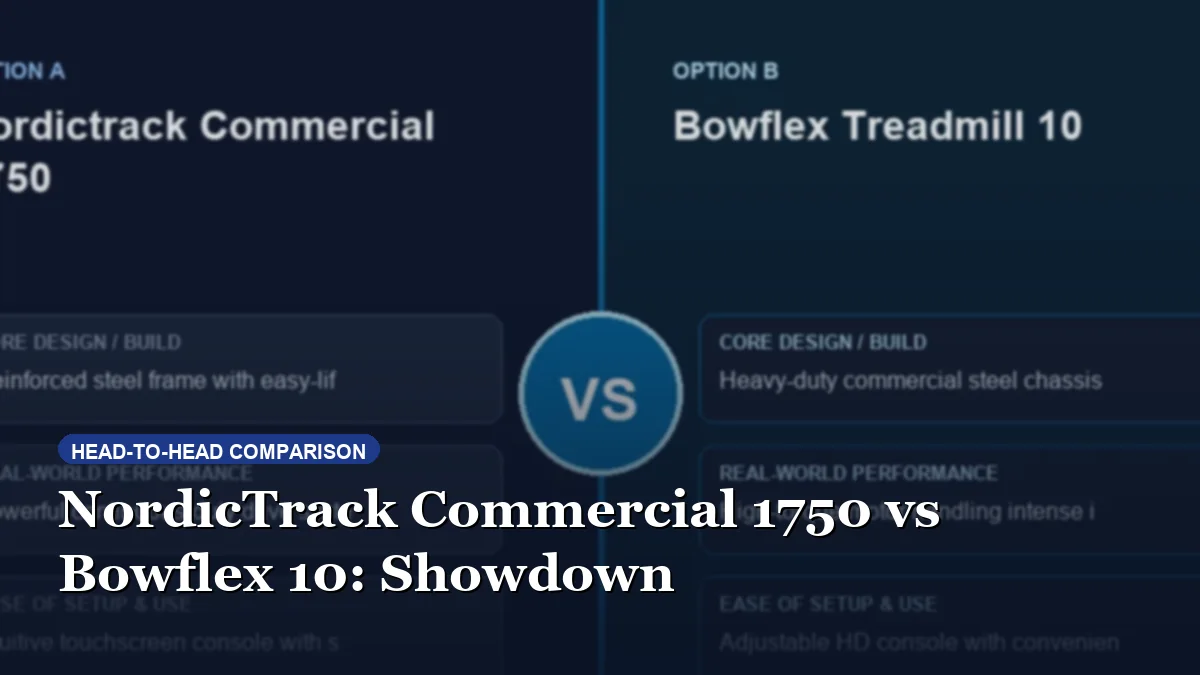
Choose the NordicTrack Commercial 1750 for seamless iFit integration and superior auto-incline mechanics, or select the Bowflex Treadmill 10 for robust JRNY programming and expansive media streaming integration.
Compare all top models in our Best Treadmill: Top Home Fitness Picks (2026 Guide).
Side-by-Side Breakdown
| Criteria | Nordictrack Commercial 1750 | Bowflex Treadmill 10 | Edge |
|---|---|---|---|
| Core Design / Build | Reinforced steel frame with easy-lift hydraulic assist | Heavy-duty commercial steel chassis with soft-drop deck | Nordictrack Commercial 1750 |
| Real-World Performance | Powerful continuous-duty drive system with rapid speed response | High-torque motor handling intense interval training sessions | Bowflex Treadmill 10 |
| Ease of Setup & Use | Intuitive touchscreen console with simplified manual adjustments | Adjustable HD console with convenient media shelf placements | Nordictrack Commercial 1750 |
| Durability & Reliability | Engineered for high-mileage runners with robust shock absorbers | Built for heavy daily usage with reinforced pivot joints | Bowflex Treadmill 10 |
| Efficiency / Operating Footprint | Standard folding footprint requiring dedicated electrical circuits | Large stationary footprint demanding substantial room clearance | Nordictrack Commercial 1750 |
| Maintenance Requirements | Routine belt lubrication and periodic incline calibration checks | Standard deck waxing schedule and motor dust removal | Bowflex Treadmill 10 |
| Best Ideal Use Case | Interactive outdoor trail running via immersive training apps | Mixed-modality conditioning with comprehensive entertainment access | Nordictrack Commercial 1750 |
Core Design & Engineering Differences
Analyzing foundational engineering reveals distinct structural priorities between these two flagship running machines. Manufacturers utilize heavy-gauge steel to ensure structural integrity during intense daily workouts.
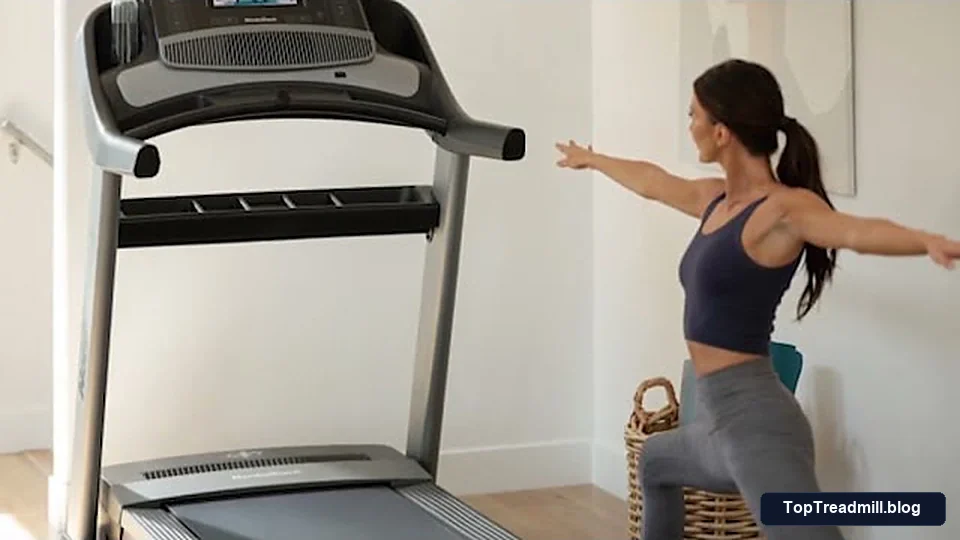
Our commercial 1750 treadmill review highlights how the NordicTrack Commercial 1750 focuses on spatial efficiency through an advanced hydraulic folding mechanism, contrasting with rivals that prioritize a rock-solid platform.
The NordicTrack Commercial 1750 utilizes a heavy-gauge steel frame with welded cross-members, providing exceptional rigidity during high-speed running intervals. Its structural mass effectively dampens vibration and prevents frame flex under heavy footstrikes.
Conversely, the Bowflex Treadmill 10 features a distinct console mast design and robust upright geometry tailored for intense incline training. Both units demand dedicated floor space, but their folding mechanisms differ significantly in footprint reduction.
- Heavy-gauge steel framework construction standards
- Hydraulic lift-assist folding deck mechanisms
- Vibration isolation dampening system placement
- Deck thickness impacts long-term durability and shock absorption across varied runner weights.
- Roller diameters dictate belt tension requirements and overall motor bearing lifespan.
Chassis Construction and Frame Integrity
Heavy-duty frames dictate how well a treadmill absorbs high-impact footstrikes. Both models feature reinforced welded steel, but gusset placements differ significantly across the structural joints.
Engineers designed these units to minimize lateral sway during maximum speed sprints. Proper leveling feet compensate for uneven flooring surfaces seamlessly.
- Welded steel gusset reinforcement patterns
- Adjustable floor leveling stabilization feet
Folding Mechanisms and Space Management
Space-saving folding capabilities matter immensely for home gym environments. The NordicTrack uses an easy-lift hydraulic cylinder to secure the deck safely upright.
Users must always verify ceiling clearance before lifting heavy running decks into storage positions. Safety locking pins prevent accidental lowering during storage.
- Hydraulic assist cylinders for safe lifting
- Automatic deck lock engagement features
Real-World Performance Comparison
Performance testing under load exposes how well continuous-duty motors manage heat dissipation. High-torque drives maintain consistent belt speeds during heavy runner footstrikes.
Check our Nordictrack commercial 2450 treadmill review to see how the NordicTrack Commercial 1750 delivers rapid speed and incline adjustments, while competitors emphasize smooth momentum delivery.
During sustained endurance workouts, the continuous horsepower rating of each drive system determines thermal stability. Commercial-grade motors maintain consistent torque output without overheating, even during prolonged sessions at maximum incline levels.
Belt tracking and friction coefficients dictate how smoothly your foot transitions from strike to toe-off. Proper lubrication schedules prevent premature deck wear and ensure the running surface maintains optimal slip resistance.
- Continuous horsepower motor rating benchmarks
- Belt speed acceleration and deceleration latency
- Incline and decline transition response times
- Incline response times vary between motorized screw jacks and hydraulic elevation struts.
- Max speed thresholds must match your sprinting cadence without lagging during interval changes.
Motor Torque and Speed Consistency
Drive motors must resist stalling when runners land forcefully on the belt. Brushless cooling fans inside the motor housing prevent thermal overload during marathons.
Electrical current regulation ensures smooth belt rotation without stuttering or hesitation.
- Thermal overload protection circuitry integration
- PWM motor controller response efficiency
Incline and Decline Range Mechanics
Simulating outdoor topography requires responsive incline and decline actuators. NordicTrack excels by offering both upward and downward slope adjustments for varied terrain simulation.
Mechanical linkages must handle shifted weight loads smoothly without introducing excessive noise or mechanical bind.
- Linear actuator load capacity ratings
- Real-time terrain simulation angle accuracy
Maintenance, Efficiency & Longevity
Long-term ownership satisfaction depends heavily on preventative maintenance protocols and component accessibility. Regular lubrication reduces friction between the running belt and the phenolic deck.
Electrical efficiency metrics show how much power these heavy machines draw from standard household outlets. Proper circuit sizing prevents tripped breakers during peak loads.
Regular preventive maintenance is essential for preserving drive motor efficiency and reducing electrical draw. Applying silicone lubricant beneath the walking belt every few months minimizes friction and protects the underlying phenolic deck.
Dust accumulation inside the motor hood can cause thermal throttling and premature electronic failure. Periodically vacuuming internal components ensures adequate airflow and extends the operational lifespan of critical control boards.
- Running belt lubrication intervals and types
- Deck flip and replacement scheduling rules
- Electrical power draw and circuit demands
- Electrical requirements demand a dedicated 15-amp circuit to prevent tripped breakers.
- Drive belt tension should be checked annually to prevent slipping under heavy loads.
Belt Lubrication and Deck Care
Silicone-based lubricants keep friction coefficients low across high-speed running sessions. Neglecting this crucial step leads to premature motor burnout and excessive belt wear.
Reversible decks double the lifespan of the running surface by allowing simple flipping.
- Silicone lubricant application frequency guidelines
- Reversible phenolic deck wear indicators
Electrical Efficiency and Power Management
High-draw cardio equipment requires dedicated electrical circuits to prevent power surges. Inverter technology helps regulate voltage spikes during sudden speed transitions.
Standby power modes reduce vampire energy draw when the console remains idle.
- Dedicated circuit amperage requirements
- Standby power consumption reduction metrics
Ergonomics, Adjustments & Usability
Ergonomic design ensures that handrails, console angles, and quick-touch buttons remain within comfortable reach. Runners need intuitive controls that minimize distraction during high-intensity intervals.
As detailed in our Nordictrack C 1750 pro review, the NordicTrack Commercial 1750 integrates thumb-accessible handlebar controls for effortless speed tuning alongside safety tether keys.
Ergonomic design directly influences running posture, stride naturalness, and overall joint comfort. Positioning the side handrails correctly offers crucial stability during rapid speed or incline transitions without forcing an unnatural arm swing.
Console height and viewing angles must accommodate users of varying statures to prevent neck strain. Intuitive tactile buttons allow for blind adjustments, letting you modify intensity without breaking your running cadence or looking down.
- Handlebar control placement and responsiveness
- Console viewing angles for various user heights
- Emergency safety tether clip mechanisms
- Step-up height dictates how easily users can mount the running deck safely.
- Console reach affects immediate access to emergency stop safety keys and bottle holders.
Handlebar Layout and Quick Controls
Ergonomic handlebars house heart rate contact sensors and quick-touch speed toggles. Placing buttons directly on the side rails prevents awkward reaching toward the main console.
Sweat-resistant grip coatings ensure secure hand placement during exhausting sprint intervals.
- Integrated heart rate contact sensor pads
- Tactile quick-touch incline toggle buttons
Console Ergonomics and Display Clarity
High-definition touchscreens require anti-glare coatings for optimal visibility under bright lighting. Tilting console mounts accommodate taller and shorter runners equally well.
Intuitive menu navigation keeps workout adjustments swift and frustration-free.
- Anti-glare touchscreen surface treatments
- Adjustable console tilt hinge mechanisms
Advanced Console & Software Ecosystems
Modern fitness equipment relies heavily on connected software ecosystems to deliver immersive workout classes. Subscriptions unlock trainer-led global routes, automated resistance changes, and performance tracking.
According to our NordicTrack commercial 1750 technical review, the NordicTrack Commercial 1750 leverages iFit to automatically adjust incline based on virtual terrain while featuring streaming options.
Modern fitness equipment relies heavily on integrated touchscreens and cloud-based operating systems. High-definition displays stream immersive instructor-led classes while tracking performance metrics like heart rate, wattage, and vertical feet climbed.
Software stability and Wi-Fi connectivity dictate the seamless execution of virtual terrain updates. Users must consider whether a closed subscription ecosystem or an open streaming platform better aligns with their daily workout preferences.
- Connected fitness subscription platform integration
- Automated trainer-controlled resistance modifications
- Third-party streaming application compatibility
- Processor speeds determine how quickly the touchscreen loads complex mapping software.
- Audio integration via Bluetooth enables wireless headphone pairing for immersive sound quality.
Interactive Training Platforms and Subscriptions
Virtual coaching transforms indoor running by simulating outdoor geography and scenic trails. Trainers adjust your machine remotely to match the real-world grade changes.
User profiles track personal milestones, heart rate zones, and historical workout logs securely.
- Remote trainer resistance control features
- Comprehensive user profile analytics tracking
Entertainment Integration and Media Streaming
Accessing external media platforms keeps long endurance sessions engaging and entertaining. Integrated speakers deliver clear audio without requiring bulky headphones.
Bluetooth headphone pairing provides private audio playback during early morning workouts.
- Built-in Bluetooth audio output capabilities
- External media app streaming integrations
Which Option Fits Your Setup
Selecting the ideal treadmill requires matching machine dimensions and power specs to your room. Ceiling height restrictions are critical when factoring in user step-up height and incline.
The NordicTrack Commercial 1750 suits users prioritizing automated outdoor simulation. The Bowflex alternative fits those seeking robust build quality and flexible media access.
Choosing the right treadmill requires balancing available room dimensions against your specific training goals. Evaluating ceiling clearance is vital, especially when factoring in maximum incline heights and your own standing elevation.
Assess whether your primary routine emphasizes long-distance road simulations or high-intensity interval training. Matching your physiological profile to the machine's engineering strengths guarantees long-term satisfaction and injury-free progression.
- Room dimension and ceiling height calculations
- Flooring protection mat placement recommendations
- User weight capacity and stride length limits
- Weight capacities must comfortably exceed the primary user's mass for structural safety.
- Warranty terms provide valuable insight into manufacturer confidence regarding critical structural components.
Space Planning and Room Requirements
Measure your designated workout space carefully, accounting for both operational and folded footprints. Leave adequate safety clearance behind the running deck for emergency dismounts.
Heavy equipment rubber mats protect delicate hardwood or carpeted flooring from vibration damage.
- Minimum rear safety clearance zones
- High-density equipment flooring mat usage
Matching User Biomechanics to Machine Specs
Taller runners require longer running belts to accommodate natural stride extensions comfortably. Check the maximum user weight limit to ensure long-term structural durability.
Cushioning systems must match your joint sensitivity preferences during high-mileage training.
- Extended running deck length requirements
- Maximum weight capacity structural safety margins
Frequently Asked Questions
Which treadmill offers better incline control?
The NordicTrack Commercial 1750 provides superior incline and decline range performance. It excels at simulating real-world outdoor topography automatically.
Do these treadmills require professional assembly?
Professional assembly is recommended due to heavy components and complex wiring. Two people can assemble them using standard household tools if needed.
Can I use these machines without a subscription?
Manual workout modes function without an active subscription. However, advanced interactive training features require ongoing platform membership plans.
How often should the running belt be lubricated?
Lubricate the belt every six months with silicone-based solutions. Regular maintenance prevents excessive motor strain and premature wear.
What ceiling height do I need for these treadmills?
Ensure your ceiling is at least eighteen inches taller than your height. This accounts for your step-up height plus the maximum incline.