Matrix TF30 vs TF50: Comprehensive Treadmill Comparison
Choosing between these folding treadmills depends on your structural needs. The TF30 fits standard home spaces, while the TF50 delivers commercial-grade heavy-duty performance.

Choose the Matrix TF30 if you need a compact footprint for daily jogging. Select the TF50 if you require a thicker belt and commercial-grade durability for heavier runners.
Compare all top models in our Best Treadmill: Top Home Fitness Picks (2026 Guide).
Side-by-Side Breakdown
| Criteria | Matrix Tf30 | Tf50 | Edge |
|---|---|---|---|
| Core Design / Build | Standard residential frame | Heavy-duty reinforced frame | Tf50 |
| Real-World Performance | 3.25 HP continuous duty motor | 3.25 HP industrial-grade motor | Tf50 |
| Ease of Setup & Use | Moderate assembly required | Heavier components need two people | Matrix Tf30 |
| Durability & Reliability | Built for regular residential use | Engineered for intense daily mileage | Tf50 |
| Efficiency / Operating Footprint | Compact folding footprint | Slightly larger operating base | Matrix Tf30 |
| Maintenance Requirements | Standard belt lubrication | Low-maintenance thick deck | Tie |
| Best Ideal Use Case | Walkers and moderate joggers | Serious runners and heavy households | Tf50 |
Core Design and Engineering Differences
Evaluating structural engineering reveals distinct philosophies in frame construction. The Matrix TF30 uses a robust residential chassis designed for standard home environments without sacrificing baseline stability.
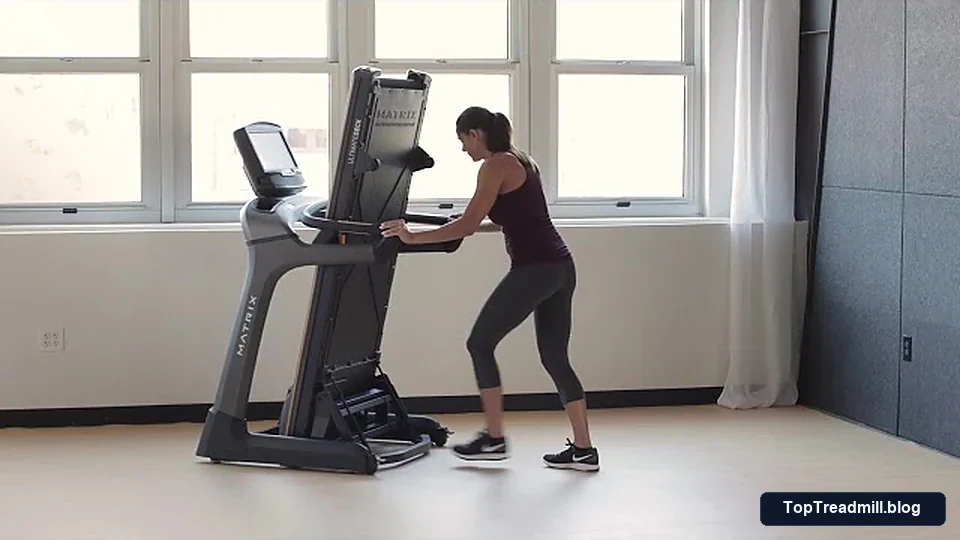
Conversely, the TF50 integrates a heavier-gauge steel frame that minimizes vibration during high-speed intervals. Both models utilize a reliable folding mechanism to maximize your available floor space when idle.
Our detailed Matrix TF30 review highlights its heavy-gauge steel frame engineered for residential spaces, balancing structural integrity with spatial economy. Welded joints minimize lateral flex during intense running intervals and workouts.
Conversely, the heavier TF50 features a more robust chassis design with reinforced pivot points that absorb greater kinetic energy. This structural distinction directly influences maximum user weight capacity and long-term frame durability under daily operation.
- Frame weight differs significantly between the two models.
- Welded steel joints provide high structural integrity.
- Folding hydraulic assist systems ease storage transitions.
Chassis Stability and Footprint
Your workout intensity dictates how much frame movement you will tolerate. The TF50 offers superior structural mass that resists lateral rocking during aggressive sprinting workouts.
Meanwhile, the TF30 maintains a smaller overall physical footprint, making it ideal for multi-use rooms where space efficiency remains a top priority for users.
- Base dimensions impact room layout planning.
- Weight capacity scales with frame reinforcement.
Belt Thickness and Deck Construction
Deck engineering directly impacts joint comfort and long-term mechanical wear. The TF30 features a standard residential running deck with adequate cushioning for daily walking routines.
Stepping up to the TF50 introduces a commercial-grade deck paired with a significantly thicker belt, absorbing impact more effectively during high-mileage training sessions.
Both machines incorporate durable surfaces, but our comprehensive Matrix TF50 treadmill review details its thicker orthopaedic belt that reduces joint impact. This multi-ply material withstands friction significantly better than standard residential treadmill options.
Underneath the belt, the deck system utilizes a reversible deck design that effectively doubles the usable lifespan of the core running platform. Regular flipping ensures even wear distribution across the phenolic-coated surface over years of use.
- Belt ply count affects thermal dissipation and grip.
- Cushioning systems reduce peak impact forces.
- Deck thickness dictates maximum weight support.
Impact Absorption Technologies
Matrix designs both decks to protect runner joints through variable cushioning zones. The front zone absorbs initial foot strike impact smoothly across both models.
The rear zone provides a firmer push-off surface, ensuring efficient energy return with every single stride you take during your running workouts.
- Variable response cushioning alters firmness levels.
- Long-term deck longevity depends on user weight.
Motor Power and Incline Mechanics
Continuous horsepower ratings dictate how smoothly a treadmill handles rapid speed changes. Both machines utilize powerful continuous-duty motors designed to prevent lagging under load.
The internal drive systems maintain consistent belt velocity even when you adjust the incline rapidly during hill simulation intervals and structured training programs.
The TF30 relies on a continuous-duty 3.25 HP motor utilizing a digital drive system to maintain smooth belt velocity without hesitation. Meanwhile, the TF50 steps up to a 3.50 HP motor for enhanced torque delivery at lower speeds.
Incline mechanics on both models provide a maximum elevation of 15 percent, driven by heavy-duty elevation motors. These actuators comply with strict safety standards to ensure precise, incremental height adjustments during automated terrain simulations and workouts.
- Horsepower ratings ensure smooth belt movement.
- Incline motors adjust smoothly from zero to maximum grade.
- Thermal protection prevents premature motor burnout.
Elevation and Speed Performance
Hill training enthusiasts will appreciate the responsive incline mechanics built into these units. Transitioning between steep grades happens quietly without sudden mechanical jerks.
Top speed limitations remain identical, allowing both machines to support fast sprint training safely within residential speed parameters.
- Maximum elevation reaches standard residential limits.
- Speed calibration remains accurate over thousands of miles.
Real-World Performance and Cushioning
Real-world training requires equipment that adapts to diverse running styles and user weights. The TF30 handles casual jogging and walking with exceptional mechanical smoothness.
When punishing the belt with daily marathon training, the TF50 excels by managing heat buildup and maintaining consistent belt tracking under heavy loads.
Our technical Matrix TF30 treadmill review examines its Ultimate Deck System, which provides balanced shock absorption tuned for moderate strides. This cushioning absorbs initial heel-strike shock while maintaining a firm toe-off zone.
The TF50 integrates a heavier-duty version of this suspension platform, offering variable response cushioning that adapts seamlessly to different user weights and running styles. This advanced dampening system significantly reduces cumulative stress on lower-extremity joints.
- Stride dynamics remain natural on both platforms.
- Roller diameters influence bearing lifespan significantly.
- Belt tracking requires occasional manual alignment checks.
Ergonomic Feel During Long Runs
Ergonomics play a critical role in preventing overuse injuries during extended training blocks. The running surface width provides ample lateral clearance for natural arm swings.
Console positioning ensures clear visibility of metrics without forcing awkward head angles while maintaining your standard running posture.
- Console angles accommodate various user heights.
- Handrail sensors offer quick heart rate monitoring.
Console Ecosystems and Software Options
Matrix offers a modular console approach across these treadmill models. You can select basic LED displays or immersive high-definition touchscreens depending on your training preferences.
Choosing the right hardware is essential when selecting from our best treadmill selections, as software integration supports popular fitness applications, allowing seamless workout tracking and virtual coaching experiences directly at home.
Buyers can pair either treadmill with multiple console tiers, ranging from the basic XR LED display to immersive touchscreen interfaces. Each console option supports standard Bluetooth heart rate monitoring and syncs smoothly with third-party fitness applications.
Advanced consoles feature integrated Sprint 8 HIIT programming, an evidence-based interval protocol designed to maximize caloric expenditure efficiently. Software updates are delivered via Wi-Fi connectivity to maintain long-term system stability and feature compatibility.
- Console choices range from simple to interactive.
- Bluetooth connectivity links external heart rate monitors.
- Virtual active courses enhance indoor running engagement.
Display Interface Customization
Navigating workout metrics should be intuitive during high-intensity efforts. The interface design prioritizes large, legible digits for speed, time, distance, and calories burned.
Custom user profiles store personalized data, making it easy for multiple household members to track long-term fitness progress accurately over time.
- Touchscreen responsiveness improves user navigation.
- Data export options simplify fitness app syncing.
Maintenance, Efficiency, and Longevity
Proper upkeep ensures your investment delivers years of reliable daily service. Routine lubrication of the running belt prevents premature friction wear on the deck.
Electrical efficiency remains optimized across both systems, drawing standard household current while delivering high-torque mechanical performance for demanding workouts.
Routine maintenance for both units involves periodic belt lubrication using 100 percent silicone to minimize thermal friction and reduce motor strain. Maintaining proper belt tension prevents premature slippage and extends the lifespan of internal electronics.
Electrical efficiency is optimized through low-idle power consumption profiles, meeting modern energy standards for heavy-duty household appliances. Regular cleaning around the motor compartment prevents dust accumulation that can otherwise trigger thermal overload protection mechanisms.
- Lubrication schedules preserve deck coating integrity.
- Dust accumulation inside the motor hood requires cleaning.
- Electrical components benefit from dedicated surge protectors.
Expected Lifespan and Component Care
Investing in quality fitness equipment means expecting multi-year durability under regular use. The heavy-duty components on the TF50 typically outlast standard residential parts.
Routine inspections of the drive belt and roller bearings will catch minor wear items before they transform into major mechanical failures.
- Bearing replacements extend overall machine lifespan.
- Routine cleaning prevents static dust buildup internally.
Which Option Fits Your Setup
Selecting the right treadmill hinges on evaluating your specific training volume and physical workspace. The TF30 represents a brilliant balance for average household runners.
If your household includes dedicated marathon runners or heavier users seeking absolute structural rigidity, the TF50 justifies its footprint and build upgrades.
Selecting the right model depends heavily on your specific training intensity, user weight parameters, and available room space. The TF30 suits standard runners seeking a reliable residential machine with premium engineering and folding convenience.
Choosing the TF50 makes sense for households requiring higher weight capacities, superior motor torque, and a heavier running platform designed for multi-user daily training regimens. Evaluating these technical factors ensures long-term satisfaction with your investment.
- Assess your weekly running mileage targets first.
- Measure available floor space in folded configurations.
- Consider cumulative user weights for long-term durability.
Making Your Final Purchasing Decision
Weighing technical specifications against daily habits clarifies your ideal path forward. Prioritize frame weight if high-speed sprinting forms the core of your routine.
Choose the more compact alternative if budget or spatial limitations dictate your home gym layout without compromising essential safety standards.
- Match console features to your entertainment needs.
- Verify warranty terms before finalizing your choice.
Frequently Asked Questions
What is the main difference between the Matrix TF30 and TF50?
The primary distinction lies in their structural build and component heft. The TF50 features a heavier frame and a thicker running belt designed for intensive daily mileage.
Can both treadmills fold up for easy home storage?
Yes, both models utilize hydraulic folding mechanisms to save floor space. Their folding design secures safely when upright for convenient storage in shared rooms.
Do these treadmills require specialized electrical outlets?
Neither machine requires commercial electrical wiring for standard operation. They plug easily into conventional household wall outlets while maintaining high motor efficiency.
Which console options are compatible with these Matrix treadmills?
Matrix offers multiple console configurations ranging from basic LED screens to immersive touchscreens. You can select the display that best matches your personal training style.
How often should I lubricate the running deck on these models?
Routine maintenance typically requires silicone lubrication every few months depending on usage. Following the manufacturer guidelines ensures your running belt lasts longer without friction.