Manual vs Electric Treadmill: Technical Comparison
Choosing between motor-driven belts and user-powered systems dictates your cardio mechanics. Understanding these engineering differences ensures optimal fitness results.

Choose manual models for pure self-powered running mechanics and zero electricity bills. Select electric treadmills for precise speed control and advanced incline programming.
Compare all top models in our Best Treadmill: Top Home Fitness Picks (2026 Guide).
Side-by-Side Breakdown
| Criteria | Manual Treadmill | Electric Treadmill | Edge |
|---|---|---|---|
| Core Design / Build | Curved slat or flat belt driven by user stride | Motorized continuous drive belt system | Depends on goal |
| Real-World Performance | High metabolic demand, natural gait pacing | Assisted belt movement, consistent fixed speeds | Electric for speed |
| Ease of Setup & Use | Plug-free placement, instant mechanical response | Requires wall outlet, digital console boot time | Manual for simplicity |
| Durability & Reliability | Fewer electrical parts, heavy-duty commercial bearings | Motor brushes and circuit boards prone to wear | Manual for longevity |
| Efficiency / Operating Footprint | Zero electrical draw, heavier user effort | Continuous power draw, motorized assistance | Manual for energy |
| Maintenance Requirements | Minimal lubrication, belt tension checks | Regular deck waxing, motor inspection, belt alignment | Manual for maintenance |
| Best Ideal Use Case | Sprint training, HIIT, and power running | Distance running, rehabilitation, and structured pacing | Depends on goal |
Core Engineering and Mechanical Design
Manual treadmills rely entirely on your physical stride to rotate the running belt. The absence of a motor shifts the mechanical burden directly to your lower limbs.
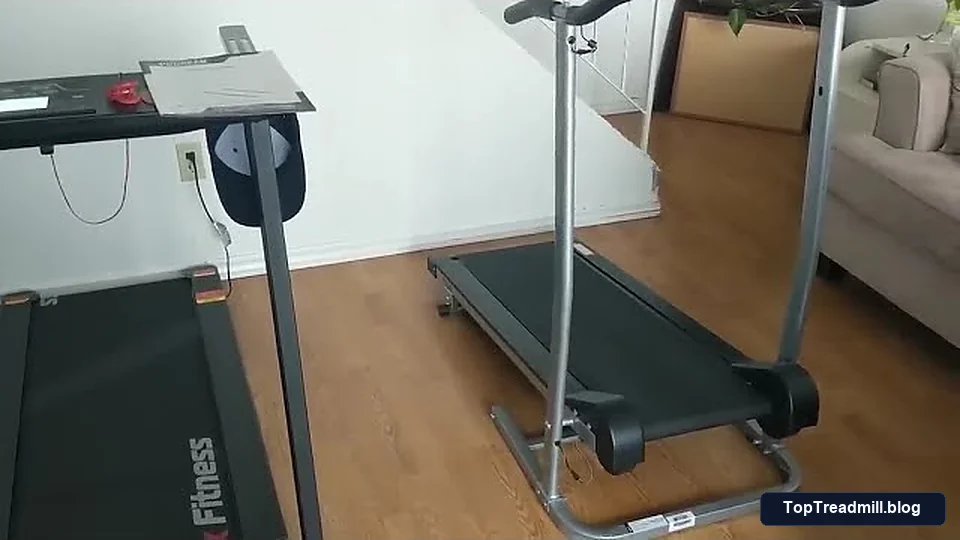
Electric treadmills utilize powerful direct-current or alternating-current motors to drive the belt at constant speeds. Internal controllers regulate belt velocity regardless of your footstrike pressure or weight.
Understanding these foundational builds helps clarify why physical fatigue profiles differ drastically between the two styles. Hardware complexity also dictates long-term reliability across both exercise machine categories.
Designs featured in our best manual treadmill for running selection rely completely on user propulsion mechanics, utilizing curved slats or flat belts connected to flywheel resistance. Your stride torque drives the surface.
Electric units feature continuous-duty drive motors ranging from 2.0 to 4.0 CHP. These motors pull the running belt at constant speeds, requiring heavy steel frames and precision-machined rollers to handle high friction loads safely.
Deck construction differs significantly between systems. Manual models often employ curved aluminum slats with ball bearings, whereas motorized variations utilize phenolic decks paired with multi-ply belts to absorb continuous heavy foot impacts effectively.
- Manual systems use curved decks or weighted flywheels.
- Electric units require continuous horsepower ratings.
- Mechanical resistance replaces digital control boards.
Drive Mechanisms Compared
Curved manual designs feature individual slats mounted on heavy-duty ball bearings. This curved geometry allows instantaneous acceleration without touching a single button.
Motorized alternatives rely on a drive roller connected via a serpentine belt to a heavy flywheel. Torque delivery depends heavily on continuous horsepower ratings and controller efficiency.
- Slatted belts improve shock absorption.
- Flywheels maintain consistent momentum.
Real-World Performance and Biomechanics
Running on a user-powered belt forces you to propel your own body weight forward continuously. This design increases oxygen consumption and caloric burn compared to motorized walking.
Electric options pull your feet backward, requiring you to match the predetermined belt speed. This assisted motion can alter natural stride length and reduce posterior chain engagement.
Athletes training for outdoor road races often prefer unassisted machines to replicate natural ground reaction forces. Motorized trainers excel at maintaining strict interval paces without speed decay.
Running on models featured in our best curved manual treadmill guide alters your running cadence and posture. Users lean forward from the ankles, engaging hamstrings and glutes more aggressively than motorized belts.
Motorized treadmills enforce a constant pace, preventing natural speed fluctuations. This forces your limbs to keep up with the pre-set speed, which can alter stride length and increase repetitive joint loading during long distance training blocks.
Interval training yields starkly different biomechanical profiles. Manual platforms allow instantaneous speed changes governed purely by your leg speed, while electronic models require waiting for motor acceleration curves to match your desired training intensity safely.
- Manual units elevate heart rate faster.
- Electric models maintain strict pace discipline.
- Biomechanics shift based on drive origin.
Pacing and Stride Dynamics
Your stride frequency dictates belt speed instantly on curved manual platforms. Accelerating requires leaning forward and driving through your toes with maximum force.
Motorized belts enforce a rigid rhythm that prevents natural speed fluctuations during fatigue. This controlled consistency benefits steady-state endurance training and rehabilitation programs.
- Manual speeds fluctuate with user effort.
- Electric speeds remain locked and steady.
Power Consumption and Electrical Architecture
Unpowered fitness equipment eliminates electrical grid dependence entirely, offering complete placement freedom. If you prefer powered units, our best treadmill lineup overview details models requiring dedicated circuits to prevent tripping breakers.
Motorized alternatives demand significant electrical output, especially during high-speed sprints or steep incline climbs. Continuous motor usage adds noticeable monthly overhead to your household utility bills.
Evaluating your home layout and available wall outlets helps determine which system fits your physical space. Energy efficiency remains a major selling point for self-powered running tracks.
Manual treadmills consume zero electricity from wall outlets. Their operational footprint relies strictly on human kinetic energy, making them entirely independent of circuit breaker ratings or household electrical load capacities during high-intensity sessions.
Motorized equipment demands dedicated 15-amp circuits to prevent voltage sags. Peak power draws can exceed 1500 watts during heavy user acceleration, generating significant electrical heat that requires active cooling fans inside the motor hood.
Standby power draw remains a hidden factor for electronic units. Consoles with touchscreens and Bluetooth radios continuously pull current, meaning you should unplug the unit or use a surge protector to prevent internal board damage.
- Manual treadmills require zero electrical wall outlets.
- Electric treadmills consume variable wattage under heavy load.
- Power cords introduce potential tripping hazards.
Grid Independence vs Wattage Draws
Operating without electricity makes self-powered machines environmentally friendly and immune to neighborhood power outages. You generate all necessary kinetic energy through your own muscular output.
High-end motorized units can draw peak wattages comparable to household appliances during heavy workloads. Proper surge protection is essential to prevent circuit board damage from power fluctuations.
- Zero electricity usage cuts operational costs.
- Surge protectors safeguard sensitive console electronics.
Maintenance Protocols and Component Longevity
Simplified engineering means manual treadmills suffer from far fewer mechanical failures over years of heavy use. Without circuit boards, wiring harnesses, or motors, routine upkeep remains remarkably straightforward.
Motorized variants require regular belt tension adjustments, deck lubrication, and dust removal from motor compartments. Neglecting these maintenance tasks can lead to premature motor burnout and costly repairs.
Longevity heavily favors unpowered models built with commercial-grade bearings and thick slat belts. Electric units demand proactive care to preserve their complex electromechanical drive systems.
Manual systems drastically reduce mechanical failures by eliminating complex circuitry. However, you must regularly inspect individual slat bearings and alignment tracks to prevent premature wear caused by dust and heavy foot friction buildup.
Electric units demand rigorous, scheduled silicone lubrication between the running belt and deck. Failing to apply lubricant increases friction, which overheates the motor control board and triggers premature error codes during workouts.
Conversely, options evaluated in our best non electric manual walking pad review bypass these motorized tensioning needs. Over time, traditional electric units stretch their main drive belts, requiring adjustment bolts.
- Manual designs feature fewer points of failure.
- Electric units need periodic deck lubrication.
- Bearings outlast motorized brush assemblies.
Upkeep Demands and Wear Points
Maintaining a slat-belt system involves inspecting roller bearings and occasional frame bolt tightening. There are no drive belts or brushes to replace inside the housing.
Electric treadmills demand silicone lubrication beneath the running deck every few months. Friction buildup eventually overheats the motor controller if preventive maintenance is ignored.
- Slat belts require minimal chemical lubrication.
- Deck friction requires consistent silicone application.
Setup, Portability, and Floor Space
Heavy flywheels and robust steel frames make unpowered treadmills exceptionally stable during intense sprinting sessions. Their lack of cords simplifies moving them across different flooring surfaces.
Motorized designs often include folding hydraulic decks to save valuable square footage in home gyms. However, their bulky motor shrouds and electronic consoles add considerable weight.
Assessing your available floor space and transport needs ensures you select a machine you can manage comfortably. Portability varies wildly between lightweight folding frames and heavy commercial units.
Heavy motorized treadmills often exceed three hundred pounds, making relocation a multi-person chore. Their rigid frames demand permanent dedicated floor space because vertical folding mechanisms still leave a massive footprint in domestic environments.
Many manual treadmills feature built-in transport wheels and vertical storage locks. Their lack of heavy electronic consoles and massive drive motors allows single-handed tilting and rolling into tight closets or corner storage areas.
Flooring protection is mandatory for both variants. Heavy-duty rubber equipment mats prevent high-frequency vibrations from damaging subfloors and keep carpet fibers from entering the internal motor ventilation vents on electric machines.
- Cordless designs allow flexible room placement.
- Folding decks reclaim valuable floor space.
- Heavy frames prevent unwanted machine rocking.
Footprint and Storage Flexibility
Many manual units feature front transport wheels and vertical storage capabilities despite their heavy base weight. You can easily tilt and roll them into a corner when finished.
Electric alternatives often feature soft-drop hydraulic folding mechanisms to ease storage tasks. However, always verify doorway dimensions before purchasing bulky motorized equipment.
- Vertical storage suits tight apartment spaces.
- Hydraulic assists ease heavy deck lifting.
Safety Mechanisms and Emergency Braking
Unpowered belts stop the moment you step off the running surface or slow your stride. This instant mechanical braking eliminates accidental slip hazards common with fast-moving motorized belts.
Electric models rely on magnetic safety tether keys clipped to your clothing to halt the motor during a fall. Without this tether engaged, the belt continues moving dangerously.
Understanding safety interventions protects users from sudden high-speed ejections or friction burns. Both machine types approach emergency stopping through entirely different engineering philosophies.
Electric models rely on magnetic safety keys tethered to your clothing. Tripping this tether instantly cuts power to the motor, stopping the belt to prevent dangerous falls during high-speed running sessions.
Manual treadmills lack emergency electrical cutoffs because the belt stops the moment you stop running. Braking is controlled by your own stride deceleration or by engaging manual magnetic resistance levers on the console.
Emergency dismounts differ fundamentally between platforms. Stepping onto side rails on motorized units requires caution, whereas curved manual decks let you easily plant your feet on the stationary side frames without risking accidental belt contact.
- Manual belts stop instantly upon foot removal.
- Electric units require tether clip attachment.
- Rapid belt deceleration prevents severe injuries.
Emergency Stopping Systems
Mechanical resistance naturally decelerates a manual belt safely without throwing the user forward. You control the stopping distance entirely through your own body mechanics.
Tether-activated kill switches cut power instantly to motorized rollers during unexpected trips or falls. Modern digital consoles also feature graceful deceleration ramps for standard workouts.
- Physical deceleration feels more natural.
- Magnetic keys trigger emergency motor cutoffs.
Cost-Value Analysis and Ideal User Profiles
Investing in unpowered equipment pays off over time through zero electricity bills and minimal repair expenses. High initial build quality justifies the upfront investment for serious runners.
Motorized alternatives offer diverse pricing tiers ranging from budget walking pads to advanced club-quality trainers. Choosing the right profile depends on your specific cardiovascular training goals.
Carefully weigh your fitness objectives against these mechanical differences to secure the best equipment for your routine. Both categories deliver exceptional cardiovascular benefits when matched properly.
Manual treadmills deliver superior long-term durability with lower upkeep costs. They suit high-intensity interval training enthusiasts and runners prioritizing natural gait mechanics over pre-programmed digital incline workouts and virtual running courses.
Motorized equipment appeals to endurance runners seeking precise pace control and structured incline training. Their heavy initial investment and ongoing maintenance requirements are offset by versatile workout programming and lower physical exertion thresholds.
Evaluating your primary fitness goals clarifies the choice. If you value low maintenance and sprint-focused conditioning, choose manual designs; if you prefer endurance logging and automated incline metrics, electronic units remain the practical standard.
- Manual units offer lower lifetime maintenance expenses.
- Electric models cater to varied budget levels.
- User profiles dictate optimal hardware choices.
Matching Hardware to Your Goals
High-intensity interval training enthusiasts and sprinters thrive on the responsive nature of curved manual belts. Their durability handles explosive power output without mechanical strain.
Distance runners, walkers, and users requiring precise speed increments benefit from motorized console programming. Automated inclines also support structured cardiovascular progression.
- Sprinters benefit from instant belt response.
- Distance runners rely on automated pacing.
Frequently Asked Questions
Do manual treadmills require any electricity to operate?
No, manual treadmills run entirely on your power. Zero electrical requirements mean complete placement freedom.
Why do manual treadmills feel harder to run on?
You must physically push the belt with every stride. This higher metabolic demand increases your overall caloric burn.
Can you run long distance on a manual treadmill?
Yes, but maintaining steady pacing requires more sustained effort. Self-powered endurance runs demand disciplined muscular control.
Which treadmill type lasts longer over time?
Manual models generally last longer due to fewer parts. Minimal electronic components prevent common motor and circuit failures.
Are electric treadmills better for walking rehabilitation?
Yes, motorized belts provide consistent, controlled pacing speeds. Precise speed increments help patients recover safely and steadily.