Manual Treadmill vs Electric Treadmill: Which Is Better
Choosing between self-powered mechanics and motorized belts defines your home cardio experience. Understanding structural differences ensures optimal training outcomes.

Choose the manual treadmill for intense athletic conditioning and zero electrical limits. Select the electric treadmill for steady rehabilitation pacing and automated incline adjustments.
Compare all top models in our Best Treadmill: Top Home Fitness Picks (2026 Guide).
Side-by-Side Breakdown
| Criteria | Manual Treadmill | Electric Treadmill | Edge |
|---|---|---|---|
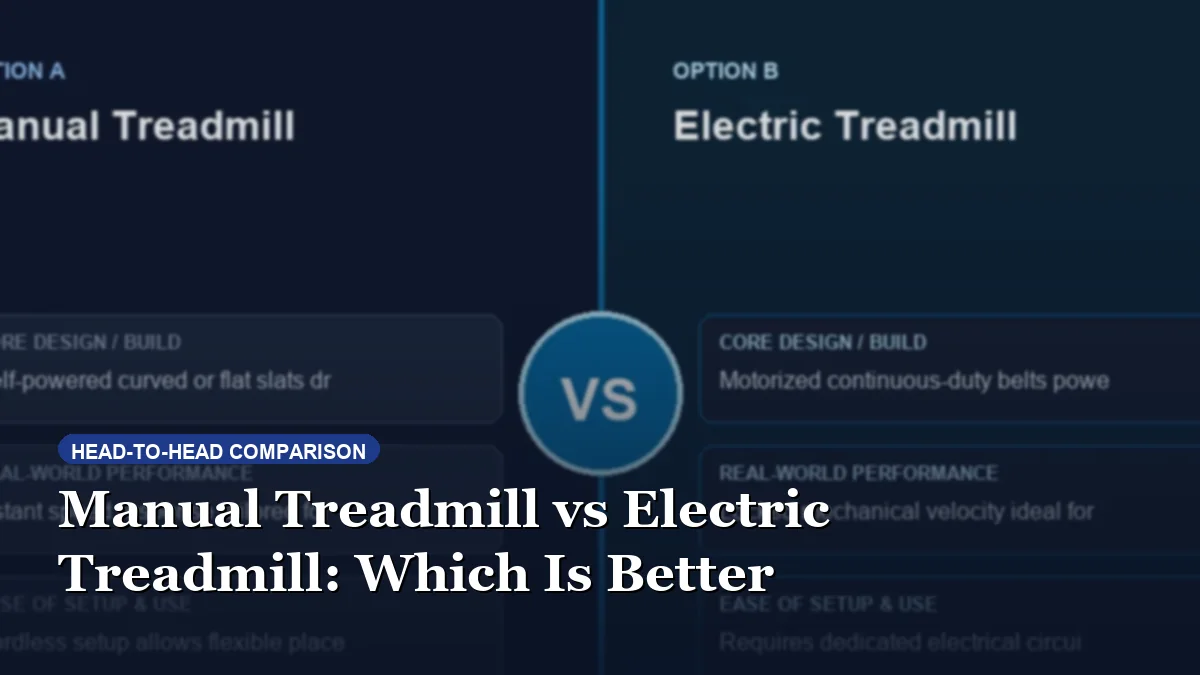
| Core Design / Build | Self-powered curved or flat slats driven entirely by user footstrikes. | Motorized continuous-duty belts powered by internal electrical systems. | Electric Treadmill |
| Real-World Performance | Instant speed response tailored for explosive sprinting and HIIT. | Locked mechanical velocity ideal for endurance pacing and distance. | Manual Treadmill |
| Ease of Setup & Use | Cordless setup allows flexible placement anywhere without wall outlets. | Requires dedicated electrical circuits and proximity to power sources. | Manual Treadmill |
| Durability & Reliability | Fewer electrical components reduce overall mechanical failure points. | Complex consoles and control boards are vulnerable over long periods. | Manual Treadmill |
| Efficiency / Operating Footprint | Consumes zero electrical power, lowering long-term utility overhead. | Draws continuous electrical current during high-speed operation. | Manual Treadmill |
| Maintenance Requirements | Minimal routine servicing needed due to simplified architecture. | Demands periodic belt lubrication, tension checks, and dust removal. | Manual Treadmill |
| Best Ideal Use Case | Sprinters, CrossFit athletes, and high-intensity interval trainers. | Marathon runners, walkers, and physical therapy patients. | Electric Treadmill |
Core Mechanical Engineering
Manual machines utilize curved or flat user-driven belts requiring lower body propulsion. Electric models feature high-torque motors delivering consistent belt speeds without depending on your raw footstrike power.
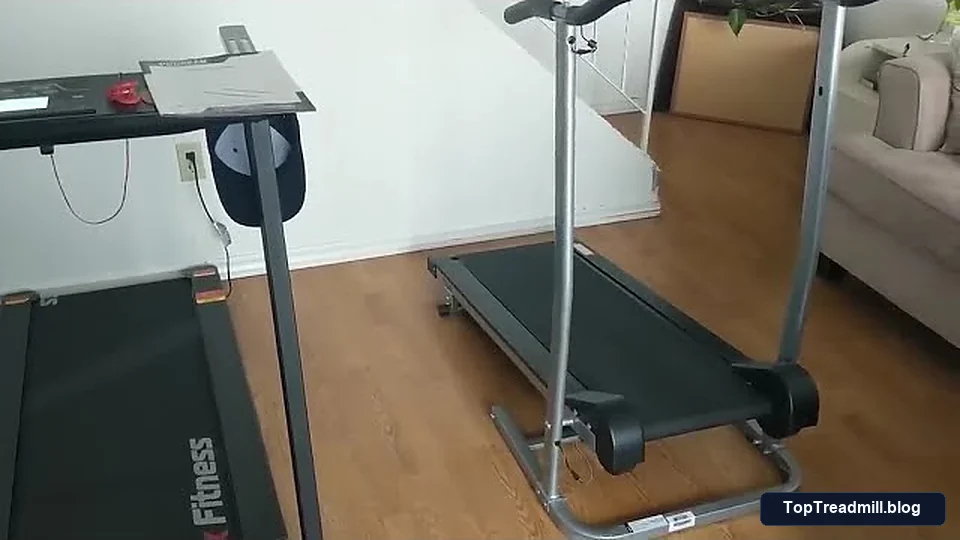
Heavy flywheels and magnetic resistance systems govern modern manual treadmills. Conversely, motorized variants rely on continuous-duty horsepower ratings, electronic control boards, and roller bearing assemblies to drive movement safely.
Manual units rely entirely on user propulsion, transferring force directly to flywheels. Selecting a model from our best curved manual treadmill guide ensures dependable mechanical simplicity and smooth user-driven performance.
Electric alternatives utilize continuous-duty horsepower motors paired with pulse-width modulation controllers to maintain steady belt speeds. These motorized systems ensure consistent pacing under heavy loads but introduce complex electronic maintenance requirements.
- User-driven curved slats engage posterior chains completely.
- Motorized continuous horsepower ranges from 2.0 to 4.0 CHP.
Drive Systems and Power Delivery
Self-powered designs eliminate wall outlet dependencies entirely. This offers ultimate placement flexibility inside residential workout spaces without managing messy cords or worrying about circuit breaker loads.
Motorized units demand dedicated electrical circuits, especially when operating at high speeds or steep inclines. Their internal components generate significant thermal output requiring internal cooling fans.
- Cordless manual frames offer infinite room placement freedom.
- Motorized units require stable household electrical grounding.
Biomechanics and Running Dynamics
Exploring options in our manual treadmill for running review reveals how unpowered units alter stride length, forcing you to lean forward and strike earlier to mimic overground running physics.
Motorized belts pull your feet backward at a locked velocity. This forces a fixed cadence that helps endurance runners maintain strict pacing during long-distance training blocks.
Curved manual designs alter striking patterns, forcing a natural midfoot or forefoot landing that engages posterior chain muscles. Runners must actively pull the belt backward, mimicking overground propulsion mechanics much more closely.
Motorized belts pull the foot backward passively, which changes joint loading and encourages a slightly more extended stride. This forced-speed environment reduces hamstring activation while maintaining a predictable, highly repetitive cadence pattern.
- Curved manual decks encourage midfoot or forefoot strikes.
- Flat motorized belts accommodate diverse heel strike patterns.
Joint Impact and Ergonomic Stresses
Traditional flat manual decks often feature harsh resistance profiles that increase joint friction. Advanced curved designs use rubber slats to absorb shock, reducing impact forces significantly compared to cheap motors.
Premium electric treadmills incorporate advanced deck cushioning elastomers. These systems absorb shock effectively, protecting runner knees and ankles during high-mileage running regimens.
- Curved rubber slats dampen high-frequency strike impacts.
- Elastomer cushioning decks minimize repetitive strain injuries.
Performance Metrics and Training Intensity
Models found in our manual walking pad guide inherently match your exact speed changes instantly, eliminating button lags during sprints to excel at high-intensity interval training.
Electric treadmills require button presses or programmatic cues to alter velocity. Heavy flywheels and heavy-duty motors take several seconds to accelerate, introducing slight mechanical latency.
Manual systems lack electronic speed calibration, making precise interval training difficult without relying on heart rate monitors. Intensity adjusts instantly through user effort rather than pressing buttons to shift digital speed controls.
Electric models provide exact speed increments and programmed incline profiles for structured endurance workouts. Digital consoles track wattage, calories, and pace accurately, supporting repeatable training protocols for marathon preparation.
- Instant speed response during maximal sprint intervals.
- Programmed interval routines executed via digital consoles.
Resistance Profiles and Incline Control
Adjusting resistance on a manual machine typically involves manual levers or magnetic dials. True elevation changes on curved units rely entirely on your body positioning.
Motorized treadmills offer precise electronic elevation adjustments up to fifteen percent or higher. This allows seamless simulation of outdoor hill climbs without altering your natural running posture.
- Manual magnetic levers adjust resistance instantly.
- Electronic incline motors elevate running decks seamlessly.
Maintenance, Durability, and Wear
Manual units boast exceptional structural longevity due to minimal electrical components. Fewer electronic control boards mean fewer failure points, ensuring extended operational lifespans under heavy daily usage.
Electric treadmills require routine belt lubrication, tension adjustments, and dust removal. Motors and electronic console displays represent primary failure points that demand professional technical service over time.
Without motors or circuit boards, manual machines feature fewer electronic failure points and demand minimal electrical upkeep. However, heavy-duty bearings, drive belts, and slat surfaces still require regular lubrication and inspection.
Motorized options require frequent belt tensioning, deck waxing, and dust clearing from the motor compartment to prevent overheating. Electrical surges can fry control boards, necessitating surge protectors and careful environmental humidity control.
- Simplified mechanical architecture reduces routine maintenance needs.
- Motor brushes and drive belts require periodic replacement.
Component Longevity and Servicing
Bearings and slats on high-end manual units handle immense pounding. They withstand heavy commercial gym environments exceptionally well when subjected to regular preventative cleaning protocols.
Electronic components are vulnerable to sweat corrosion and power surges. Using dedicated surge protectors preserves the lifespan of sensitive console microprocessors inside motorized frames.
- Heavy-duty bearings support intense commercial workloads.
- Surge protection safeguards sensitive computerized console displays.
Space, Portability, and Footprint
Manual treadmills generally feature compact footprints and integrated transport wheels. Their lighter designs simplify moving them across residential flooring without requiring extra lifting assistance.
Electric treadmills feature bulky folding decks, heavy steel frames, and large motor hoods. Storing them safely requires substantial vertical clearance and reinforced flooring surfaces.
Most manual models skip heavy drive motors and elevation assemblies, resulting in lighter frames and easier transport wheels. Their compact footprints fit well in smaller apartments where floor space is strictly limited.
Motorized units feature bulky front shrouds housing heavy flywheels and incline motors, significantly increasing total weight. Moving these heavy machines demands dedicated space and sturdy flooring capable of supporting high static loads.
- Compact storage profiles suit smaller urban apartments.
- Heavy motorized frames demand permanent dedicated workout rooms.
Weight Distribution and Stability
Despite lighter overall weights, manual frames stay stable during explosive sprints because user force drives the belt. There is minimal chassis rocking during aggressive running strides.
Heavy electric frames rely on massive steel heft to stay grounded during high-speed belt rotations. This heavy mass prevents dangerous shaking during intense incline workouts.
- Self-driven mechanics prevent high-speed chassis wobbling.
- Massive steel frames ensure absolute structural grounding.
Cost-Efficiency and Energy Consumption
Manual machines consume zero electrical power, reducing your monthly utility overhead. Their upfront manufacturing costs span a wide range based entirely on mechanical build quality.
Electric treadmills draw continuous electrical currents from household outlets during operation. High horsepower motors increase monthly utility bills, especially when running at maximal incline levels.
Manual treadmills consume zero electricity, drawing power solely from your own kinetic energy during workouts. This zero-watt operation lowers long-term utility costs and eliminates concerns over phantom electrical draw.
Electric treadmills draw continuous current from wall outlets, adding noticeable overhead to monthly utility bills. Their complex electronic components also increase long-term ownership costs due to potential out-of-warranty repairs.
- Zero electricity usage lowers ongoing operational expenditures.
- Continuous motor operation increases household energy consumption.
Long-Term Value and Resale
Simpler machines retain strong resale values because fewer internal electronic parts degrade over years of storage. Buyers trust robust mechanical builds over aging computerized consoles.
Older electric units suffer from depreciating electronics and obsolete software interfaces. Finding replacement control boards for discontinued motorized models can prove extremely challenging.
- Durable mechanical frames hold strong secondary market appeal.
- Depreciating electronics complicate long-term motorized equipment resale.
Target User Profiles and Training Goals
Sprinters, CrossFit athletes, and HIIT enthusiasts thrive using manual treadmills. The unrestricted speed control matches explosive movements and demanding conditioning circuits perfectly.
Marathon runners, walkers, and rehabilitation patients benefit from electric treadmills. Consistent speeds and controlled pacing support endurance training and steady cardiovascular progress.
High-intensity interval trainers and sprinters benefit immensely from manual platforms that match acceleration instantly. These machines suit athletes focusing on athletic power development and natural running mechanics correction.
Distance runners, walkers, and rehabilitating patients usually prefer electric treadmills for controlled pacing and joint safety. The steady motorized belt helps maintain consistent rehabilitation strides without unexpected speed fluctuations.
- Ideal for high-intensity interval training and athletic conditioning.
- Perfect for steady-state endurance running and recovery walks.
Matching Equipment to Your Fitness Journey
Evaluating options in our comprehensive best treadmill purchasing guide helps you assess training objectives carefully, ensuring the chosen drive mechanism maintains long-term motivation and prevents premature equipment obsolescence.
Beginners should evaluate their joint health and running experience. Experienced athletes often prefer the unassisted challenge offered by curved self-powered designs.
- Align equipment mechanics with specific fitness objectives.
- Evaluate joint health before choosing unassisted trainers.
Frequently Asked Questions
Can you run long distances comfortably on a manual treadmill?
Running long distances on a traditional manual treadmill requires significantly more continuous muscular effort from your posterior chain muscles and calves than a standard motorized belt.
This relentless physical demand can lead to accelerated overall fatigue during extended endurance training sessions if you lack specialized athletic conditioning and robust lower body endurance capacity.
Do electric treadmills require a lot of electrical maintenance?
Electric treadmills generally demand very little routine electrical maintenance beyond using proper surge protectors and keeping internal console components entirely free from dust accumulation over time.
However, complex electronic control boards and continuous-duty motors can eventually fail after years of heavy residential usage, requiring expensive professional technical repairs and specialized replacement components from manufacturers.
Which option is safer for high-intensity sprint training?
Manual curved treadmills offer superior safety for maximal sprint training because the running belt stops immediately when your footstrike slows down.
This instant self-governed braking capability completely eliminates the dangerous risk of being thrown backward by a continuously moving motorized belt during high-speed exhaustion or sudden physical slips.
Can manual treadmills handle heavy daily gym usage?
High-end manual treadmills handle heavy commercial gym usage exceptionally well because their robust mechanical designs completely lack vulnerable electronic motors and computerized consoles.
These heavy-duty steel frames and thick rubber slats withstand intense daily pounding from numerous athletic members without experiencing major structural degradation or performance failures.
Are electric treadmills better for walking and rehabilitation?
Electric treadmills remain the absolute best choice for walking and rehabilitation routines because they deliver reliable, steady belt speeds.
This consistent mechanical pacing allows recovering patients to focus entirely on their gait mechanics without generating manual propulsive physical force against heavy manual resistance systems during therapy sessions.