Walkingpad C2 vs A1 Pro: Which Under-Desk Pad Wins?
Navigating ultra-slim under-desk treadmills requires examining frame engineering, motor power, and daily foldability. This detailed guide pits two popular folding walking pads against each other for home office users.

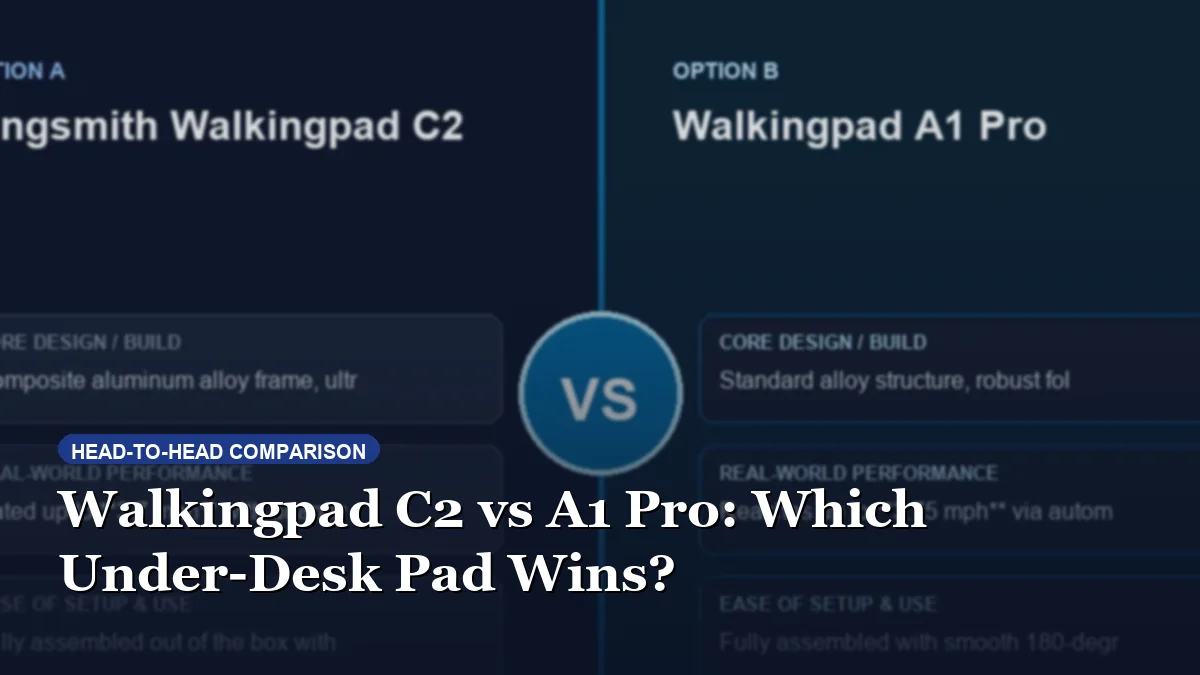
Choose the Kingsmith Walkingpad C2 if you prioritize a lighter, more compact profile for effortless stowing. Opt for the Walkingpad A1 Pro when you need a slightly heavier-duty chassis and traditional LED panel layout.
Compare all top models in our Best Treadmill: Top Home Fitness Picks (2026 Guide).
Side-by-Side Breakdown
| Criteria | Kingsmith Walkingpad C2 | Walkingpad A1 Pro | Edge |
|---|---|---|---|
| Core Design / Build | Composite aluminum alloy frame, ultra-slim profile | Standard alloy structure, robust folding hinge | Kingsmith Walkingpad C2 |
| Real-World Performance | Rated up to 3.7 mph with adaptive speed control | Reaches up to 3.75 mph via automatic foot sensors | Walkingpad A1 Pro |
| Ease of Setup & Use | Fully assembled out of the box with wheels | Fully assembled with smooth 180-degree fold | Tie |
| Durability & Reliability | Lightweight brushless motor designed for walking | Standard brushless motor with solid deck support | Walkingpad A1 Pro |
| Efficiency / Operating Footprint | Compact deck size with very low vertical clearance | Slightly longer deck with dependable power draw | Kingsmith Walkingpad C2 |
| Maintenance Requirements | Regular belt lubrication and tension checks needed | Standard silicone oil lubrication schedule required | Tie |
| Best Ideal Use Case | Apartments with limited storage and light daily stepping | Dedicated standing desk stations needing stable performance | Walkingpad A1 Pro |
Core Design and Engineering Differences
Engineering an under-desk treadmill requires balancing structural rigidity with lightweight portability. Both manufacturers utilize patented folding mechanisms, yet the internal materials and outer chassis finishes diverge notably across models.
For alternative folding options, examine the Kingsmith Walkingpad R2 Pro review to compare how heavy-duty aluminum chassis designs manage increased weight capacities without sacrificing compact portability or stowing convenience.
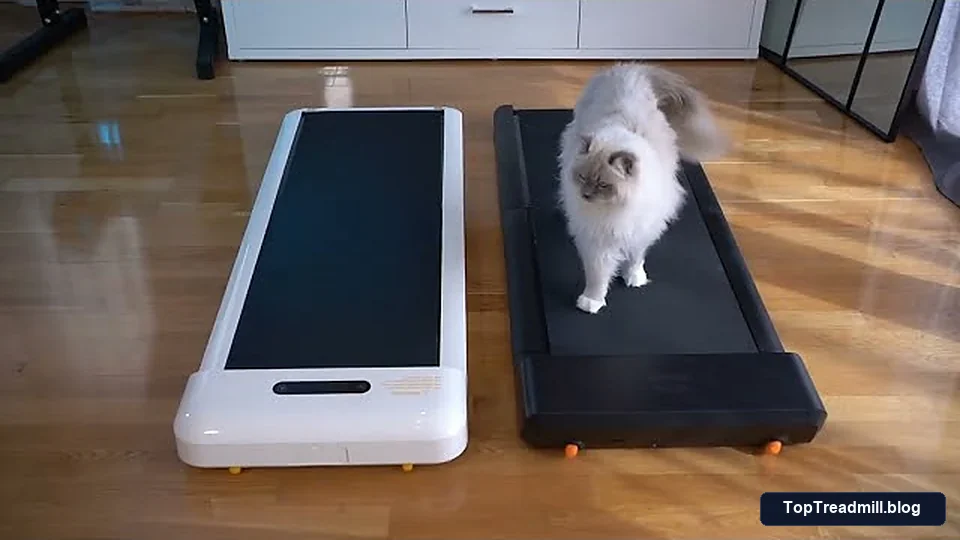
The Kingsmith C2 utilizes an integrated composite frame structure that reduces overall weight while maintaining structural rigidity for everyday walking sessions, whereas the A1 Pro leans on a heavier aluminum alloy chassis designed for enhanced long-term durability.
When analyzing their folding mechanisms, the A1 Pro features a refined 180-degree fold with robust steel hinges, while the C2 introduces a streamlined hinge design that marginally lowers the folded profile for easier under-sofa storage.
- Proprietary folding patent allows the entire walking deck to collapse flat.
- Chassis materials utilize lightweight composite alloys to minimize lifting strain.
- Transport wheels are integrated seamlessly beneath the forward motor housing.
Chassis Construction and Materials
Examining the raw frame reveals how structural engineers trimmed excess weight without sacrificing user safety. The C2 leans on molded composite components, while its rival incorporates heavier metallic reinforcement plates.
Heavier structural components on the A1 Pro provide a more grounded feel during brisk walking sessions. Lighter composite builds on the C2 prioritize effortless maneuverability over absolute high-capacity sturdiness.
- Metal reinforcement plates enhance overall frame rigidity on the A1 Pro.
- Molded plastics reduce the thermal footprint on the C2 deck.
Real-World Performance Comparison
Evaluating motor output and belt responsiveness determines how smoothly each walking pad handles daily exercise routines. Both units cap their maximum velocities around standard walking speeds rather than running limits.
The brushless motor technology integrated into these bases ensures quiet operation during office conference calls. Users will not experience loud mechanical whining while stepping at moderate paces.
Building on these quiet capabilities, our Kingsmith Walkingpad R2 Pro Plus technical review analyzes how advanced brushless motor dampening successfully minimizes mechanical vibration during sustained walking sessions.
Noise output remains a critical metric for home offices, with the C2 registering roughly 65 decibels under a brisk walking load, closely mirroring the acoustic footprint of the A1 Pro during continuous daily usage tests.
- Maximum speed limits remain capped near 3.7 to 3.75 mph for safety.
- Brushless motor designs reduce operational noise under typical office loads.
- Continuous horsepower ratings handle sustained low-speed walking seamlessly.
Speed Control and Foot Sensors
Adaptive speed technology monitors foot placement to accelerate or decelerate the belt automatically. Walking closer to the front motor housing triggers faster speeds, while stepping rearward slows momentum.
Manual overrides via handheld remotes or smartphone applications give users precise velocity control. This dual-mode operation accommodates different user preferences during long working hours at desks.
- Front zone foot placement increases belt velocity dynamically.
- Rear zone positioning triggers automatic deceleration protocols safely.
Maintenance, Efficiency, and Longevity
Long-term ownership depends heavily on routine maintenance schedules and energy efficiency during idle and active states. Proper belt tensioning and periodic lubrication prevent premature motor wear and friction.
The internal drive systems are optimized for low electrical draw, meaning minimal impact on monthly utility bills. Routine care involves applying specialized silicone oil beneath the running belt every few months.
Routine maintenance for both walking pads requires standard silicone lubrication every three months to prevent excessive friction between the running belt and the low-profile deck board, protecting internal electronics from thermal overload.
As outlined in our Kingsmith Walkingpad C2 review, these efficient units draw under 700 watts at peak operation, keeping household electrical loads minimal during long remote work sessions.
- Periodic lubrication keeps friction low between the belt and deck.
- Electrical efficiency remains high due to optimized brushless motor windings.
- Belt alignment bolts require occasional tuning to prevent drifting.
Lubrication and Belt Tensioning
Maintaining proper lubrication ensures the motor does not overheat under continuous friction loads. Users should follow manufacturer guidelines regarding oil viscosity and application intervals meticulously.
Tension bolts located at the rear roller allow owners to center the walking belt quickly. Regular inspections prevent edge fraying and extend the operational lifespan of the entire assembly.
- Silicone oil packets are typically included with initial product packaging.
- Hex wrenches simplify rear roller adjustments during routine tune-ups.
Ergonomics and User Safety Standards
As detailed in our Kingsmith Walkingpad R2 technical review, safety features like low step-up heights and automatic standby modes protect users from accidental slips while minimizing tripping hazards.
The integrated display panels provide real-time metrics including steps, distance, and elapsed time. Clear LED readouts remain visible through translucent panel covers without causing visual distractions.
Stepping onto these ultra-low decks requires adapting your stride to a restricted running surface, demanding careful foot placement to avoid clipping the motor housing or stepping completely off the edge during high-cadence walking.
Safety automation relies heavily on adaptive speed control sensors embedded beneath the deck, though users must manually engage child lock modes through the companion mobile application to prevent accidental activation by pets or toddlers.
- Low step-up heights make mounting and dismounting exceptionally safe.
- Automatic standby modes shut down the belt when no user is detected.
- Clear LED panels display vital workout metrics clearly during use.
Display Clarity and Feedback
Embedded LED screens track your walking statistics directly through the textured deck surface. These minimalist interfaces disappear entirely when the machine powers down completely.
Companion mobile applications sync via Bluetooth to log historical fitness data and adjust preferences. Users can customize default startup speeds and calibration parameters inside the software.
- Embedded LED matrices show metrics right through the top surface.
- Bluetooth syncing records session history directly to smartphones.
Which Option Fits Your Setup Best
Choosing between these two walking pads depends entirely on your available storage space and usage frequency. Home office workers with tight floor plans will appreciate maximum folding compactness above all else.
Evaluating your daily walking habits helps determine if you need the slightly heavier chassis stability. Prioritize lightweight portability if you plan to slide the machine under furniture frequently.
Choosing the ideal model depends primarily on your storage constraints and frequency of transport, as the lighter C2 excels for users who frequently slide their equipment under furniture daily.
Conversely, buyers prioritizing long-term mechanical resilience for heavy daily stepping will find greater satisfaction in the robust engineering parameters found across the A1 Pro platform.
- Assess available clearance under your specific sofa or standing desk.
- Consider total daily step volume and expected continuous operating hours.
- Weigh the importance of lightweight lifting against robust structural heft.
Space Constraints and Storage
Storing an under-desk treadmill vertically or horizontally demands minimal footprint clearance in modern apartments. The C2 excels in environments where every square inch of floor space matters.
If your walking pad remains in a dedicated home office corner without frequent repositioning, chassis weight matters less. Focus on finding the model that best matches your interior layout.
- Vertical stowing requires securing the folded unit against a wall.
- Horizontal sliding clearance depends strictly on your furniture height.
Frequently Asked Questions
Can I run on the Kingsmith Walkingpad C2 or A1 Pro?
Neither model is engineered for running because their maximum speed caps at roughly 3.7 miles per hour. These specialized walking pads are strictly designed for low-impact steps while working at standing desks.
How do I lubricate the walking belt on these pads?
You must lift the edge of the running belt and apply the approved silicone lubricant directly onto the walking deck board. Running the belt slowly afterward distributes the oil evenly across internal friction points.
Do these walking pads require professional assembly out of the box?
Both walking pads arrive fully assembled and ready for immediate operation right out of the shipping container. Users simply need to unpack the unit, plug in the power cord, and connect their mobile app.
How does the automatic speed control mode function during use?
Sensors embedded beneath the deck detect your foot positioning to adjust belt velocity dynamically based on where you step. Walking near the front accelerates the belt, while stepping toward the rear slows it down.
What is the primary difference in build between the C2 and A1 Pro?
The C2 utilizes a lighter composite frame construction designed for maximum portability and effortless stowing under furniture. In contrast, the A1 Pro features a slightly heavier chassis for enhanced structural rigidity during sessions.