Jogging On Treadmill vs Outside
Choosing between indoor belt running and open-air training defines your daily routine. Understanding mechanical differences ensures optimal conditioning.

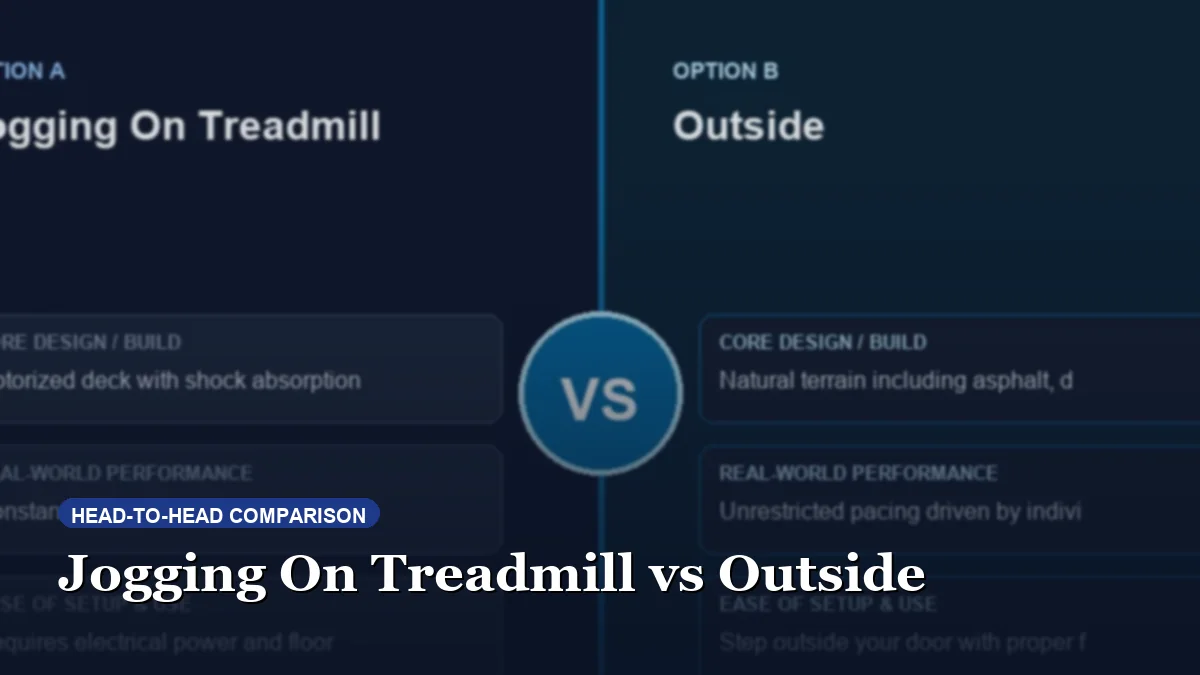
Pick Side A for controlled shock absorption and weather immunity. Choose Side B for authentic terrain variability and natural wind resistance.
Compare all top models in our Best Treadmill: Top Home Fitness Picks (2026 Guide).
Side-by-Side Breakdown
| Criteria | Jogging On Treadmill | Outside | Edge |
|---|---|---|---|
| Core Design / Build | Motorized deck with shock absorption elastomers. | Natural terrain including asphalt, dirt, and concrete. | Side B |
| Real-World Performance | Constant belt speed forces strict cadence control. | Unrestricted pacing driven by individual exertion. | Side A |
| Ease of Setup & Use | Requires electrical power and floor space. | Step outside your door with proper footwear. | Side B |
| Durability & Reliability | Mechanical motors and belts require periodic servicing. | Self-sustaining body mechanics with zero mechanical wear. | Side B |
| Efficiency / Operating Footprint | Draws continuous electrical current from wall outlets. | Zero electrical footprint utilizing purely human power. | Side B |
| Maintenance Requirements | Regular deck lubrication and belt tensioning checks. | Minimal upkeep limited to footwear replacement cycles. | Side B |
| Best Ideal Use Case | Controlled interval training and inclement weather days. | Long-distance endurance runs and race simulation. | Side A |
Core Engineering And Mechanical Design
Indoor jogging relies on sophisticated motorized systems designed to simulate outdoor motion. Heavy steel frames support rotating running belts driven by continuous horsepower motors.
Conversely, open-air running interacts directly with unyielding surfaces like asphalt. Engineers focus entirely on footwear technology rather than mechanical deck dampening to absorb impact forces.
Modern motor drives rely on continuous horsepower ratings to maintain belt speed under heavy footstrikes. Selecting options from our best treadmill for jogging guide ensures long-term mechanical stability for home runners.
Deck cushioning systems utilize elastomer buffers or air pods to absorb shock. Unlike unyielding asphalt, these engineered platforms reduce peak impact forces by mimicking natural surface compliance without sacrificing energy return.
- Motorized belt assistance reduces physical propulsion effort
- Rigid outdoor pavements demand higher shoe cushioning
- Indoor rollers require routine alignment and calibration
Belt Mechanics Versus Fixed Terrain
Treadmill belts move beneath your feet, assisting the leg turnover phase. This mechanical assistance changes your natural stride mechanics compared to stationary ground.
Outdoor routes force your hamstrings to actively propel your body forward. Every single step requires full muscular engagement without any motorized assistance from machinery.
- Belt propulsion lowers posterior chain activation
- Fixed terrain builds superior raw propulsive strength
Structural Dampening And Shock Absorption
Modern machines integrate elastomer cushions beneath the deck to protect joints. These dampening systems absorb significant impact shock during high-speed jogging sessions.
Concrete paths offer zero give, transferring maximum shock waves through your ankles and knees. Runners must rely on midsole foam chemistry to mitigate repetitive stress injuries.
- Elastomers reduce peak impact forces significantly
- Concrete surfaces maximize localized skeletal loading
Biomechanics And Joint Impact Forces
Running biomechanics shift subtly depending on your chosen training environment. The moving belt alters your natural stride length and foot strike patterns over extended intervals.
Natural terrain introduces uneven micro-features that constantly challenge stabilizer muscles. This dynamic adaptation builds robust ankle strength but increases sprain risks on rocky paths.
Treadmill belts move beneath your feet, altering normal propulsion mechanics. Choosing models featured in our best compact treadmill for jogging guide helps minimize posterior chain activation differences compared to overground running.
Joint loading patterns differ significantly due to belt synchronization. While indoor decks decrease tibial shock, consistent incline settings are required to replicate the exact propulsive muscular demand found on outdoor terrain.
- Indoor belts encourage shorter and quicker strides
- Outdoor trails activate deep ankle stabilizing muscles
- Impact forces vary based on deck cushioning
Stride Length And Cadence Alterations
Treadmill users often adopt a slightly shorter stride to match belt speeds safely. Maintaining a consistent cadence target becomes effortless with auditory beeps and visual displays.
Open environments allow natural pacing variations dictated by terrain and fatigue. Your stride naturally lengthens on downhills and shortens during steep climbing segments.
- Belt speed enforces strict step frequency
- Terrain gradients dictate natural stride adjustments
Muscular Recruitment Discrepancies
Indoor jogging minimizes wind resistance, reducing total energy expenditure at matching speeds. Compensating requires a minor incline adjustment to mirror outdoor exertion levels.
Outdoor joggers constantly push against ambient air currents and uneven ground. This creates a more complete muscular workout involving core and upper body stabilizers.
- Incline settings offset missing wind resistance
- Outdoor air resistance increases caloric burn
Cardiovascular Metrics And Pace Calibration
Tracking cardiovascular output differs vastly between static machines and open routes. Treadmills provide immediate numerical feedback on heart rate zones and elapsed distance.
Outdoor runners rely on GPS watches to estimate pace and distance metrics. Atmospheric interference and satellite drift can occasionally compromise pace accuracy during tough workouts.
Indoor running eliminates aerodynamic drag, making belt speeds feel artificially easier. Setting a one percent incline successfully compensates for this missing wind resistance, aligning your true energetic expenditure with outdoor efforts.
Heart rate monitors pair seamlessly with console displays to track cardiovascular load. However, indoor thermal stress often elevates heart rates faster than outdoor breezes cool your skin during intense sessions.
- Console sensors offer instant speed adjustments
- GPS watches track complex outdoor routing paths
- Heart rate straps integrate seamlessly with both
Pace Control And Consistency
Locking in a specific speed on a digital console eliminates pacing guesswork entirely. You maintain strict tempo discipline without risking accidental speed surges during fatigue.
Outdoor pacing requires high internal discipline and body awareness. Many runners struggle with maintaining even splits without constant GPS monitoring feedback.
- Consoles enforce strict and unchanging speeds
- Outdoor splits demand internal pacing intuition
Virtual Simulation And Grade Control
Indoor units allow precise electronic elevation changes for hill training simulations. You can program exact gradient percentages to mimic grueling mountain climbs indoors.
Finding authentic long hills outdoors depends entirely on your local geography. Flat regions make elevation training difficult without seeking out manmade structures.
- Electronic inclines simulate exact mountain grades
- Local geography limits natural hill accessibility
Environmental Control And Climate Adaptation
Climate control is a primary advantage of indoor exercise setups. Air-conditioned rooms prevent overheating, allowing you to maintain target heart rates during scorching summer days.
Outdoor training exposes you to unpredictable weather elements like rain, wind, and humidity. These harsh conditions build mental toughness but can severely disrupt training consistency.
Climate-controlled rooms remove weather variables, stabilizing your core temperature and hydration needs. Unfortunately, this lack of natural airflow inhibits evaporative cooling, requiring dedicated wall fans to prevent premature thermal fatigue.
Outdoor running forces your cardiovascular system to adapt to shifting temperatures, humidity, and winds. While treadmills offer consistent training environments, they fail to prepare your body for harsh race-day weather conditions.
- Climate-controlled rooms prevent heat exhaustion
- Outdoor exposure builds psychological endurance
- Weather extremes force schedule modifications
Thermal Stress Management
Running indoors eliminates direct solar radiation and high ambient temperatures. Your body manages thermal regulation much more efficiently inside climate-controlled spaces.
High summer humidity impairs sweat evaporation and spikes core body temperatures quickly. Outdoor runners must carefully adjust their workout intensity to prevent heat illness.
- Indoor fans assist with sweat evaporation
- Solar radiation increases perceived exertion
Safety And Route Security
Indoor spaces offer secure environments free from vehicular traffic hazards. You can jog late at night without worrying about visibility issues or unsafe neighborhoods.
Outdoor paths require constant vigilance regarding cars, cyclists, and uneven pavement. Wearing reflective gear becomes mandatory during low-light early morning runs.
- Treadmills eliminate vehicular collision risks
- Outdoor routes require high-visibility gear
Maintenance Protocols And Wear Factors
Mechanical equipment demands regular upkeep to ensure safe operation over years of use. Neglecting basic lubrication schedules can ruin expensive running motors prematurely.
Outdoor running shifts maintenance focus strictly to personal footwear and apparel. Replacing worn running shoes every few hundred miles prevents joint injuries effectively.
Running belts require regular lubrication with silicone-based fluids to minimize friction against the deck. Neglecting this routine increases motor amp draw, leading to premature thermal overload and costly electronic component failures.
Debris buildup beneath the motor hood can obstruct vital cooling vents. Vacuuming internal compartments semi-annually preserves circuit board integrity, ensuring your equipment operates safely through thousands of high-mileage training sessions.
- Running decks require silicone oil lubrication
- Drive belts need periodic tension checks
- Shoes absorb all outdoor impact stress
Mechanical Upkeep Requirements
Treadmills accumulate dust and belt debris inside their motor hoods regularly. Vacuuming internal components prevents electrical failures and extends component lifespans significantly.
Belts drift sideways over time and require manual centering adjustments with wrenches. Ignoring these adjustments causes premature edge fraying and costly part replacements.
- Internal dust removal prevents electrical shorts
- Belt tracking adjustments maintain deck symmetry
Consumable Wear Costs
Indoor machines consume electricity and require occasional replacement belts and rollers. These ongoing utility and part costs form part of ownership budgeting.
Outdoor runners spend zero money on electricity or mechanical repairs. Their primary financial investment lies in high-performance shoes and specialized weatherproof clothing.
- Electricity usage adds to monthly utility bills
- Footwear remains the primary outdoor expense
Equipment Footprint And Spatial Logistics
Indoor jogging equipment occupies significant floor space in residential homes. Selecting units from our best treadmill for jogging at home guide helps mitigate space issues and ensures proper room clearance.
Stepping outside requires zero spatial footprint inside your living quarters. You simply open your front door and begin your workout without any spatial preparation.
Heavy motorized units demand sturdy flooring and adequate vertical clearance. Calculating your maximum ceiling height plus your user height prevents dangerous head impacts during steep incline workouts in basement gyms.
Folding frames feature hydraulic assist mechanisms to save floor space when not in use. Ensuring proper clearance zones around the machine remains critical for emergency dismounts and general operational safety compliance.
- Heavy frames demand permanent room layouts
- Folding models save valuable floor space
- Outdoor training requires zero storage
Home Gym Integration
Positioning a heavy machine requires reinforced flooring and adequate ceiling height. Low basements can make taller runners feel cramped during steep incline workouts.
Noise vibration can travel through floors and disturb other household members. Placing heavy rubber mats underneath helps dampen impact sounds effectively.
- Ceiling clearance is vital for steep inclines
- Rubber mats reduce household noise transfer
Portability And Travel Flexibility
Moving a bulky treadmill between rooms or houses is exceptionally difficult. Their heavy weight requires multiple people and specialized transport for relocation tasks.
Outdoor running offers ultimate portability wherever your travels take you. Packing a pair of running shoes allows you to explore new locations with zero restrictions.
- Heavy frames resist easy room relocation
- Travel requires only packing running shoes
Practical Selection Framework For Runners
Deciding between indoor belts and outdoor routes depends on your lifestyle priorities. Assess your local climate, schedule flexibility, and joint health needs before purchasing equipment.
Many dedicated runners utilize a hybrid approach combining both methods. They leverage indoor machines for interval speedwork and reserve weekends for long outdoor endurance runs.
Choosing between indoor and outdoor running depends on your specific training goals. Selecting a treadmill with a robust deck size accommodates longer strides safely, whereas outdoor routes build superior mental grit.
Combining both modalities yields the best balance of joint protection and race preparedness. Evaluate your local climate, schedule constraints, and injury history before designing a comprehensive hybrid running program.
- Hybrid training captures benefits of both methods
- Climate dictates seasonal indoor preferences
- Joint comfort guides machinery selection
Evaluating Personal Training Goals
Marathon runners benefit from outdoor miles to build race-day resilience. Simulating actual course conditions prepares your body for unyielding asphalt surfaces.
Busy professionals often prefer indoor convenience for quick morning sessions. Eliminating travel time ensures consistent workouts despite tight daily schedules.
- Race training requires outdoor surface exposure
- Busy schedules favor home gym convenience
Budget And Long-Term Value
Investing in a high-end machine demands careful financial consideration upfront. Exploring models highlighted in our best budget treadmill for light jogging guide ensures durability and supports intensive daily jogging routines.
Outdoor running offers unmatched cost efficiency for budget-conscious athletes. Your investment focuses entirely on personal gear rather than complex machinery.
- Quality frames require upfront financial investment
- Outdoor training provides maximum financial value
Frequently Asked Questions
Is jogging on a treadmill harder than running outside?
Indoor jogging feels easier due to lack of wind resistance, but adding a one percent incline matches outdoor exertion levels. Mechanical belt assistance also changes your natural stride mechanics.
Do treadmills cause more or less joint pain than outdoor surfaces?
Treadmills generally offer superior shock absorption through elastomer cushioning systems. This dampening technology significantly reduces impact forces compared to unforgiving concrete sidewalks.
How do I maintain my treadmill for optimal longevity?
Regular maintenance involves lubricating the running deck with silicone oil and vacuuming dust from the motor hood. Checking belt tension prevents premature wear on internal components.
Can I train for a marathon entirely on a treadmill?
You can build exceptional cardiovascular fitness indoors, but you should incorporate some outdoor runs. Simulating real weather and asphalt impact prepares your joints for race day.
Why does my outdoor pace feel different from treadmill speeds?
Indoor belts force a constant speed, whereas outdoor pacing fluctuates naturally. GPS watches also track actual ground distance while console sensors measure belt rotations.