Motorized Versus Manual Treadmill Analysis
Motorized units rely on electric motors for belt movement, while manual systems depend entirely on user propulsion. Understanding these core drive differences dictates your daily workout experience.

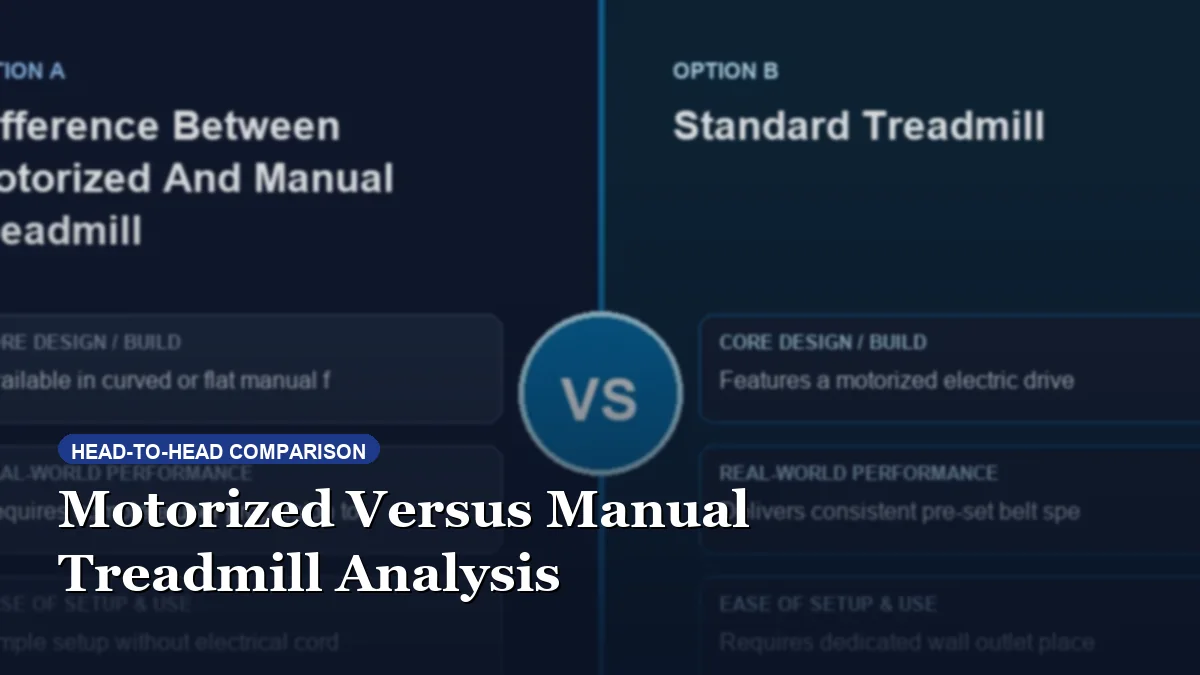
Choose motorized models for steady-state endurance training with precise speed control. Opt for manual designs if you want high-intensity interval training that heavily engages your posterior chain.
Compare all top models in our Best Treadmill: Top Home Fitness Picks (2026 Guide).
Side-by-Side Breakdown
| Criteria | Difference Between Motorized And Manual Treadmill | Standard Treadmill | Edge |
|---|---|---|---|
| Core Design / Build | Available in curved or flat manual frames | Features a motorized electric drive system | Depends on Goal |
| Real-World Performance | Requires complete user propulsion to move | Delivers consistent pre-set belt speeds | Motorized |
| Ease of Setup & Use | Simple setup without electrical cords | Requires dedicated wall outlet placement | Manual |
| Durability & Reliability | Fewer electrical components to break down | Complex motor boards require occasional service | Manual |
| Efficiency / Operating Footprint | Consumes zero household electricity | Draws continuous power under load | Manual |
| Maintenance Requirements | Minimal lubrication and belt adjustments | Regular deck waxing and motor checks | Manual |
| Best Ideal Use Case | Sprinting intervals and athletic training | Walking and steady-state distance running | Depends on Goal |
Core Design And Engineering Differences
Engineering a fitness machine requires balancing mechanical simplicity with user comfort. Motorized trainers integrate heavy flywheels, drive belts, and continuous-duty horsepower motors to force the running surface backward against your advancing footfalls.
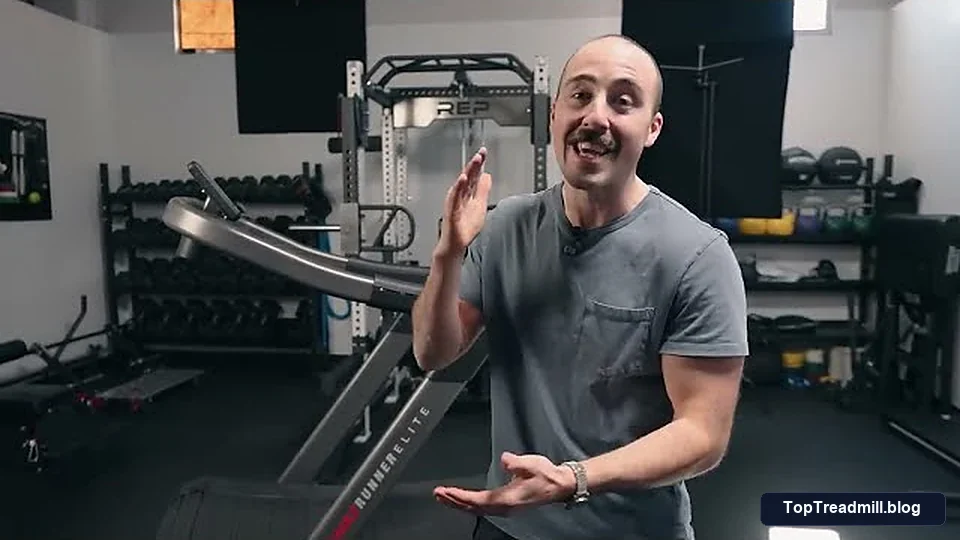
Conversely, manual alternatives eliminate electric motors completely. They rely on gravity, bearing systems, and your own muscular force to rotate the belt, altering resistance dynamically based entirely on your exact stride frequency.
Motorized models rely on an internal direct-current or alternating-current motor connected to a drive roller via a poly-V belt. This system pulls the continuous belt backward under a low-friction phenolic deck.
Manual designs completely eliminate electrical components, featuring a specialized running surface driven purely by user propulsion. Exploring our curved manual treadmill guide details how heavy-duty flywheels maintain smooth stride momentum.
- Electric motors supply fixed belt speeds measured in miles per hour.
- Manual curved belts utilize concave tracks to facilitate natural sprinting mechanics.
- Internal roller bearings dictate how smoothly the unpowered running belt spins.
Drive Mechanism Engineering
Drive mechanics dictate how energy transfers from the machine to your body. Standard motorized units use pulse-width modulation controllers to maintain steady speeds regardless of your foot strike impact force.
Manual systems convert horizontal force into rotational momentum. This direct mechanical feedback loop eliminates lag, matching your acceleration instantly without waiting for electronic motor acceleration phases.
- Motor horsepower ratings indicate continuous load capacity.
- Curved slat belts reduce friction during high-speed sprinting sessions.
Real-World Performance And Biomechanics
Running biomechanics shift significantly depending on how the belt moves beneath your feet. Motorized systems pull your legs backward, forcing you to keep pace with an externally driven mechanical velocity profile.
Manual units require you to push the belt away, heavily recruiting your hamstrings and glutes. This fundamental kinematic difference alters muscle activation patterns and changes your overall energy expenditure during workouts.
When using motorized systems, your foot strikes a moving belt that dictates your pace. This forces your nervous system to match an external speed, which can sometimes alter natural stride length and cadence.
Curved designs require you to push the belt backward, engaging your posterior chain more intensely. Evaluating our top manual treadmill picks highlights units engineered for high caloric expenditure and natural running mechanics.
- Motorized belts encourage a more passive recovery phase during running.
- Manual running demands continuous active propulsion from your lower body.
- Stride length adjusts instantly on manual belts without pressing console buttons.
Kinetic Energy And Stride Mechanics
Your body absorbs and generates forces differently across these two platforms. Standard motorized machines cushion impacts using elastomer dampening systems integrated directly beneath the running deck surface.
Unpowered manual treadmills often feature heavy rubber slats that absorb initial shock while transferring maximum propulsive power directly back into your working leg muscles during every single stride.
- Deck cushioning protects joints from excessive repetitive impact trauma.
- Propulsive running builds superior posterior chain muscular strength.
Maintenance, Efficiency, And Longevity
Long-term equipment ownership involves managing mechanical wear and tear across moving parts. Motorized machines feature electronic control boards and drive motors that demand periodic diagnostic checks and professional servicing.
Manual equipment drastically reduces failure points by discarding electrical circuitry entirely. Without circuit boards to fry or drive belts to stretch, these units often last decades with minimal maintenance.
Motorized units demand regular lubrication of the deck surface and routine belt tension adjustments to prevent slipping. Electrical components like control boards also carry a higher risk of long-term component wear over time.
Manual treadmills boast significantly simpler mechanical architectures with fewer failure points. Without motors or complex circuit boards, upkeep usually involves inspecting sealed bearings and checking structural bolts for overall integrity.
- Electric motors generate heat requiring adequate internal cooling ventilation.
- Manual bearings need occasional cleaning to prevent dust accumulation buildup.
- Electrical components remain vulnerable to power surges and voltage drops.
Energy Consumption And Operating Costs
Electrical efficiency is a major differentiator when reviewing equipment. Browsing our favorite walking and running models reveals how motorized trainers consume household electricity during high-speed workouts under heavy loads.
Manual models operate purely on human power, drawing zero watts from your electrical grid. This eco-friendly design lets you place the machine anywhere without worrying about proximity to wall outlets.
- Power draw increases substantially during heavy user weight loads.
- Unpowered designs eliminate electricity costs from home workout routines.
Motorized Versus Manual Drive Mechanics
Examining internal drive trains reveals stark contrasts in power delivery. Reviewing continuous horsepower ratings through our guide to motor power specs helps clarify how heavy-duty flywheels stabilize belt momentum under loads.
Manual alternatives rely on precision ball bearings and magnetic resistance cassettes. These systems allow users to dial in specific resistance levels for sled-push simulations or heavy resistance walking workouts.
The torque output of a motorized treadmill is measured in continuous horsepower, dictating how well the belt handles heavier foot strikes. High-torque systems prevent hesitation when running at rapid acceleration profiles.
Conversely, manual drive mechanics rely entirely on mechanical resistance and flywheel inertia. As you push forward, ball-bearing systems translate your physical output directly into rotational velocity without any electrical power assistance.
- Flywheel weight directly affects belt smoothness at slower speeds.
- Magnetic resistance provides repeatable friction levels for targeted training.
- Direct-drive systems eliminate slippage during intense acceleration phases.
Resistance Systems Explained
Controlling workout intensity requires different mechanical interventions on each machine. Motorized variants change elevation via motorized lift jacks to simulate outdoor hill climbing against gravity.
Manual trainers use adjustable magnetic brakes or air dampers to increase workload. This lets you experience heavy resistance without needing a motorized incline ramp lifting the heavy deck.
- Incline motors adjust deck angle for hill simulation workouts.
- Magnetic resistance offers friction without wearing down rubber belts.
Ergonomics And Joint Impact Analysis
Protecting your joints during high-mileage training requires careful consideration of deck materials. Standard motorized treadmills use flexible decks that bend slightly upon impact to absorb shock waves.
Many manual curved treadmills utilize rigid slat-belt designs that prioritize durability over cushioning. While tougher on joints, they encourage proper midfoot striking techniques that naturally reduce jarring impact forces.
Motorized decks often feature elastomeric cushioning systems designed to absorb high impact forces. These rubber dampeners reduce peak tibial shock during long runs, protecting joints from chronic repetitive stress injuries.
Manual curved treadmills often use slat-belt designs that absorb shock naturally through rubberized slats. However, the lack of motorized assistance requires more muscular effort, shifting mechanical loads heavily onto your hamstrings and calves.
- Flexible decks reduce peak ground reaction forces on knees.
- Rigid slat surfaces promote aggressive running form and posture.
- Cushioning levels vary widely across different motorized manufacturer models.
Impact Absorption Technologies
Engineering shock absorption into a moving platform requires sophisticated dampening materials. Motorized units incorporate elastomer cushions that compress underfoot to protect runner ankles and lower backs.
Manual machines rely on heavy vulcanized rubber slats to absorb initial high-frequency vibrations before they reach your skeletal system, offering a distinct firm feel compared to traditional electric units.
- Elastomer cushions minimize repetitive stress injuries over time.
- Vulcanized rubber slats absorb sharp impact transients effectively.
Power Consumption And Space Planning
Integrating fitness equipment into your living space involves evaluating physical and electrical footprints. Motorized models require clear wall clearance and heavy grounded circuits to handle peak electrical current draws.
Manual units offer superior spatial flexibility because they lack power cords. You can wheel them into corners or outdoor patios without tripping over unsightly extension cords or worrying about weather exposure.
Standard motorized treadmills consume substantial electricity, often requiring dedicated 15-amp circuits to prevent household breaker trips during peak motor loads. Their heavy frames also make them permanent, difficult-to-relocate fixtures in home gyms.
Manual options consume zero grid electricity, allowing flexible placement anywhere in your home regardless of outlet proximity. Their lack of bulky motors usually translates to lighter frames and easier folding mechanisms for storage.
- Dedicated electrical circuits prevent tripped breakers during workouts.
- Cordless designs allow unrestricted placement anywhere in your home.
- Foldable manual frames save valuable floor space when stored.
Spatial Integration And Mobility
Managing equipment weight and mobility ensures your home gym remains versatile. Motorized units are exceptionally heavy due to steel frames, large motors, and bulky incline assembly mechanisms.
Manual treadmills often feature built-in transport handles and integrated wheels that make repositioning much easier despite their sturdy commercial-grade steel construction and heavy curved frames.
- Heavy steel frames prevent unwanted rocking during intense sprints.
- Integrated transport wheels simplify room reconfiguration tasks.
Which Option Fits Your Specific Setup
Selecting the ideal equipment depends entirely on your personal fitness objectives and training style. If your primary goal is marathon training or gentle walking, a motorized machine delivers unmatched reliability.
Should your routine focus on athletic conditioning, sprinting intervals, and high-calorie burn, an unpowered manual trainer provides the aggressive training stimulus necessary to reach your peak performance goals.
Choose a motorized machine if your training involves precise speed intervals, marathon training simulations, or recovery jogs requiring consistent pace control. They suit users seeking programmed workouts and predictable resistance profiles.
Select a manual alternative if you prioritize High-Intensity Interval Training, lower ongoing maintenance, and maximum caloric burn efficiency. They are ideal for cross-training athletes wanting total control over their running dynamics.
- Endurance runners benefit from programmable speed and incline profiles.
- Cross-fitters thrive on the self-powered intensity of manual curved decks.
- Budget considerations often favor simpler unpowered mechanical alternatives.
Matching Equipment To Training Goals
Assessing your daily workout habits clarifies your equipment requirements. Walkers and casual joggers appreciate the gentle assistance and constant pacing provided by standard motorized running decks.
Serious athletes seeking explosive power development prefer manual units because they demand full engagement, matching your exact physical output without artificial mechanical speed restrictions.
- Casual walkers enjoy steady, uninterrupted belt movement speeds.
- Athletes build explosive power through self-regulated sprinting.
Frequently Asked Questions
Do manual treadmills burn more calories than motorized ones?
Yes, manual treadmills typically burn more calories because your body must supply all the propulsive force. This constant muscle engagement significantly increases your total energy expenditure during workouts.
Can you run at high speeds on an unpowered manual treadmill?
Absolutely, because manual belts accelerate instantly with your stride. You control the speed entirely through your own leg turnover rate without waiting for a motor.
Do motorized treadmills require specialized electrical outlets?
Most standard motorized treadmills plug into normal household outlets. However, heavy-duty commercial models may require dedicated circuits to prevent tripping your home circuit breakers.
Why do manual treadmills often feature curved running decks?
Curved decks naturally match your running stride geometry. This ergonomic shape allows for safer sprinting mechanics and better midfoot strike positioning.
Which treadmill type lasts longer with heavy daily use?
Manual treadmills generally last longer due to fewer electrical failure points. Eliminating complex circuit boards and motors drastically reduces long-term maintenance issues.