Compare Sole F80 And Nordictrack 1750 vs Standard Treadmill
Navigating home cardio requires balancing build quality with software features. We evaluate the Sole F80 and NordicTrack 1750 against standard models.

Choose the Sole F80 for unmatched mechanical durability and heavy-duty frame construction. Select the NordicTrack 1750 if you want immersive interactive training and advanced software integration.
Compare all top models in our Best Treadmill: Top Home Fitness Picks (2026 Guide).
Side-by-Side Breakdown
| Criteria | Compare Sole F80 And Nordictrack 1750 | Standard Treadmill | Edge |
|---|---|---|---|
| Core Design / Build | Reinforced steel frames with heavy-duty commercial styling | Lighter gauge steel with standard consumer framing | Side A |
| Real-World Performance | High continuous horsepower motors with rapid adjustments | Standard continuous horsepower motors with moderate response | Side A |
| Ease of Setup & Use | Intuitive tactile console controls and quick buttons | Basic minimalist interfaces requiring manual speed cycling | Side A |
| Durability & Reliability | Extensive commercial-grade warranties and robust parts | Standard consumer warranties with basic component lifespans | Side A |
| Efficiency / Operating Footprint | Larger footprints requiring dedicated floor space planning | Compact footprints suited for smaller multi-use rooms | Side B |
| Maintenance Requirements | Periodic belt lubrication and routine hardware tightening | Minimal baseline maintenance with sealed drive components | Standard |
| Best Ideal Use Case | Serious runners wanting longevity or virtual coaching | Casual walkers needing simple space-saving equipment | Side A |
Core Design and Engineering Differences
Evaluating heavy-duty fitness hardware demands a close look at structural engineering. Both premium units utilize reinforced steel frames designed to withstand intense daily pounding without flexing.
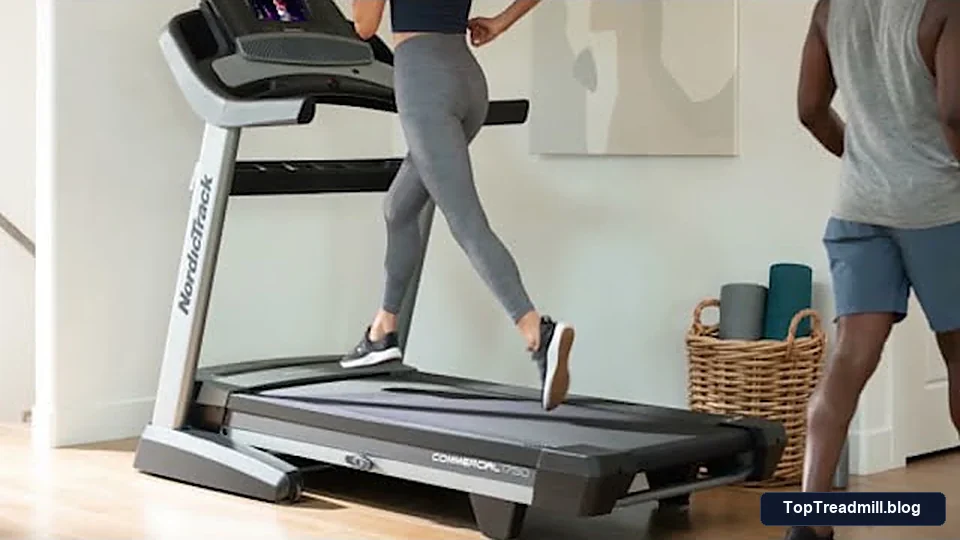
Standard entry-level machines often compromise on structural integrity by using thinner gauge steel tubing. This reduction leads to noticeable frame wobbling during high-speed running intervals.
Commercial-grade styling sets elite machines apart. Exploring our NordicTrack 1750 review details reveals superior weight distribution and larger diameter rollers that reduce belt friction.
- Reinforced steel construction prevents structural flexing during intense workouts.
- Standard treadmills often utilize thinner gauge steel leading to instability.
- Larger diameter rollers reduce friction and prolong belt life span.
Frame Geometry and Footprint
The footprint of a premium home cardio machine dictates your room layout requirements. You must allocate sufficient clearance behind the rear roller for safe dismounts.
Standard treadmills feature compact designs that save floor space but sacrifice lateral stability. Wider console masts on premium models improve overall user confidence during sprints.
- Expanded rear clearances prevent tripping hazards during sudden stops.
- Wider console masts enhance overall machine rigidity and user confidence.
Motor Capacity and Horsepower
Continuous horsepower ratings dictate how smoothly a machine handles heavy continuous workloads. High-output motors run cooler under pressure, preventing unexpected thermal overloads.
Standard treadmills utilize smaller motors that struggle during prolonged incline sessions. A robust drive system ensures consistent belt speed under heavy footstrikes.
- High continuous horsepower ratings prevent thermal shutdowns during long runs.
- Larger drive systems maintain steady speeds under heavy footstrikes.
Real-World Performance Comparison
Real-world training requires responsive speed and incline adjustments to simulate outdoor terrain accurately. Premium gear excels at shifting rapidly between intensity levels without lagging.
Standard alternatives often feature sluggish elevation motors that delay your interval transitions. This lag disrupts your workout pacing and diminishes overall cardiovascular conditioning efficiency.
Weight capacities also tell a vital story regarding stability. As highlighted in our Sole Fitness F80 review, higher weight thresholds mean heavier internal components and sturdier overall chassis designs.
- Rapid elevation shifts simulate outdoor terrain changes without frustrating delays.
- Higher weight thresholds indicate superior internal component build quality.
- Smooth speed transitions maintain precise pacing throughout interval sessions.
Speed and Incline Transitions
Interval training relies entirely on lightning-fast mechanical transitions between paces. Premium consoles use advanced digital controllers to change speeds almost instantaneously.
Standard models often step through speed increments gradually, hindering high-intensity interval training. Quick-touch buttons on advanced units eliminate repetitive tapping during workouts.
- Advanced digital controllers eliminate frustrating speed change delays.
- Quick-touch buttons streamline interval training and pacing adjustments.
Weight Capacities and Stability
User weight limits reflect the structural integrity of the running deck and frame. Higher limits ensure the machine stays grounded during heavy running strides.
Standard machines may rattle or shift when subjected to aggressive pounding. Solid engineering prevents premature bearing wear and eliminates annoying squeaks.
- Robust weight ratings guarantee stable performance during running strides.
- Solid engineering prevents premature bearing wear and structural noises.
Console Tech and Software Integration
Modern treadmills increasingly function as entertainment hubs through integrated touchscreens. Our Nordictrack 1750 review details details how advanced interfaces provide seamless access to scenic routes and instructor-led studio classes.
Standard treadmills typically feature simple LCD or LED screens displaying basic workout metrics. While less immersive, these straightforward consoles rarely experience software freezing issues.
Connectivity options dictate how easily you can track your fitness data across platforms. Built-in Bluetooth allows seamless pairing with heart rate monitors and training apps.
- Integrated touchscreens offer immersive virtual training and scenic routes.
- Simple LCD consoles provide reliable metrics without software update hassles.
- Bluetooth connectivity syncs your workout data with popular fitness apps.
Display Interfaces and Screen Sizes
Large high-definition displays transform your basement into a boutique fitness studio. Clear visual feedback keeps you engaged throughout grueling distance runs.
Basic consoles display essential metrics like time, distance, and calories burned. These utilitarian screens focus purely on raw performance tracking without distractions.
- High-definition displays enhance virtual training immersion significantly.
- Utilitarian screens prioritize core performance metrics over entertainment.
Streaming Ecosystems and Subscriptions
Interactive software subscriptions unlock vast libraries of trainer-led outdoor running content. These platforms automatically adjust your incline to match virtual terrain profiles.
Standard machines rely on built-in manual programs without recurring subscription fees. Users who prefer offline training often favor these simpler standalone systems.
- Automated incline syncing creates realistic virtual running experiences.
- Standalone systems eliminate recurring software subscription fees completely.
Deck Cushioning and Biomechanical Impact
Joint protection remains paramount for runners logging high weekly mileages. Discussed inside our Nordictrack C 1750 Pro review, advanced cushioning systems absorb impact forces before they reach your knees.
Standard running decks often feature stiff surfaces that mimic outdoor pavement. While some runners prefer this road-like feel, others experience increased joint fatigue.
Adjustable cushioning lets you customize deck firmness to match your running preferences. Softer settings protect healing joints, while firmer settings simulate race day conditions.
- Advanced cushioning systems absorb harmful impact shock effectively.
- Stiff running decks mimic traditional outdoor pavement conditions.
- Adjustable firmness settings let you customize your joint protection.
Shock Absorption Technologies
Engineered elastomer cushions reduce impact shock by absorbing strike energy efficiently. This technology lowers injury risks for runners recovering from lower extremity issues.
Basic decks rely on simple rubber dampeners with limited flexibility. These systems offer minimal shock attenuation during intense long-distance training blocks.
- Elastomer cushions lower injury risks during high-mileage training blocks.
- Simple rubber dampeners offer minimal shock attenuation benefits.
Joint Protection Mechanics
Proper deck suspension reduces the repetitive strain placed on connective tissues. Walkers and runners alike benefit from minimized soreness following long workouts.
Standard models pass more kinetic energy directly back into your body. Users must wear high-quality running shoes to compensate for lesser deck absorption.
- Minimized kinetic feedback reduces post-workout muscle soreness.
- Lesser deck absorption requires runners to wear supportive footwear.
Maintenance, Efficiency and Longevity
Long-term equipment ownership requires regular upkeep to preserve mechanical health. Premium machines feature robust components that demand routine lubrication and periodic tension checks.
Standard treadmills often feature sealed maintenance-free decks designed for casual users. These units require less active intervention but may lack replaceable parts.
Electrical efficiency varies based on motor size and console power consumption. Energy-saving standby modes help reduce your household electricity bill during idle hours.
- Robust mechanical parts require periodic belt lubrication and checks.
- Sealed maintenance-free decks suit casual users seeking zero hassle.
- Energy-saving standby modes reduce household electricity consumption.
Belt and Roller Maintenance
Wide running belts require occasional centering adjustments to prevent premature fraying. Routine silicone lubrication keeps friction low and protects the drive motor.
Standard belts are pre-lubricated at the factory for simplified initial upkeep. Owners should still inspect deck surfaces periodically for accumulated dust debris.
- Routine silicone lubrication protects motors from excessive friction.
- Factory pre-lubricated belts simplify initial ownership requirements.
Electrical Draw and Efficiency
High-horsepower motors draw substantial electrical current during peak acceleration phases. Dedicated household circuits prevent tripped breakers during intense running workouts.
Standard units feature low-draw motors that operate safely on standard outlets. They consume minimal power while running at walking speeds.
- Dedicated household circuits prevent tripped breakers during heavy use.
- Low-draw motors operate efficiently on standard residential outlets.
Assembly and Ergonomic Setup Realities
Heavy-duty fitness equipment requires careful logistical planning prior to delivery. Complex assembly processes demand multiple people and specialized tools for safe setup.
Standard treadmills arrive partially assembled with streamlined fold-up mechanisms. These units save floor space in smaller residential workout rooms effectively.
Ergonomic handrail placement ensures safe support during mounting and dismounting. Convenient built-in accessory trays keep water bottles within easy reach.
- Complex assembly processes require multiple people and tools.
- Streamlined folding mechanisms save valuable residential floor space.
- Ergonomic handrails ensure safe mounting and dismounting procedures.
Initial Setup and Hardware Weight
The sheer weight of premium cardio frames makes DIY assembly challenging. Professional installation services save time and prevent accidental component damage.
Standard models feature lightweight components that simplify home assembly tasks. Clear instructions allow single users to build the machine safely.
- Professional installation services prevent accidental assembly damage.
- Lightweight components allow straightforward single-person home setup.
Spatial Planning and Folding
Hydraulic folding mechanisms make storing heavy treadmills much easier. Safe locking latches secure the deck upright when not in use.
Compact standard models often lack hydraulic assist lifts for folding. Users must lift the full weight of the running deck manually.
- Hydraulic folding assists make vertical deck storage effortless.
- Manual folding systems require users to lift deck weight.
Which Option Fits Your Setup
Choosing the right machine depends on your specific fitness goals and available space. Serious runners benefit immensely from the durability of advanced commercial designs.
Casual walkers and budget-conscious buyers find standard models perfectly adequate. Assessing your daily training volume clarifies which category suits your lifestyle.
Evaluate your room dimensions and electrical outlet placement before making a final purchasing decision. Proper planning ensures seamless integration into your home environment.
- Serious runners thrive on the durability of advanced designs.
- Casual walkers find standard models adequate for daily routines.
- Room dimension planning ensures seamless home integration.
Matching Equipment to User Goals
Marathon training demands robust motors and spacious running decks. Investing in premium hardware prevents premature equipment failure under heavy mileage.
Casual fitness walkers can achieve their goals using standard compact treadmills. Simple interfaces keep workouts straightforward without technological distractions.
- Marathon training requires robust motors and spacious decks.
- Casual fitness walkers benefit from straightforward simple interfaces.
Space and Electrical Constraints
Measure your ceiling height to ensure safe clearance during incline workouts. Taller users need adequate vertical room to avoid head clearance issues.
Verify that your chosen outlet supports the continuous electrical draw of heavy motors. Proper electrical planning protects your home wiring infrastructure.
- Ceiling height measurements prevent head clearance issues during inclines.
- Electrical planning protects home wiring from excessive motor draws.
Frequently Asked Questions
How do advanced treadmills compare to standard models in build quality?
Advanced units utilize reinforced steel frames and heavy commercial components for superior stability. Standard treadmills feature lighter gauge steel suited for casual walking.
Do I need a subscription for interactive training features?
Interactive touchscreens often require recurring software subscriptions to access virtual coaching classes. Standard treadmills operate fine without any extra software fees.
What maintenance is required for high-end running decks?
High-end decks require periodic belt lubrication and routine hardware tightening. Standard models often feature sealed components requiring minimal upkeep.
Can heavy runners use standard entry-level treadmills safely?
Standard models have lower weight capacities that may cause frame flexing. Heavy runners should choose models with robust weight ratings for stability.
Are folding mechanisms difficult to operate on heavy machines?
Heavy treadmills utilize hydraulic assist lifts to make folding effortless. Standard units may require manual lifting without hydraulic assistance.