2 In 1 Folding Treadmill vs Standard Walking Pad
Choosing the right home cardio machine requires balancing speed capability with storage limitations. This technical guide compares dual-function units against ultra-low-profile walking pads.

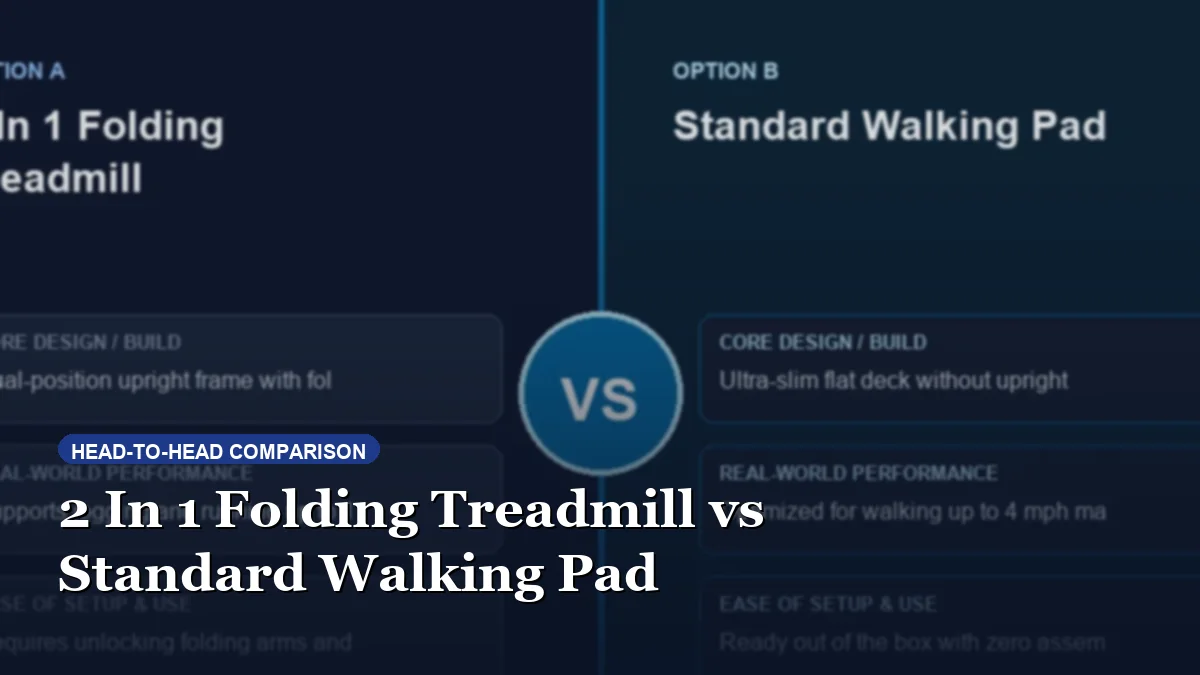
Pick the 2 in 1 folding treadmill if you require running speeds up to twelve miles per hour. Choose the standard walking pad when strict under-desk storage and low speeds are your priorities.
Compare all top models in our Best Treadmill: Top Home Fitness Picks (2026 Guide).
Side-by-Side Breakdown
| Criteria | 2 In 1 Folding Treadmill | Standard Walking Pad | Edge |
|---|---|---|---|
| Core Design / Build | Dual-position upright frame with folding handrails | Ultra-slim flat deck without upright handlebars | Depends on goal |
| Real-World Performance | Supports jogging and running up to 12 mph | Optimized for walking up to 4 mph max | 2 In 1 Folding Treadmill |
| Ease of Setup & Use | Requires unlocking folding arms and locking consoles | Ready out of the box with zero assembly | Standard Walking Pad |
| Durability & Reliability | Higher continuous horsepower motor for sustained loads | Compact brushless motor suited for low-impact steps | 2 In 1 Folding Treadmill |
| Efficiency / Operating Footprint | Larger floor space footprint when fully deployed | Minimalist footprint sliding easily beneath furniture | Standard Walking Pad |
| Maintenance Requirements | Standard belt lubrication and regular tension checks | Frequent silicone oil application due to compact decks | 2 In 1 Folding Treadmill |
| Best Ideal Use Case | Mixed jogging and walking in spare bedrooms | Active office work under a standing desk setup | Depends on goal |
Core Design & Engineering Architecture
Engineering a dual-function cardio machine demands robust frame geometry to support both upright running and folded walking modes. Manufacturers use reinforced steel tubing to maintain structural integrity.
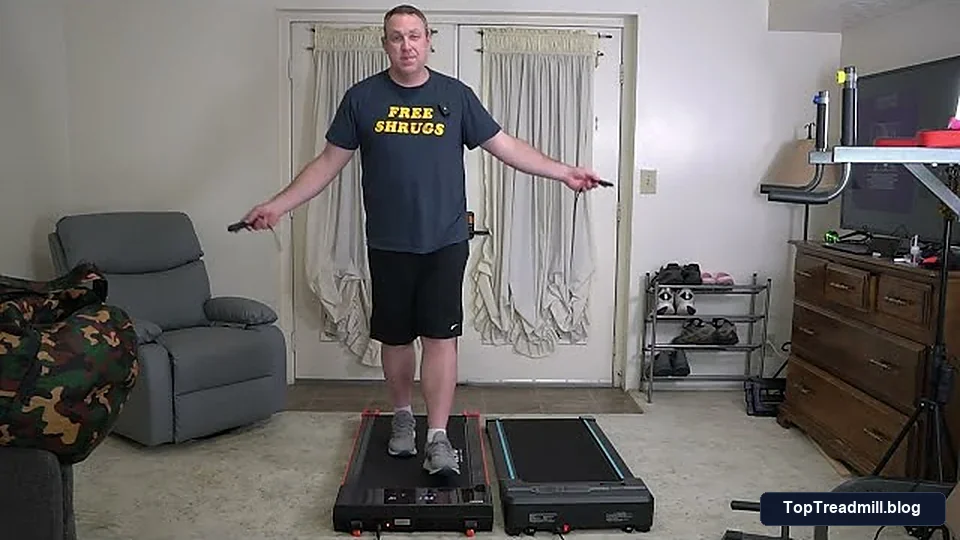
Conversely, standard walking pads prioritize minimalist design by eliminating heavy upright consoles. This engineering choice reduces total weight but limits the unit to lower speed profiles and lighter loads.
- Heavy-gauge steel frames support high-impact running forces.
- Brushless motors reduce operating noise in compact housings.
- Integrated LED displays track essential workout metrics clearly.
Frame Geometry & Folding Mechanisms
The folding mechanism on a two-in-one unit utilizes hydraulic pistons. Our best folding treadmill for small spaces overview details how locking pins secure upright handrails.
Standard walking pads omit these mechanical hinges entirely. Their flat bed design maximizes vertical stiffness while minimizing mechanical failure points common in articulated folding frames.
- Hydraulic assist arms ease the transition between modes.
- Rigid deck platforms prevent flex during foot strikes.
Motor Housing & Deck Clearance
Housing placement differs significantly between these two fitness categories. Dual-use models feature elevated motor hoods to accommodate larger continuous horsepower drive systems safely.
Walking pads feature front-mounted low-profile motors to maintain a low step-up height that facilitates easy mounting and seamless placement beneath standard office furniture.
- Elevated hoods protect internal electronics from sweat.
- Low clearance allows storage in tight vertical gaps.
Real-World Performance & Speed Profiles
User biomechanics change drastically when transitioning from a gentle stroll to a full sprint. Dual-mode machines deliver robust speed ranges reaching up to twelve miles per hour.
Standard walking pads restrict maximum speeds to roughly four miles per hour. This safety restriction aligns with their lack of handrails and compact motor torque capacity.
- High-speed belts require precise tracking adjustments over time.
- Low-speed belts emphasize smooth torque delivery at walking paces.
- Responsive acceleration prevents jarring movements during pace changes.
Running Dynamics at Higher Velocities
Running requires extended deck lengths and shock-absorbing elastomers. Two-in-one treadmills incorporate multi-layer cushioning systems to absorb impact forces and protect user joints during intense workouts.
Attempting to run on a standard walking pad creates safety hazards. You should check out our best walking pad treadmill guide to understand why short running surfaces cause risks.
- Multi-layer belts reduce impact shock on runner knees.
- Extended deck lengths accommodate natural running strides.
Walking Ergonomics at Low Speeds
Walking ergonomics rely on consistent belt velocity and low step-up heights. Walking pads excel here by providing quiet, friction-free movement tailored for multitasking professionals.
Using a heavy folding treadmill solely for walking feels cumbersome due to the elevated console and bulky frame obstructing natural arm movements during office work.
- Low deck heights prevent tripping during office multitasking.
- Quiet operation prevents distraction in shared workspaces.
Maintenance Protocols & Lubrication Standards
Proper equipment maintenance ensures longevity across both machine types. Regular silicone oil application prevents excessive friction between the walking belt and running deck surface.
Due to smaller roller diameters, walking pads often demand more frequent lubrication schedules to prevent premature motor strain and belt degradation under daily use.
- Silicone lubricant reduces friction and electrical current draw.
- Routine belt alignment prevents edge fraying and motor wear.
- Debris removal keeps internal optical sensors functioning properly.
Belt Tensioning & Alignment Mechanics
Maintaining correct belt tension is vital for preventing slippage during workouts. Dual-purpose treadmills feature rear roller adjustment bolts for straightforward calibration using hex wrenches.
Walking pads also use rear tension bolts, but their compact tolerances require micro-adjustments to keep the narrower belt centered during continuous walking sessions.
- Hex wrenches provide precise control over roller tension.
- Regular checks prevent uneven wear along belt edges.
Deck Debris Removal & Motor Care
Dust and carpet fibers accumulate beneath walking belts over extended periods. Periodic cleaning beneath the deck prevents particulate buildup from clogging internal electronic components.
Motor ventilation slots on larger two-in-one models require occasional vacuuming to eliminate dust accumulation that traps heat and diminishes overall motor lifespan.
- Vacuuming motor compartments prevents overheating risks.
- Wiping down deck surfaces eliminates abrasive dirt particles.
Electrical Efficiency & Power Draw Metrics
Electrical specifications dictate both performance capability and monthly utility costs. Folding treadmills utilize higher wattage motors capable of sustaining heavy loads at rapid speeds.
Walking pads employ efficient low-draw motors designed for continuous low-speed operation, resulting in minimal electrical consumption during prolonged office walking sessions.
- Continuous horsepower ratings indicate sustained workload capacity.
- Low-draw motors minimize heat generation during slow paces.
- Surge protection safeguards sensitive digital control boards.
Continuous Horsepower vs Peak Outputs
Understanding motor ratings prevents premature equipment burnout. Continuous horsepower measures the sustained power output a motor delivers during extended running sessions without overheating.
Peak horsepower represents maximum burst capacity during startup or acceleration phases. Walking pads rely on lower continuous outputs since high-torque sprints are absent.
- Continuous ratings reflect true motor endurance limits.
- Peak ratings highlight momentary acceleration capabilities.
Standby Power Consumption Profiles
Modern cardio equipment draws minor electrical current even when idling in standby mode. Display consoles with bright LED matrices consume trace power continuously.
Many walking pads feature auto-shutoff relays that completely sever electrical draw after periods of inactivity, enhancing energy efficiency in home office environments.
- Auto-shutoff features reduce phantom electrical power draw.
- Backlit displays contribute to active operating energy usage.
Storage Footprint & Spatial Optimization
Floor space constraints heavily influence home fitness equipment purchases. Consult our best folding treadmill small space rankings to find units that fold vertically.
Walking pads conquer spatial limitations entirely through ultra-slim profiles designed to slide horizontally underneath sofas, beds, or standing desks without hassle.
- Vertical storage options free up valuable floor space.
- Transport wheels facilitate easy repositioning around rooms.
- Low profile heights enable seamless furniture clearance.
Vertical Storage vs Under-Desk Profiling
Vertical folding systems allow users to store bulky treadmills in closets or room corners. However, their physical height requires careful ceiling clearance checks during storage.
Horizontal under-desk storage eliminates lifting entirely. Users simply slide the flat walking pad out of sight when work hours conclude, optimizing room aesthetics.
- Vertical configurations require secure wall latching mechanisms.
- Horizontal sliding profiles maximize invisible room storage.
Weight Distribution & Mobility Casters
Moving heavy fitness gear requires thoughtful weight distribution and quality transport casters. Folding treadmills often weigh over one hundred pounds, requiring careful navigation.
Walking pads typically weigh significantly less, allowing users to tilt and roll the unit effortlessly using front-mounted transport wheels built into the chassis.
- Front transport wheels assist with effortless room repositioning.
- Balanced weight distribution prevents tipping during transport.
Safety Engineering & Emergency Mechanisms
User safety remains paramount when exercising on moving belts. Folding treadmills feature magnetic safety lanyards that instantly cut motor power if the runner stumbles.
Walking pads rely on sensor-based speed zones or remote controls to manage velocity, as traditional clip-on lanyards are rarely included on ultra-slim frames.
- Magnetic safety keys provide immediate emergency motor braking.
- Handrails offer crucial stability for higher-speed jogging.
- Remote controls allow safe pace adjustments while walking.
Magnetic Lanyards & Auto-Stop Sensors
Safety lanyards physically attach the user to the console housing. If separation occurs, the magnetic switch trips and stops the belt immediately to prevent injury.
Walking pads incorporate foot-step detection sensors on select models to automatically adjust speed based on user positioning near the front or rear.
- Instant motor cutoff prevents dangerous runaway falls.
- Proximity sensors adapt belt speed to user positioning.
Handrail Stability & Load Ratings
Upright handrails provide essential balance assistance during intense cardio workouts. Their rigid mounting points withstand heavy downward forces during running strides.
The absence of handrails on standard walking pads means users must rely entirely on their own balance, making them unsuitable for individuals with stability issues.
- Rigid handrails support heavy body weight safely.
- Unobstructed walking decks require solid independent balance.
Buyer Fit & Long-Term Value Analysis
Selecting the ideal equipment depends on your specific fitness goals and living situation. Assess whether your routine emphasizes serious running or casual daily steps.
Investing in the correct machine prevents buyer remorse and ensures your home equipment receives consistent use rather than collecting dust in a corner.
- Match machine capabilities directly to your primary workout style.
- Consider available storage space before committing to a chassis.
- Evaluate daily usage intensity to determine required durability.
Matching User Biomechanics to Equipment
Runners must select two-in-one folding treadmills to accommodate impact forces. Review our best folding walking pad with handlebar recommendations for secure running support.
Office workers seeking passive step counts during conference calls will find standard walking pads to be the ideal ergonomic solution for their daily routines.
- Runners require robust shock absorption and high speeds.
- Desk workers benefit from silent, low-profile walking surfaces.
Assessing Daily Usage Intensity Limits
Heavy daily usage by multiple household members demands commercial-grade durability found in heavier folding units. Lighter walking pads suit individual users seeking moderate daily activity.
Reviewing motor duty cycles helps predict equipment lifespan under your specific household workout frequency and intensity requirements.
- High household usage demands heavy-duty motor construction.
- Moderate individual use aligns well with compact walking pads.
Frequently Asked Questions
Can I run on a standard walking pad?
You should never run on a standard walking pad due to low maximum speeds and lack of shock absorption. Choose a 2 in 1 folding treadmill for safe running.
How do folding treadmills save space?
Folding treadmills save space by utilizing articulated frames that lock upright or slide into vertical storage positions. This design minimizes your room footprint significantly.
What maintenance do walking pads require?
Walking pads require regular silicone lubrication applied beneath the belt to reduce friction. Proper belt tension adjustment prevents slipping during daily office use.
Are walking pads loud during work calls?
Most walking pads feature quiet brushless motors designed specifically for office environments. Selecting a quality unit ensures minimal noise disruption during meetings.
Which option is better for standing desks?
Standard walking pads are superior for standing desks because their low profile fits effortlessly underneath furniture. Their low step-up height prevents tripping hazards.